






If you notice any errors in the translations, remember:
"In the Legion, of the 144 languages, there is only one language: understanding each other."
About Legion'Arts
Isabelle Maury,
an exceptional painter.
By Christian Morisot
Isabelle Maury is possessed by a passion for painting the French Foreign Legion, and more specifically, the legionnaire.
Her recent visit to Saumur left a particularly delicate and high-quality impression.
She discreetly expresses her position on bullfighting without taking a firm stance, and her paintings can be interpreted by both sides, for and against; everyone finds something to appreciate. However, there is no misunderstanding; Isabelle subtly conveys her message.
Isabelle Maury is possessed by a passion for painting the French Foreign Legion, and more specifically, the legionnaire.
Her recent visit to Saumur left a particularly delicate and high-quality impression.
She discreetly expresses her position on bullfighting without taking a firm stance, and her paintings can be interpreted by both sides, for and against; everyone finds something to appreciate. However, there is no misunderstanding; Isabelle subtly conveys her message.
_(1).jpg?t=19bb03f6_400f_44ca_ba51_b0895320a168)
Painting is not knowledge. Nor is it pleasure. Before experiencing it, the painter is plunged into darkness. He must emerge from it for the transgression of inventing objective and subjective forms to take place. It is projecting oneself into an inner universe while using the incorruptible world of visual reality.
Painting is about discovering the sensitivity to beauty, the kind that leads to an understanding of art and the uncertainty of the laws and criteria of beauty, which often remain unexplained.
“Isabelle” embodies intellectual beauty, expressed through a skillful blending of multiple color varieties, which a deliberate yet controlled indiscipline transforms into a work of art... Read more...
Painting is about discovering the sensitivity to beauty, the kind that leads to an understanding of art and the uncertainty of the laws and criteria of beauty, which often remain unexplained.
“Isabelle” embodies intellectual beauty, expressed through a skillful blending of multiple color varieties, which a deliberate yet controlled indiscipline transforms into a work of art... Read more...
Views of the Elders
Letter from My Garden 4

A Glimpse of a Silent France
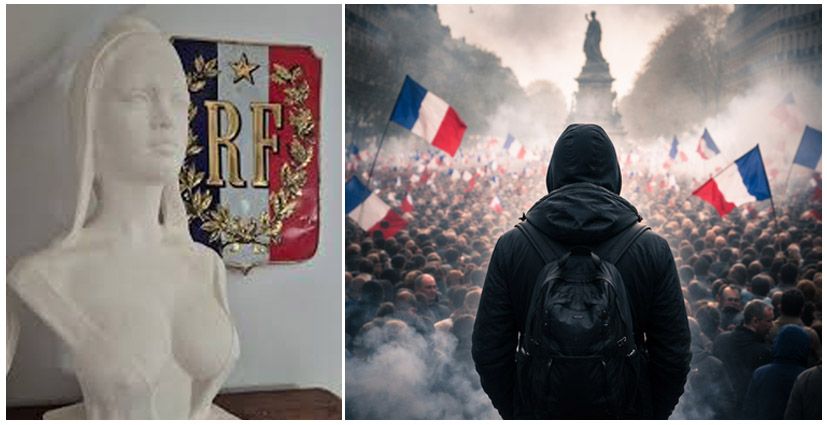
Thus spoke General Bigeard: “I am heartbroken for France!” I must admit that I find myself in the uncomfortable position of a worried observer, watching the world in turmoil around me and feeling a deep sorrow in my soul.
Never, ever, have I been truly interested in anything political. I have simply made a choice, more out of duty than conviction, and I have always placed my trust in the person who best represented my values... Read more...
Reflexions
The lights will not go out… they are simply waiting to be brought to light.
By Louis Perez y Cid
The Cycles of Power
History does not progress in a straight line; it moves. It glides from one center of gravity to another.
The European upheaval of the 15th and 16th centuries was not primarily military, but intellectual. The rediscovery of ancient texts, the circulation of Byzantine manuscripts, the printing press, humanist thought, the work of Nicolaus Copernicus and Galileo—all these created fissures in a world ordered around the Holy Roman Empire and religious authority. This moment has a name: the Renaissance.
Innovation arises when knowledge circulates; power follows.
The 15th-century Portuguese opened maritime routes.
The 16th-century Spanish organized the empire.
The 17th-century Dutch invented modern finance.
The 18th-century French structured political thought.
The 19th-century British industrialized the planet.
But history is not simply an alternation of dominations. It is a succession of anthropological models. Each, in turn, imposes its way of organizing humanity, power, and the world.
These powers were unequal, sometimes brutal, always rivals. Their confrontation culminated in the two world wars, a European suicide that ushered in the 20th century, dominated by others: the United States and the Soviet Union.
The 20th century was bipolar, and the 21st century seems hesitant. The question is not only who dominates today. It is to understand what makes power endure... Read more...
The European upheaval of the 15th and 16th centuries was not primarily military, but intellectual. The rediscovery of ancient texts, the circulation of Byzantine manuscripts, the printing press, humanist thought, the work of Nicolaus Copernicus and Galileo—all these created fissures in a world ordered around the Holy Roman Empire and religious authority. This moment has a name: the Renaissance.
Innovation arises when knowledge circulates; power follows.
The 15th-century Portuguese opened maritime routes.
The 16th-century Spanish organized the empire.
The 17th-century Dutch invented modern finance.
The 18th-century French structured political thought.
The 19th-century British industrialized the planet.
But history is not simply an alternation of dominations. It is a succession of anthropological models. Each, in turn, imposes its way of organizing humanity, power, and the world.
These powers were unequal, sometimes brutal, always rivals. Their confrontation culminated in the two world wars, a European suicide that ushered in the 20th century, dominated by others: the United States and the Soviet Union.
The 20th century was bipolar, and the 21st century seems hesitant. The question is not only who dominates today. It is to understand what makes power endure... Read more...
Facts
Laotian Chronicle 3/6
By Lt. Colonel (Ret.) Antoine Marquet
January 31, 1954
7:30 a.m.
Commander Cabaribère's detachment leaves Mouang Khouei in the following order: 3rd Company of the 2nd BCL, 6th Company, CCB personnel, and 7th Company.
8:15 a.m.
The Menigoz detachment leaves Kouang Rip after Commander Vaudrey and the 5th Tabor departed an hour before them.
9:00 a.m.
The scouts of the lead section of the 3rd Company of the 2nd BCL encounter a section of Viet Minh regulars marching towards Mouang Khouei. The Laotians react first and open fire, killing the three lead Viet Minh.
The enemy retaliated, and after half an hour of fighting, Lieutenant Banlier reported that his fire unit was almost exhausted. The commanding officer then ordered the 6th Company to advance past him.
Meanwhile, the enemy steadily reinforced its position, and the Debret, Bondietete, and Ducati sections, deployed on either side of the track, had to repel four successive assaults. During these attacks, the enemy left behind about fifty dead and a significant amount of weaponry. The 6th Company suffered one killed, six missing (including Lieutenant Debret), and twelve wounded, plus three wounded in the CCB (Combat Support Battalion).
The enemy was able to replace its losses, while the 6th Company, already reduced to 80 legionnaires when it left Mouang Khoua, felt the full force of the reduction, which represented a quarter of its strength, including two section leaders. It would be reinforced by the 7th Company.... Read more...
Literary Explorations
The 18
Based on the true story of Fernando Magellan's voyage
A graphic novel series by Louis Perez y Cid.
In 1519, 240 men set sail from Seville. Seasoned sailors, inexperienced foreigners, men haunted by their past, and children.
Five ships embarked for the Ocean Sea under the command of Fernand Magellan.
No one knew their true destination. Two years' worth of provisions were on board.
The maps stopped where their route began. They set off into the void.
Three years later, only one ship returned, carrying several tons of cloves and… 18 survivors.
Captain Juan Sebastián Elcano completed the first circumnavigation of the globe in history.
But between departure and return, there was no glory.
There is hunger, fear, betrayal, cold, suffocating heat, mutiny, fighting, and blood—lots of blood.
.jpg?t=19bb03f6_400f_44ca_ba51_b0895320a168)
This is not a legend. It's worse.
All this is happening above our heads
The Moons of the Solar System.
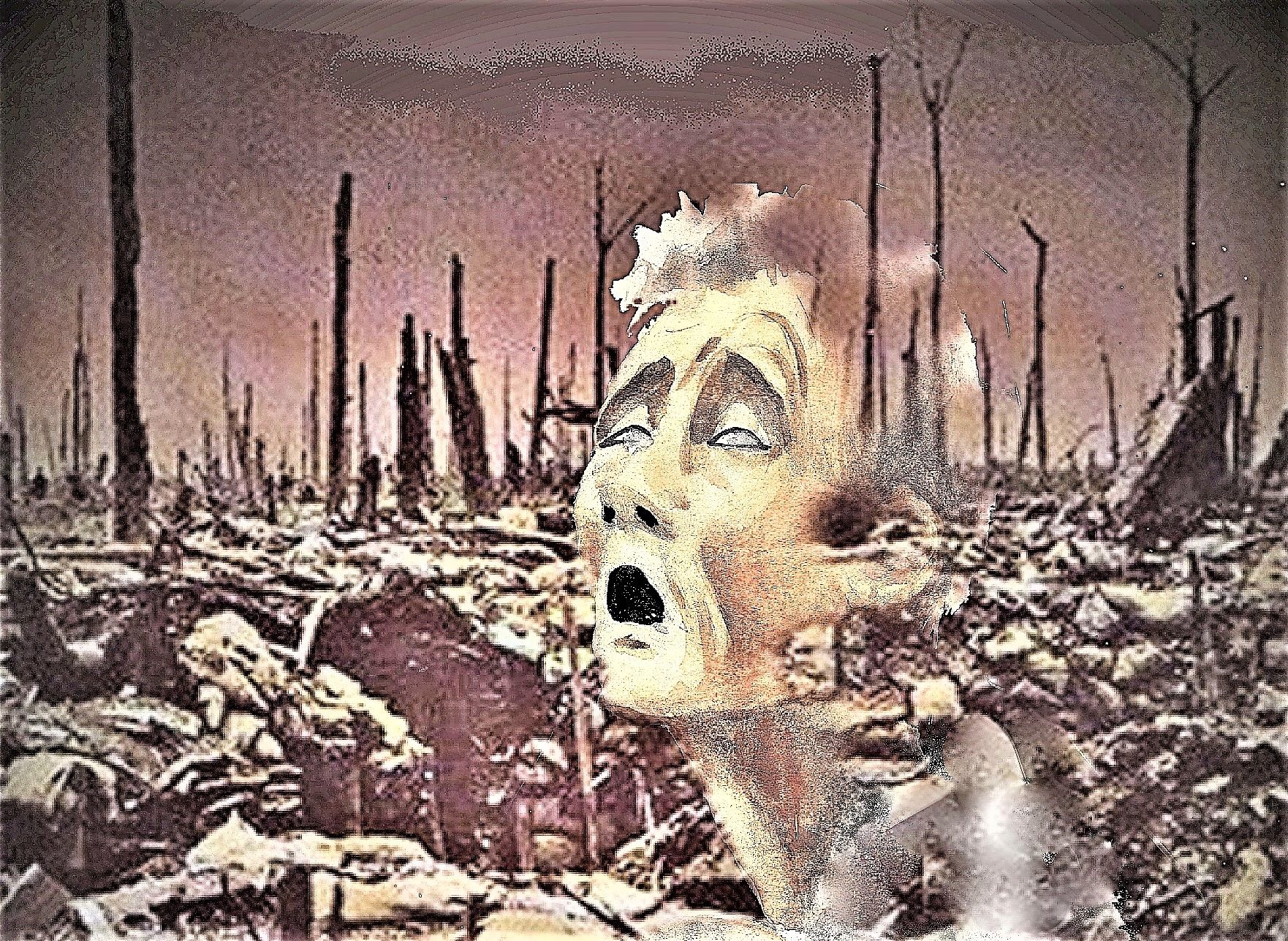
For a very long time, we only spoke of one Moon, our own, Earth's Moon. Certainly, other bodies orbiting certain planets were known, such as those orbiting Jupiter since Galileo discovered them in 1609, but humans called them "satellites."
Since the launch of numerous man-made satellites of all kinds—communication, weather, military, etc.—the term "satellite" has been applied to them, and the natural satellites of the planets have taken the official name "moon."
Since the launch of numerous man-made satellites of all kinds—communication, weather, military, etc.—the term "satellite" has been applied to them, and the natural satellites of the planets have taken the official name "moon."

Are there moons around all the planets?
Of the eight planets, only six have them.
Indeed, Mercury and Venus have no moons.
Earth has one, 3,476 km in diameter. Earth is considered the poor relation in terms of the number of its moons, as the other planets have plenty... Read more...
Indeed, Mercury and Venus have no moons.
Earth has one, 3,476 km in diameter. Earth is considered the poor relation in terms of the number of its moons, as the other planets have plenty... Read more...

.jpg?t=19bb03f6_400f_44ca_ba51_b0895320a168)
Don't miss any of our publications and creations!
WHO WE ARE
Légion’Arts is an independent publishing house created by former legionnaire artists: preserving and sharing the memory of the Foreign Legion through authentic, human, and inspiring works. Every legionnaire has a voice. With Légion’Arts, these stories become a collective memory, accessible to all.