



If you notice any errors in the translations, remember:
"In the Legion, of the 144 languages, there is only one language: understanding each other."
About Legion'Arts
Calligraphy, the art of beautifully forming characters.
Calligraphy (from the Greek kallos = beauty, graphein = to write).
It appeared as early as the first civilizations, in ancient Egypt with hieroglyphs, in China where it very quickly became a major art form (more than 2,000 years BCE), and then in the Islamic world where Arabic script took on a spiritual dimension.
In medieval Europe, copyist monks decorated manuscripts in scriptoria. The invention of printing in the 15th century reduced its utilitarian role, but it remained an art... Read more...
Views of the Elders
The Old Man of Camp Kossei
By Jean-Marie Dieuze
We are in Chad, in N’Djamena, within the grounds of Camp Kossei, an airbase for the French forces since the 1960s. Early 1990s: the heat was oppressive, crushing everything, even certainties. I was deployed with the 2nd Foreign Parachute Regiment (2nd REP) during Operation Sparrowhawk.
I remember this old man as a discreet and singular presence. One of those faces you see every day without always knowing the name, the story, the origin.
We are in Chad, in N’Djamena, within the grounds of Camp Kossei, an airbase for the French forces since the 1960s. Early 1990s: the heat was oppressive, crushing everything, even certainties. I was deployed with the 2nd Foreign Parachute Regiment (2nd REP) during Operation Sparrowhawk.
I remember this old man as a discreet and singular presence. One of those faces you see every day without always knowing the name, the story, the origin.
A humble local employee of the Military Post Office, he wore no rank insignia. What had once been a uniform jacket barely covered his tall, thin frame. On his chest, decorations with ribbons worn by time told a prestigious story. His sandals, as old as his memories, left no trace behind him. The sound of his voice would remain a mystery.
His dark face bore the marks of ancient, African, ancestral terroir. Baldness was gaining ground, leaving a few white tufts, bristling like scorched grass. Time had plowed his skin, life had branded it, war had left its scars. One didn't just see an old man: one read the passage of time... Read more...
Reflexions
The lights will not go out… they are simply waiting to be brought to light.
By Louis Perez y Cid
The Cycles of Power
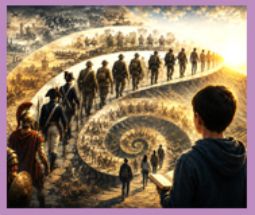
History does not progress in a straight line; it moves. It glides from one center of gravity to another.
The European upheaval of the 15th and 16th centuries was not primarily military, but intellectual. The rediscovery of ancient texts, the circulation of Byzantine manuscripts, the printing press, humanist thought, the work of Nicolaus Copernicus and Galileo—all these created fissures in a world ordered around the Holy Roman Empire and religious authority. This moment has a name: the Renaissance.
Innovation arises when knowledge circulates; power follows.
The 15th-century Portuguese opened maritime routes.
The 16th-century Spanish organized the empire.
The 17th-century Dutch invented modern finance.
The 18th-century French structured political thought.
The 19th-century British industrialized the planet.
But history is not simply an alternation of dominations. It is a succession of anthropological models. Each, in turn, imposes its way of organizing humanity, power, and the world.
These powers were unequal, sometimes brutal, always rivals. Their confrontation culminated in the two world wars, a European suicide that ushered in the 20th century, dominated by others: the United States and the Soviet Union.
The 20th century was bipolar, and the 21st century seems hesitant. The question is not only who dominates today. It is to understand what makes power endure... Read more...
The European upheaval of the 15th and 16th centuries was not primarily military, but intellectual. The rediscovery of ancient texts, the circulation of Byzantine manuscripts, the printing press, humanist thought, the work of Nicolaus Copernicus and Galileo—all these created fissures in a world ordered around the Holy Roman Empire and religious authority. This moment has a name: the Renaissance.
Innovation arises when knowledge circulates; power follows.
The 15th-century Portuguese opened maritime routes.
The 16th-century Spanish organized the empire.
The 17th-century Dutch invented modern finance.
The 18th-century French structured political thought.
The 19th-century British industrialized the planet.
But history is not simply an alternation of dominations. It is a succession of anthropological models. Each, in turn, imposes its way of organizing humanity, power, and the world.
These powers were unequal, sometimes brutal, always rivals. Their confrontation culminated in the two world wars, a European suicide that ushered in the 20th century, dominated by others: the United States and the Soviet Union.
The 20th century was bipolar, and the 21st century seems hesitant. The question is not only who dominates today. It is to understand what makes power endure... Read more...
Facts
Laotian Chronicle 1/6
By Lt. Colonel (Ret.) Antoine Marquet
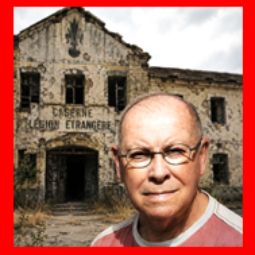
It was in June 2023 that my comrade Jean-Pierre Raoul, a retired battalion commander, first told me about his discovery, through his reading*, of deadly battles in the Mouang Khoua region of northern Laos involving the 2nd Battalion of the 3rd Foreign Infantry Regiment (3e REI) under the command of Major Cabaribère, a column of the 5th Tabor under Major Vaudrey, three companies of Laotians, and a company of auxiliaries. He decided to try to shed light on this affair by visiting the site 70 years later. To do so, he compiled a very complete and solid file on the dramatic events that led to the disappearance of the 2nd Battalion of the 3rd REI, as well as significant elements of the 5th Tabor and the Laotian Chasseurs units.
This is how two lines in a book led to a journey in the footsteps of our predecessors. Joining me were my comrade Raoul (we served together in three regiments and are from the same graduating class), General Jean Baillaud (Paratrooper) (General Rollet class), with whom I completed a year of practical training at the EAI (Air Force Training School), Corporal Jacky Biaugeaud, president of the FACS Thailand (Army Veterans Association), and myself. An administrative issue prevented Jean-Luc Martin, a Colonel (General Rollet class), from joining us. They all live in Thailand and had the good sense to invite me—I live in Portugal—to participate in this commemorative expedition.
This account aims to describe this trip while recalling the historical context of the time, established thanks to the war diary of the 2nd Battalion, 3rd Foreign Infantry Regiment (II/3e REI) and the report written by Commandant Cabaribère himself. We, former legionnaires, had never heard of this affair. January 21, 2024
After a long journey, I arrived in Vientiane, the capital of Laos, at a hotel where I was waiting for my companions to arrive the next day.
January 22, 2024
In the afternoon, we met at a lovely hotel, La Seine, on the banks of the legendary Mekong River. I hadn't seen Baillaud for 43 years, Raoul for about 30, and I was meeting Jacky Baillaud for the first time.
The walk across the city between the two hotels revealed a distinctly Eastern cleanliness and the impressive electrical and telephone wiring of this capital. That alone should make it a World Heritage Site! Read more...
It was in June 2023 that my comrade Jean-Pierre Raoul, a retired battalion commander, first told me about his discovery, through his reading*, of deadly battles in the Mouang Khoua region of northern Laos involving the 2nd Battalion of the 3rd Foreign Infantry Regiment (3e REI) under the command of Major Cabaribère, a column of the 5th Tabor under Major Vaudrey, three companies of Laotians, and a company of auxiliaries. He decided to try to shed light on this affair by visiting the site 70 years later. To do so, he compiled a very complete and solid file on the dramatic events that led to the disappearance of the 2nd Battalion of the 3rd REI, as well as significant elements of the 5th Tabor and the Laotian Chasseurs units.
This is how two lines in a book led to a journey in the footsteps of our predecessors. Joining me were my comrade Raoul (we served together in three regiments and are from the same graduating class), General Jean Baillaud (Paratrooper) (General Rollet class), with whom I completed a year of practical training at the EAI (Air Force Training School), Corporal Jacky Biaugeaud, president of the FACS Thailand (Army Veterans Association), and myself. An administrative issue prevented Jean-Luc Martin, a Colonel (General Rollet class), from joining us. They all live in Thailand and had the good sense to invite me—I live in Portugal—to participate in this commemorative expedition.
This account aims to describe this trip while recalling the historical context of the time, established thanks to the war diary of the 2nd Battalion, 3rd Foreign Infantry Regiment (II/3e REI) and the report written by Commandant Cabaribère himself. We, former legionnaires, had never heard of this affair. January 21, 2024
After a long journey, I arrived in Vientiane, the capital of Laos, at a hotel where I was waiting for my companions to arrive the next day.
January 22, 2024
In the afternoon, we met at a lovely hotel, La Seine, on the banks of the legendary Mekong River. I hadn't seen Baillaud for 43 years, Raoul for about 30, and I was meeting Jacky Baillaud for the first time.
The walk across the city between the two hotels revealed a distinctly Eastern cleanliness and the impressive electrical and telephone wiring of this capital. That alone should make it a World Heritage Site! Read more...
Literary Explorations
The 18
Based on the true story of Fernando Magellan's voyage
A graphic novel series by Louis Perez y Cid.
In 1519, 240 men set sail from Seville. Seasoned sailors, inexperienced foreigners, men haunted by their past, and children.
Five ships embarked for the Ocean Sea under the command of Fernand Magellan.
No one knew their true destination. Two years' worth of provisions were on board.
The maps stopped where their route began. They set off into the void.
Three years later, only one ship returned, carrying several tons of cloves and… 18 survivors.
Captain Juan Sebastián Elcano completed the first circumnavigation of the globe in history.
But between departure and return, there was no glory.
There is hunger, fear, betrayal, cold, suffocating heat, mutiny, fighting, and blood—lots of blood.
This is not a legend. It's worse.
All this is happening above our heads
The Moons of the Solar System.
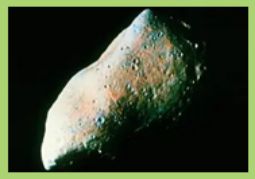
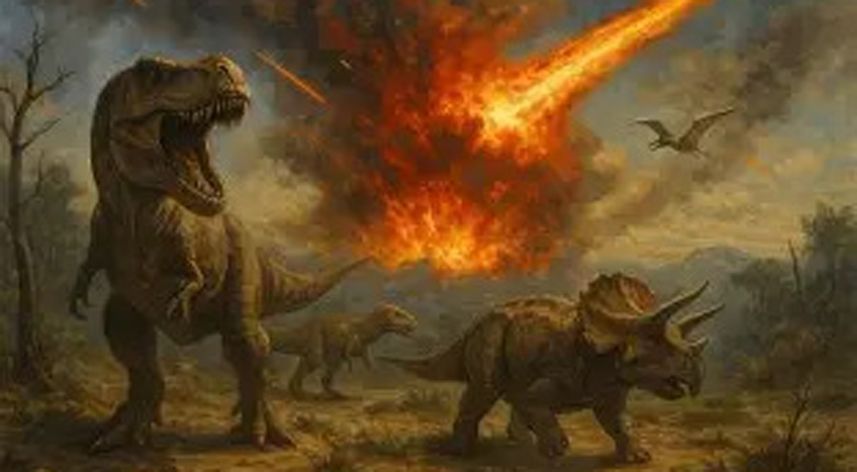
For a very long time, we only spoke of one Moon, our own, Earth's Moon. Certainly, other bodies orbiting certain planets were known, such as those orbiting Jupiter since Galileo discovered them in 1609, but humans called them "satellites."
Since the launch of numerous man-made satellites of all kinds—communication, weather, military, etc.—the term "satellite" has been applied to them, and the natural satellites of the planets have taken the official name "moon."
Are there moons around all the planets?
Of the eight planets, only six have them.
Indeed, Mercury and Venus have no moons.
Earth has one, 3,476 km in diameter. Earth is considered the poor relation in terms of the number of its moons, as the other planets have plenty... Read more...
Indeed, Mercury and Venus have no moons.
Earth has one, 3,476 km in diameter. Earth is considered the poor relation in terms of the number of its moons, as the other planets have plenty... Read more...
Don't miss any of our publications and creations!
WHO WE ARE
Légion’Arts is an independent publishing house created by former legionnaire artists: preserving and sharing the memory of the Foreign Legion through authentic, human, and inspiring works. Every legionnaire has a voice. With Légion’Arts, these stories become a collective memory, accessible to all.