





All this is happening above our heads
Weather in Space
By Michel Gravereau
With our special instruments equipped with H-alpha, we can admire these solar flares erupting from our star. Small, medium, or large, sometimes even gigantic, they travel in all directions, including, of course, that of our planet, Earth.
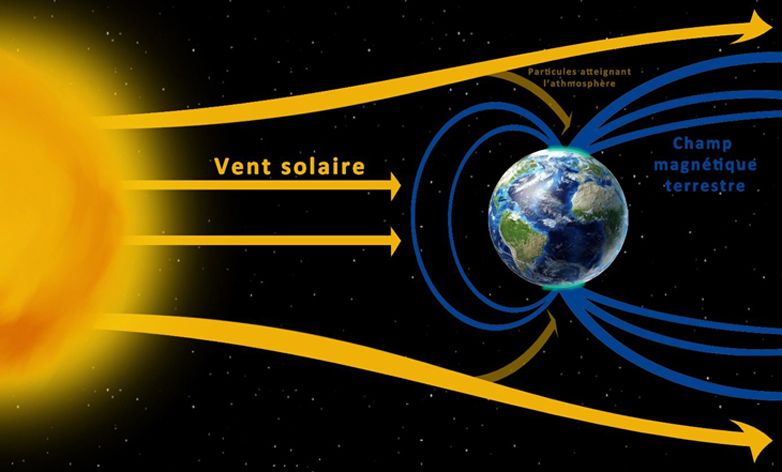
Astrophysicists have given them the name "solar wind." It is composed of all possible radiation: alpha, gamma, X-rays, and radio waves. Light is also part of this procession; before violet, there is ultraviolet, which tans our skin; after red, there is infrared, which warms us during our exposure to the Sun.
Gigantic, I said. Because our star can unleash eruptions beyond the average. These solar storms are the result of titanic explosions of matter that represent the equivalent of several million nuclear bombs. This stream of particles is ejected from the Sun at speeds of up to 2,000 km per second, or more than 7 million km/h. Can you top that?
We are then witnessing a coronal mass ejection (CME). And if Earth is in its path, this cloud of electrically charged particles will reach us in a short time, within 1 to 5 days.
Are we therefore constantly under threat from these solar flares? It seems not, because statistics from observations of our star have established that our Sun follows an 11-year activity cycle. This means that it reaches a peak of significant activity every 11 years: 1969, 1980, 1991, 2002, 2013, and 2024.
During these activity peaks, the Sun can experience up to ten tremors per day.
You guessed it, it's starting to decrease in intensity and will reach its lowest point in five years. I'm willing to bet that then, if I'm still around, I'll have a lot of trouble showing my audience the interesting solar flares and sunspots, which are areas cooler than the rest of the Sun's surface.
The obvious question for astronauts on the International Space Station and for future space travelers hoping to set foot on Mars is this: are we protected from these cosmic rays, which are so harmful to humans that they can become lethal after prolonged exposure?
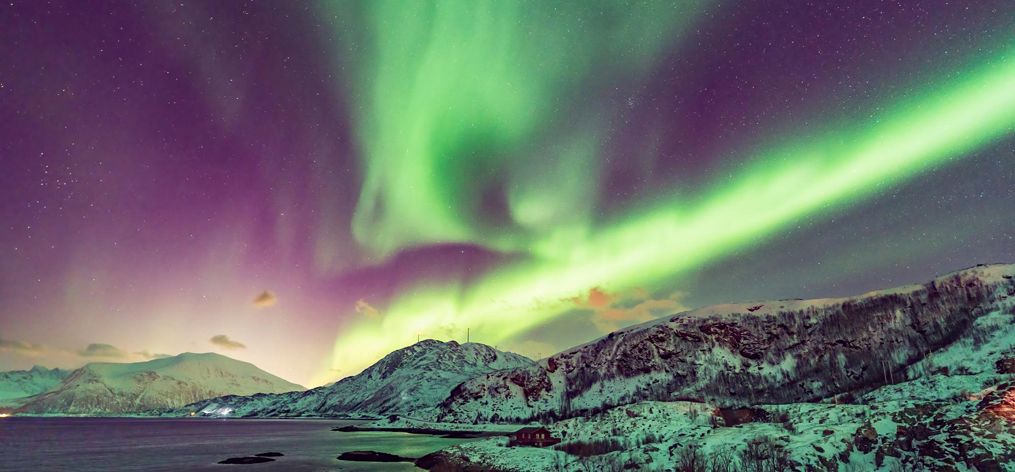
The answer, of course, is no. Hence the current impossibility of considering a long journey beyond Earth without having found a way to protect ourselves. Because we have this unique advantage on Earth: our atmosphere protects us from this cosmic poison. With the exception of radio waves, light, and ultraviolet rays that give us our tan, everything else is blocked. This invisible shield also deflects particles ejected by the Sun. However, weakened around the South and North Poles, it cannot prevent them from reaching the upper layers of our atmosphere. Highly charged with energy, these particles react with the nitrogen and oxygen atoms that make up our atmosphere, creating the greatest natural spectacle we are treated to: the polar auroras (aurora borealis in the North, aurora australis in the South).
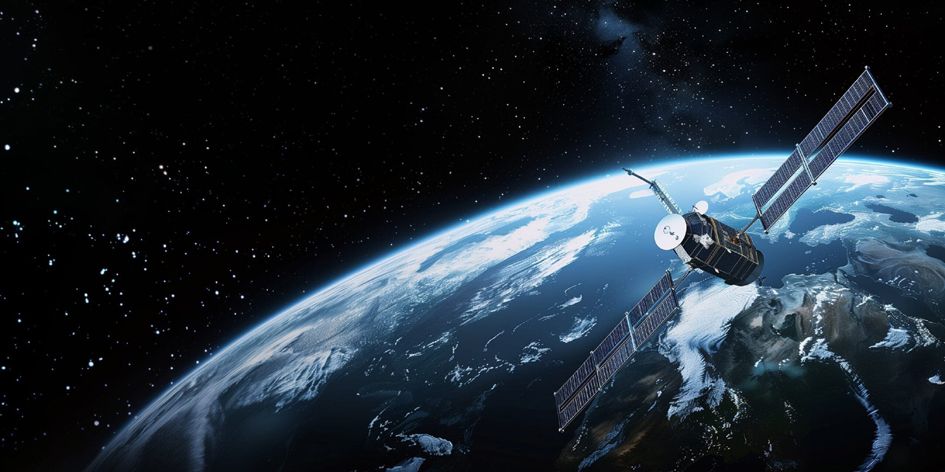
These solar storms can also damage satellites orbiting our planet. This is far less pleasant than the auroras. SpaceX can attest to this. In 2022, about forty of its satellites were irretrievably lost due to a powerful solar flare. In this hyper-connected world, one can scarcely imagine what such an event would be like if the satellites carrying information for banks, GPS, emergency services, transportation, and telecommunications were destroyed or severely damaged by a massive solar storm.
In March 1989, a gigantic solar flare left millions of Quebecers (Canada) without electricity for nine hours. The overloaded power grid shut down as a safety precaution.
But the largest known solar storm is believed to have occurred in 1859. It produced numerous auroras, visible even in the tropics! It caused significant damage to the communication networks of the time, the telegraphs. Several telegraph operators were electrocuted.
Looking ahead to better understand the heart of our star, various organizations are studying the Sun in order to predict, if possible, its unpredictable behavior and protect our infrastructure. In France, since 2018, OFRAME, the French Organization for Applied Research in Space Meteorology, has been providing data and services to organizations such as civil aviation, banks, insurance companies, and the armed forces.
The Sun, this powerful force, can both enchant us with its gentle warmth and the auroras it brings, but it can also partially destroy the very foundations of our most modern installations, like satellites.
True to our way of life, let us take only the best and admire, whenever we can, its radiance that colors our surrounding nature, like an Impressionist painter playing with all the hues of their palette.