







Letter from My Garden 18
History repeats itself endlessly… but for how long?
Declaration:
Veterans reject and condemn:
- The blind conservatism or indifference of those who believe it possible to maintain certain privileges, to freeze economic and social development in its current state.
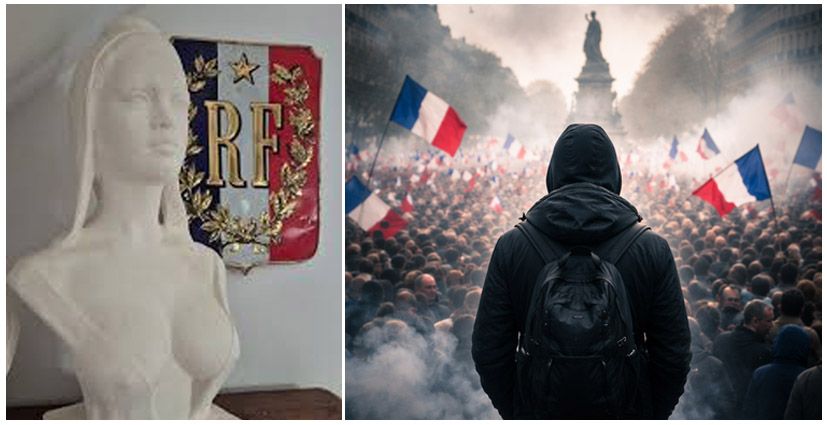
- The incitement (not the provocation) to violence, hatred, and passions.
- They unanimously agree to cry out to the nation, in these grave times it is going through, that the French, by dividing themselves, are making a mistake and would be guilty of a crime by... Read more...

The Legion Unvarnished
The Pirates of the Tuamotu Archipelago in Polynesia
By Christian Morisot
Our company in Mururoa was commanded by Captain Jean-Paul Blanchard. The company's color was black, displayed on the flagpole as a black pennant, and this was also reflected on our sports T-shirts.
I was a lieutenant, head of the 2nd section, and we were looking for ways to transform our shelter into a more pleasant place where we could gather after grueling days under the blazing sun on our work sites, and also during the heavy tropical rains.
The idea came to me to create an original T-shirt that we would sell. I started with several essential elements:... Read more...
Letter from My Garden 17
My Dear Friend,
I have the discerning eye of an octogenarian, a man with a memory brimming with experience, having reached the end of a long and arduous journey. This leads me to present myself with smooth hands, the hands of a bourgeois, refined just enough to project a certain culture, sometimes to the point of being irritating.
In fact, I have lived my life firsthand, learning to live in the Foreign Legion in a way quite different from that refined bourgeois I mentioned. I learned there that our society either shelters itself from men or accommodates itself to them. For me, adapting to life as a legionnaire became familiar, silent when necessary, capable of both nonchalance and gravity... Read more...
The Legion Unvarnished
The Legion Section of the Auriol Cemetery
Early 1999. The handover of responsibilities for the management of the Legionnaire's Home in Auriol between Captain (ret.) Cattaneo and myself was drawing to a close. As is customary when assuming a new responsibility, I wanted to learn about all aspects of the Home's operations, including those concerning its former residents after their passing. I therefore asked him where the deceased residents were buried.
At that time, the Auriol cemetery had only two six-person vaults. The first was already fully occupied; the second had been converted into an ossuary. Consequently, when one of our former residents passed away, they were generally taken to the Saint-Pierre Cemetery in Marseille, where the municipality had reserved a plot for the dead of the Foreign Legion, under the responsibility of the Mutual Aid Center... Read more...
Letter from My Garden
The Forbidden City of the Forest
It was early afternoon. I was still reeling from the frustration of having repeatedly driven past a stretch of highway in front of this forest, which I suspected was strange. My curiosity was running wild; I couldn't resist any longer, I had to see it for myself…
So, on a beautiful sunny day, and with nothing planned in my retirement schedule, I decided to head towards this mysterious and alluring place, to explore it and, why not, get lost in it… Once there, I followed the small paths, crossed a few streams, and continued my unusual journey until I came to a bench, weathered by time, hidden in the shade of an old oak tree.
Sitting for a moment on this dilapidated bench, I thought it must have been there since time immemorial; its shape belonged to another era, the green paint covering it had peeled away in places, the iron frame was rusted, and the exposed wood had taken on a rather strange color. As I settled down, I felt the bench's legs sink slightly into the soft earth, and I carefully, without any sudden movements, took a camera out of my bag. The moment was magical; I couldn't leave this place without capturing its image... Read more...
Letter from My Garden 13
Philosophy in Two Strokes of the Pen
From Charlie Brown to Rantanplan, when comics illuminate the human condition.
“Since childhood, I have remained a devoted fan of comics."
Comics are capable, in three words and two strokes of the pen, of expressing why there is something rather than nothing, whether one must die or live, and whether life truly has meaning. A good, inspired graphic novel allows the life of its hero to contract and expand like an accordion, finding its own paths to questions one might think are reserved for philosophy. A world of dreams and fantasies, of the absurd and the nonsensical, these are all images that allow drawing to offer genuine existential anxieties.
Charles Schulz declared his love for the “Peanuts” and his gratitude towards these “poets of childhood, these children like “Charlie Brown” who resonate with us deeply because they are, in a certain sense, monsters.” The word is out: we are in the presence of a monstrous, childlike presentation of all the neuroses of a modern citizen of our civilization. Everything is there: the frustrated struggle for success, the quest for sympathy, loneliness, arrogance, passive consent, and neurotic protest. Read more...
Comics are capable, in three words and two strokes of the pen, of expressing why there is something rather than nothing, whether one must die or live, and whether life truly has meaning. A good, inspired graphic novel allows the life of its hero to contract and expand like an accordion, finding its own paths to questions one might think are reserved for philosophy. A world of dreams and fantasies, of the absurd and the nonsensical, these are all images that allow drawing to offer genuine existential anxieties.
Charles Schulz declared his love for the “Peanuts” and his gratitude towards these “poets of childhood, these children like “Charlie Brown” who resonate with us deeply because they are, in a certain sense, monsters.” The word is out: we are in the presence of a monstrous, childlike presentation of all the neuroses of a modern citizen of our civilization. Everything is there: the frustrated struggle for success, the quest for sympathy, loneliness, arrogance, passive consent, and neurotic protest. Read more...
Letter from My Garden 12
The past doesn't repeat itself
Why we must learn to look ahead rather than behind.
"If I had known, I wouldn't have come."
An awkward phrase in broken French, but one that, in the public eye, conveys its intended meaning.
I appeal to "the muses of the past": Piaf, no, nothing at all...
Life is made up of acceptances and renunciations that don't always depend on the person experiencing them. The coup, so often evoked with the same song, is the very illustration of an acceptance that isn't necessarily a choice.
Sometimes life chooses for us, and therefore any regret is useless, as it can't change the past. This can indeed turn into unease, but we can't always live looking back as if to protect ourselves from a pursuit initiated by our old demons. As I mentioned again today in a message to a friend, Stalin said that history doesn't repeat itself.
I think that individual history doesn't repeat itself either. At most, it should allow us to right the ship so as not to make the same mistakes… so, in light of our experiences, let's get back on course whenever we feel our ship is drifting and straying from the right path. This will probably save us too many regrets and allow us to hum: "No, nothing at all, no, I regret nothing."... Read more...
Letter from My Garden.
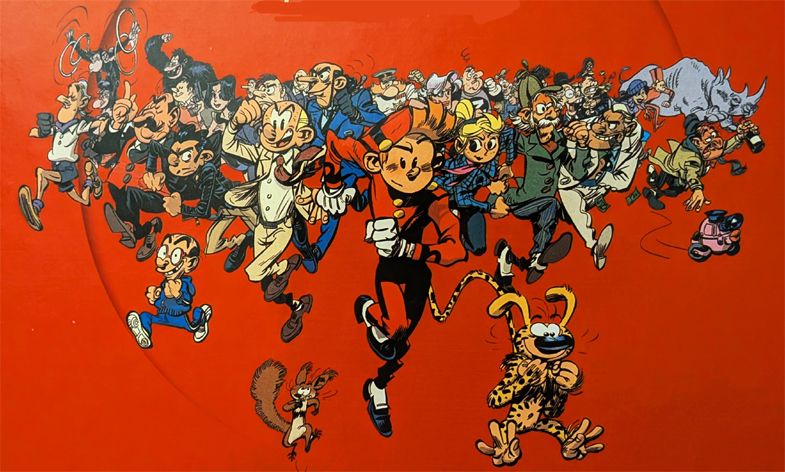
Spirou, the Undiminished Breath of Our Childhood Dreams
By Christian Morisot
At the heart of our childhood lie the great adventures fueled by fantastical stories, disseminated through comics. We all imagined an extraordinary life and destiny through our reading. Our heroes feared nothing, always managing to survive in the most perilous conditions imposed upon them.
Thanks to them, we developed our imaginations and learned how to face danger and adversity. Read more...
The Legion Unvarnished
The White Kepi of My Childhood
By Christian Morisot
“As a young boy, every year on July 14th, I would sit with my father in front of the television to watch our army march by. From this annual event, I have kept, hidden deep in my memory, the vivid image of that splendid avenue where the band of the Republican Guard, with all its brass and drums, led the military schools, the infantrymen, the light infantry, the colonial infantry, and, once they had passed, a great, impressive emptiness would settle in, an august silence would fill the air…
Then, in good years, for there were bad years, the well-rehearsed notes of the famous Legion refrain, “Le Boudin” (The Sausage), could be heard in the distance. At that moment, everyone would raise their heads and look towards the “immense Arch.” It was the Legion arriving. There it was, majestic in its Impeccable in its bearing, imperturbable in its demeanor. Read more...

Guy Paris,
Art in the Service of Legionary Fraternity
By Christian Morisot
Mr. Guy Paris entered the Institution for Invalids of the Legion in 1957 for a short period, enough time to teach former legionnaires a pastime that would allow them to forget their serious physical and moral wounds through an occupational activity.
The adventure lasted forty-two years, during which Mr. Paris demonstrated remarkable and noteworthy integration. He wrote a book about his years spent at the Captain Danjou estate in Puyloubier. This civilian observer teaches us a great deal about the directors of the Institution who, at different times, left their mark on this remarkable house where active solidarity is not an empty phrase.
Mr. Guy Paris entered the Institution for Invalids of the Legion in 1957 for a short period, enough time to teach former legionnaires a pastime that would allow them to forget their serious physical and moral wounds through an occupational activity.
The adventure lasted forty-two years, during which Mr. Paris demonstrated remarkable and noteworthy integration. He wrote a book about his years spent at the Captain Danjou estate in Puyloubier. This civilian observer teaches us a great deal about the directors of the Institution who, at different times, left their mark on this remarkable house where active solidarity is not an empty phrase.

Excellent artists died in poverty, while others, mediocre, achieved worldwide, social, and financial success. The young man, fresh out of military service, didn't ask himself these kinds of questions about his future as an artist. For him, living his art was a joy, even if it led him down dark, dead-end paths where the light of the mind shines only faintly and where, sometimes, inspiration results in artistic extravagances. Life, from a young age, had taught him that to live from his art, he had to relinquish some of his creative freedom in favor of certain constraints—an essential necessity for survival in a society where living on the margins is rarely, if ever, tolerated... Read more...
The Legion Unvarnished 6
Madame Zaza of Marseille
While waiting for the obligatory check-in at the various offices where our identity cards were gradually being filled out before our departure for training, the "downtime" was spent on small community service projects for the benefit of the Legionnaire community in the various locations where it was stationed.
One day, like any other, I was selected to serve as a "duty" at the Malmousque rest center for soldiers on leave in Marseille, a short distance from the lower Saint Nicolas fort, on the seafront, near the Corniche Kennedy.
Shortly before arriving at my destination, at the corner of the Traverse Sainte Hélène, a strange facade with tinted windows and a curious sign caught my eye: "Madame Zaza of Marseille." Seeing a few elegant and beautiful women emerge, all very chic and refined, was enough to ignite my imagination, which took a prodigious leap, setting a fire of dreams ablaze within me, a fire that the upbringing I received from my parents could barely quell… Read more...


Fragments of the Legion
This isn't quite a history of the Legion. It's a collection of anecdotes.
These pages recount situations, atmospheres, and men.
Simple, absurd, tense, or unexpected moments. There's commitment, mistakes, and silences too. And sometimes, yes, absences.
Nothing is embellished. Nothing is resolved either. It's told as it comes.
Those who know will recognize. The others... will see for themselves.
The Patio of the 1st Foreign Regiment
How a Backyard Became a Symbol of the Legion Spirit
"I want people to understand, as soon as they pass through this door, that they are entering a regiment." Colonel Blevin, Commanding Officer of the 1st Foreign Regiment
Towards the end of the 1990s, the colonel had a daily frustration. It didn't come from headquarters, inspections, or even the budgets, which, in the army, is practically a miracle... Read more...
Towards the end of the 1990s, the colonel had a daily frustration. It didn't come from headquarters, inspections, or even the budgets, which, in the army, is practically a miracle... Read more...
Letter from My Garden 10
When the Subway Becomes Human Again
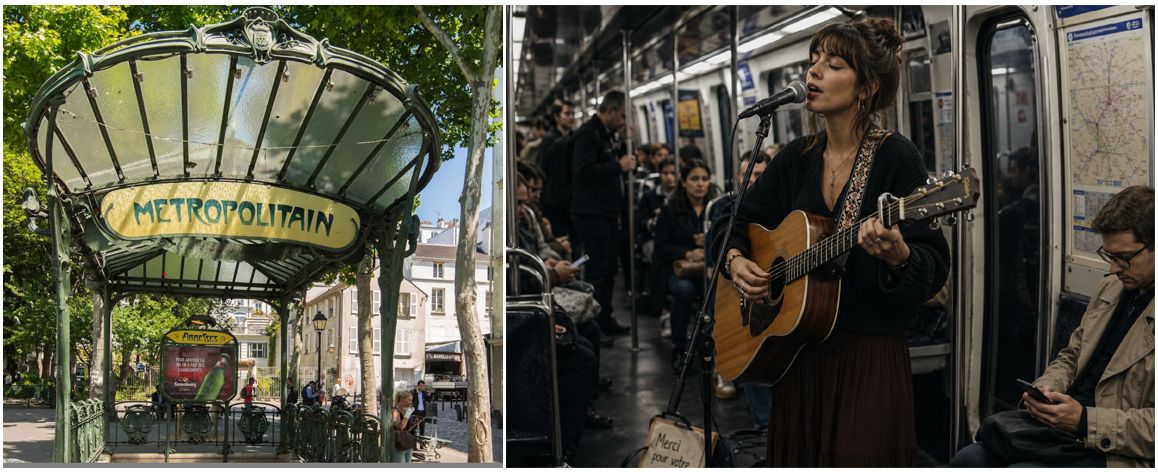
Recently, I found myself traveling on the Paris Metro. I got the distinct impression that everyone in the cars was giving each other the cold shoulder, avoiding eye contact, and silence reigning, except, often, for noisy groups clearly trying to annoy the other passengers.
During a stop, a woman of indeterminate age, accompanied by a portable sound system, entered the carriage. Read more...
The Legion Unvarnished 5
My father told me:
Returning to France after more than three years in Madagascar, during a leave, my father said to me: “You see, my son, when I saw the Germans during the war, I thought of the young men for whom the words ‘Nazism, Fascism, Communism, Radicalism’ were meaningless terms with indeterminate, vague values.
These soldiers, with their disturbing yet fascinating discipline, were handsome, strong, proud, and smiling; they were undeniably made for victory, not defeat. They had everything it took to attract an athletic young man.
After the Liberation, many of these young men who had been seduced into joining the SS or the LVF were shot; they completed a picture where scores were settled without mercy and where even women who had ‘colluded’ with the Germans were publicly shorn.
Their enlistment was the consequence of a complete lack of education.” Politically, it took very little for them to enlist, go fight, and become those fine, proud, and valiant soldiers themselves. A few resounding pronouncements, a different environment, a different circle of friends—very little indeed—and that's how heroes and traitors were made, or at least those who ended up being labeled as such, recruited from among the same naive and sincere young men.
Haven't you taken the wrong path, son?... Read more...
Camerone
On the occasion of Camerone, a pivotal moment in the tradition of the French Foreign Legion, this text by Antoine Marquet offers a close reading of the command's communication. Through an analysis of the symbols, decorations, and figures highlighted, he examines the evolution of the Legion's narrative in light of its heritage.
Louis Perez y Cid
Between Tradition and Evolution of the Foreign Legion
By Antoine Marquet.
Communication from General Cyrille Youchtchenko, Commander of the French Foreign Legion.
"We belong to a generation that has once again decorated our flags, whether with citations, medals – including the recently decorated 5th Foreign Regiment – or fourragères, awarded in recognition of the individual citations earned by each regiment. We have ten 'marshals' among our non-commissioned officers. Therefore, to symbolize these 40 years of operations, I decided to ask Warrant General Thierry Burkhard, who served from 1986 to 2025, to carry Captain Danjou's hand in Aubagne. He accepted.
He will be accompanied by:
- Chief Warrant Officer (Ret.) Jörgen Madsen, who, following in the footsteps of his compatriot Prince Aage of Denmark, joined the Legion in 1955 ... Read more...
Communication from General Cyrille Youchtchenko, Commander of the French Foreign Legion.
"We belong to a generation that has once again decorated our flags, whether with citations, medals – including the recently decorated 5th Foreign Regiment – or fourragères, awarded in recognition of the individual citations earned by each regiment. We have ten 'marshals' among our non-commissioned officers. Therefore, to symbolize these 40 years of operations, I decided to ask Warrant General Thierry Burkhard, who served from 1986 to 2025, to carry Captain Danjou's hand in Aubagne. He accepted.
He will be accompanied by:
- Chief Warrant Officer (Ret.) Jörgen Madsen, who, following in the footsteps of his compatriot Prince Aage of Denmark, joined the Legion in 1955 ... Read more...
The Legion Unvarnished 4
Memories of French Guiana
By Christian Morisot
Letter to a friend in mainland France.
I must admit that I exaggerated the story somewhat, and it is, I humbly confess, more my fondness for a good tale than pure mythomania, make no mistake.
Nevertheless, even today, I believe this text is true, and all those who have experienced the "green hell" should be able to attest to the reality of what I've said.
It's true that this excerpt from a letter to a friend makes me dream of French Guiana, which remains a land of exceptional adventure in the active life of a legionnaire.
Enjoy your reading. ...Read more...
Nevertheless, even today, I believe this text is true, and all those who have experienced the "green hell" should be able to attest to the reality of what I've said.
It's true that this excerpt from a letter to a friend makes me dream of French Guiana, which remains a land of exceptional adventure in the active life of a legionnaire.
Enjoy your reading. ...Read more...

The Legion Unvarnished 3
Rear Base – Madagascar
The regiment was conducting maneuvers in the Sakaramy region, the stronghold of the 3rd Foreign Infantry Regiment squadron in Madagascar.
I had just been promoted to corporal and, to demonstrate my leadership abilities, I was ordered to manage, at the head of a group, a rear base comprised of cooks and medics, to accommodate the entire regiment at the end of the maneuvers, allowing the legionnaires to recover physically after a long march.
Thus, we went to the cocoa forest of Anbage, having received permission from the landowner to set up camp there.
The place was peaceful, almost idyllic, but, on the other hand, we were constantly attacked by swarms of large female mosquitoes that bit us through our combat uniforms.
Our commanding officer had strictly forbidden us from tailoring our fatigues, as was common practice among our paratrooper comrades, convinced that they ended up looking like "ballerinas"... Read more...
The Legion Unvarnished 2
By Christian Morisot
Old age is, as everyone knows, the twilight of life. It is now or never, not to write one's will, but to pass on a written legacy, drawing on the memories and "eclipses" that have marked our lives. For us, legionnaires, it is also the time to take stock of these years spent in service to the Institution, which occupied the greater part of our youth.
One observation is inescapable: we are the heirs of these veterans with their remarkable destinies. In all objectivity, and without wishing to tarnish the image of this magnificent Institution, we simply wish to present—without naivety—certain aspects little known or obscured by the writers who have recounted the history of the Legion.
The motivation for such a sharing is clear: to draw upon the writings accumulated during our service to reveal, subtly woven throughout, reflections and lived anecdotes. For if no other military corps has so captivated the popular imagination, we, the living witnesses, are its only remaining witnesses. Currently, our website primarily reflects the reactions of foreign officers, although it is open to all veterans—as our comrade Michel Gravereau demonstrates to us each week.
In reality, the Legion is composed of men fleeing their countries or who have reached their breaking point—a common stereotype—but for a thousand other reasons, as there are as many motives as there are legionnaires. For many foreigners, whose national salary barely exceeds a few hundred euros, the pay, aligned with the French minimum wage, is a godsend. These young men, in excellent health, enlist and push their endurance to the extreme limits. All contribute to making the history of the Legion this dramatic and mysterious saga, of unparalleled exoticism... Read more...
Old age is, as everyone knows, the twilight of life. It is now or never, not to write one's will, but to pass on a written legacy, drawing on the memories and "eclipses" that have marked our lives. For us, legionnaires, it is also the time to take stock of these years spent in service to the Institution, which occupied the greater part of our youth.
One observation is inescapable: we are the heirs of these veterans with their remarkable destinies. In all objectivity, and without wishing to tarnish the image of this magnificent Institution, we simply wish to present—without naivety—certain aspects little known or obscured by the writers who have recounted the history of the Legion.
The motivation for such a sharing is clear: to draw upon the writings accumulated during our service to reveal, subtly woven throughout, reflections and lived anecdotes. For if no other military corps has so captivated the popular imagination, we, the living witnesses, are its only remaining witnesses. Currently, our website primarily reflects the reactions of foreign officers, although it is open to all veterans—as our comrade Michel Gravereau demonstrates to us each week.
In reality, the Legion is composed of men fleeing their countries or who have reached their breaking point—a common stereotype—but for a thousand other reasons, as there are as many motives as there are legionnaires. For many foreigners, whose national salary barely exceeds a few hundred euros, the pay, aligned with the French minimum wage, is a godsend. These young men, in excellent health, enlist and push their endurance to the extreme limits. All contribute to making the history of the Legion this dramatic and mysterious saga, of unparalleled exoticism... Read more...
The Legion Unvarnished
Literature and the Legion
By Christian Morisot
The Legion has its own literature. Like the epic poems of the Middle Ages, it has inspired the heroic and adventurous characters we know. Since its creation in 1831, literature about the Legion has traversed so many lands, won so many battles, inspired so many sacrifices, created so many legendary figures, and given refuge to so many human beings that it deserves to have its own stories, novelists, and poets.
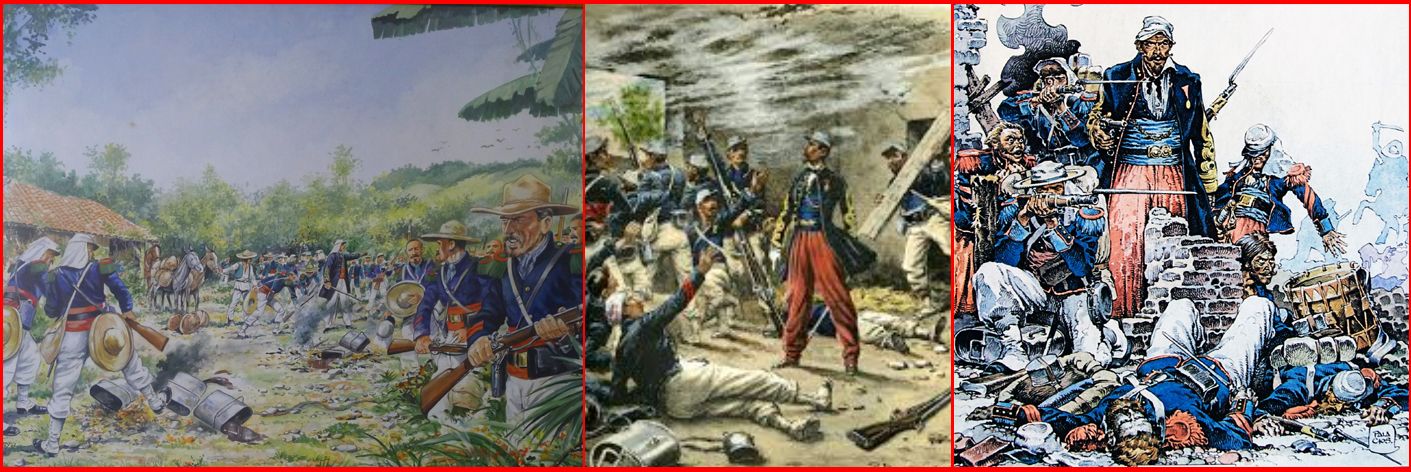
Much has been written about "Camerone," which is on every legionnaire's priority list this month. It is also true that the sacrifice of these legionnaires, overwhelmed by a Mexican horde, is very moving to read, but many other less well-known and less celebrated events also took place, and historians find in them a sense of discovery and sincerity, a striking realism that often makes one feel as if they were there themselves…
It's like a firsthand account…
Thus, these stories and anecdotes are published in a much-appreciated simplicity of style. These works are essential witnesses, and for many of them, they do not stray too far from the reality of the events as they are revealed in their writings.
The place that the Legion occupies in the realm of literature must be recognized because it honors one of the finest expressions of the human spirit... Read more...
The Legion has its own literature. Like the epic poems of the Middle Ages, it has inspired the heroic and adventurous characters we know. Since its creation in 1831, literature about the Legion has traversed so many lands, won so many battles, inspired so many sacrifices, created so many legendary figures, and given refuge to so many human beings that it deserves to have its own stories, novelists, and poets.
Much has been written about "Camerone," which is on every legionnaire's priority list this month. It is also true that the sacrifice of these legionnaires, overwhelmed by a Mexican horde, is very moving to read, but many other less well-known and less celebrated events also took place, and historians find in them a sense of discovery and sincerity, a striking realism that often makes one feel as if they were there themselves…
It's like a firsthand account…
Thus, these stories and anecdotes are published in a much-appreciated simplicity of style. These works are essential witnesses, and for many of them, they do not stray too far from the reality of the events as they are revealed in their writings.
The place that the Legion occupies in the realm of literature must be recognized because it honors one of the finest expressions of the human spirit... Read more...
Letter from My Garden 9
“The Secret Agreement”
After several years of losing touch, a twist of fate brought us together again, and naturally, we shared a few confidences, particularly about the good times we spent together in the Legion.
A passionate painter, Paulo lamented, undeniably, that his work hadn't brought him the recognition he desired and felt he richly deserved. He had recently been reborn after the success of an exhibition, but the visitors' reactions unsettled him more than he should have. Somewhat withdrawn from the world, he had decided to be self-sufficient. Then one day, while looking at one of his canvases, he wondered: “Is it really worth doing this? Why on earth do I paint these pictures? Does painting help me with anything other than distracting myself and passing the time?”
These thoughts disrupted his work to such an extent that he stopped painting altogether, and there was our friend, wandering aimlessly, guided by chance, frequenting all sorts of bars. Feeling lost and unmotivated, he wondered why he had ever started painting. He fondly remembered that he had been driven by the desire to establish a kind of relationship, a beautiful communication, between himself and the world. By painting his figures and landscapes, Paulo sought to express his inner self and hoped that those interested in his work would recognize his innermost being, hidden within him, so that they would see him as a man imbued with a new vitality and generosity... Read more...
Letter from My Garden 8
Nicolas de Staël
Painter and former legionnaire
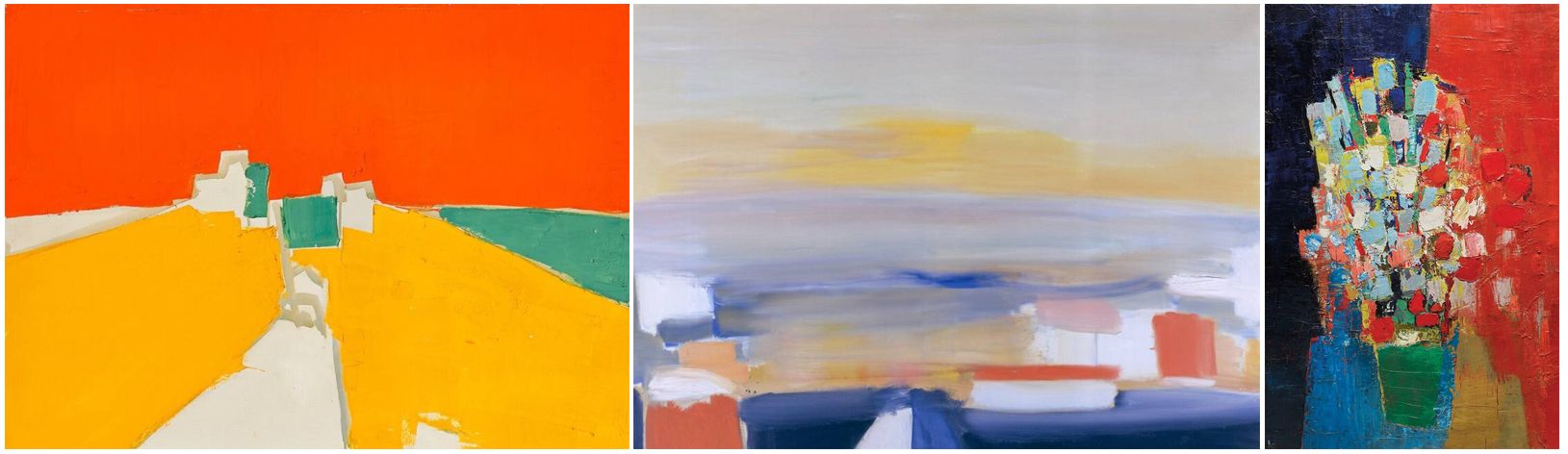
Nicolas de Staël, Baron Nikolai Vladimirovich Staël von Holstein in Russian, was born on December 23, 1913, and died on March 16, 1955.
In September 1939, he enlisted in the French Foreign Legion. On January 19, 1940, he was assigned to the depot of the foreign regiments in Sidi-Bel-Abbès, Algeria, and demobilized on September 19 of the same year.
The artistic career of this unique artist spanned fifteen years, from the end of his service in the Legion until his death by suicide. During these years, he created more than a thousand canvases influenced by Cézanne, Matisse, Van Gogh, Braque, Soutine, as well as the Dutch masters Rembrandt, Vermeer, and Seghers... Read more...
In September 1939, he enlisted in the French Foreign Legion. On January 19, 1940, he was assigned to the depot of the foreign regiments in Sidi-Bel-Abbès, Algeria, and demobilized on September 19 of the same year.
The artistic career of this unique artist spanned fifteen years, from the end of his service in the Legion until his death by suicide. During these years, he created more than a thousand canvases influenced by Cézanne, Matisse, Van Gogh, Braque, Soutine, as well as the Dutch masters Rembrandt, Vermeer, and Seghers... Read more...
Letter from My Garden 7
The danger of silence
When the majority watches and does nothing.
A very interesting text by Martin Niemöller, and also an interesting reflection from my friend Louis:
“You see, after this question concerning non-Muslim French people who cannot understand Islam, one observation becomes clear: At the beginning of the last century, we separated religion, then Christian, from the state, and until now, nothing could take precedence over the law.
Among Muslims, the discourse is quite different: nothing can take precedence over God, and the law comes second. That says it all. Thus, these believers cannot integrate, or else we are the ones who integrate into them…” ... Read more...
“You see, after this question concerning non-Muslim French people who cannot understand Islam, one observation becomes clear: At the beginning of the last century, we separated religion, then Christian, from the state, and until now, nothing could take precedence over the law.
Among Muslims, the discourse is quite different: nothing can take precedence over God, and the law comes second. That says it all. Thus, these believers cannot integrate, or else we are the ones who integrate into them…” ... Read more...

Letter from My Garden 6
Monet visits me
and explains a secret that cannot be seen without explanation
I remember the magnificent painting "The Gare Saint-Lazare." Installed at the Musée d'Orsay, I stood before this Impressionist work, mesmerized, trying to understand what I was ultimately seeing: a succession of impressions that shifted as I observed them, and the incomprehension that a simple movement on my part altered the colors…
I gazed in wonder at the gray of the smoke in the painting and understood that this smoke was not only gray…
In fact, it also shifted into a bright white or an intense black, sparingly illuminated by the yellow reflections of a spotlight. The gray of the smoke held an infinite number of variations. I was wondering how to define the color of smoke. Without hesitation, I answered that it was gray. Monet, however, depicted it in cobalt blue, in lead white... Read more...

Letter from My Garden 5
Letter from My Garden:
Louis is a man preoccupied with reflecting on everything that comes his way. On the website he manages, the texts follow, drawn from a collection of volunteer authors chosen and selected for the light they shed on the meaning and use of the key word: "freedom of expression." These readings offer immediate entry into a world of sensitive and imaginative motifs.
Each article offers a different perspective on the man, the legionnaire, his inspiration, his thoughts on literature, his intellectual commitments, his language. These words will serve as a key to understanding the avid readers and writers, the painters, the photographers, and many others. ... Read more...
Louis is a man preoccupied with reflecting on everything that comes his way. On the website he manages, the texts follow, drawn from a collection of volunteer authors chosen and selected for the light they shed on the meaning and use of the key word: "freedom of expression." These readings offer immediate entry into a world of sensitive and imaginative motifs.
Each article offers a different perspective on the man, the legionnaire, his inspiration, his thoughts on literature, his intellectual commitments, his language. These words will serve as a key to understanding the avid readers and writers, the painters, the photographers, and many others. ... Read more...

Letter from My Garden 4
A Glimpse of a Silent France
Thus spoke General Bigeard: “I am heartbroken for France!” I must admit that I find myself in the uncomfortable position of a worried observer, watching the world in turmoil around me and feeling a deep sorrow in my soul.
Never, ever, have I been truly interested in anything political. I have simply made a choice, more out of duty than conviction, and I have always placed my trust in the person who best represented my values... Read more...
The Old Man of Camp Kossei
By Jean-Marie Dieuze
We are in Chad, in N’Djamena, within the grounds of Camp Kossei, an airbase for the French forces since the 1960s. Early 1990s: the heat was oppressive, crushing everything, even certainties. I was deployed with the 2nd Foreign Parachute Regiment (2nd REP) during Operation Sparrowhawk.
I remember this old man as a discreet and singular presence. One of those faces you see every day without always knowing the name, the story, the origin.
We are in Chad, in N’Djamena, within the grounds of Camp Kossei, an airbase for the French forces since the 1960s. Early 1990s: the heat was oppressive, crushing everything, even certainties. I was deployed with the 2nd Foreign Parachute Regiment (2nd REP) during Operation Sparrowhawk.
I remember this old man as a discreet and singular presence. One of those faces you see every day without always knowing the name, the story, the origin.
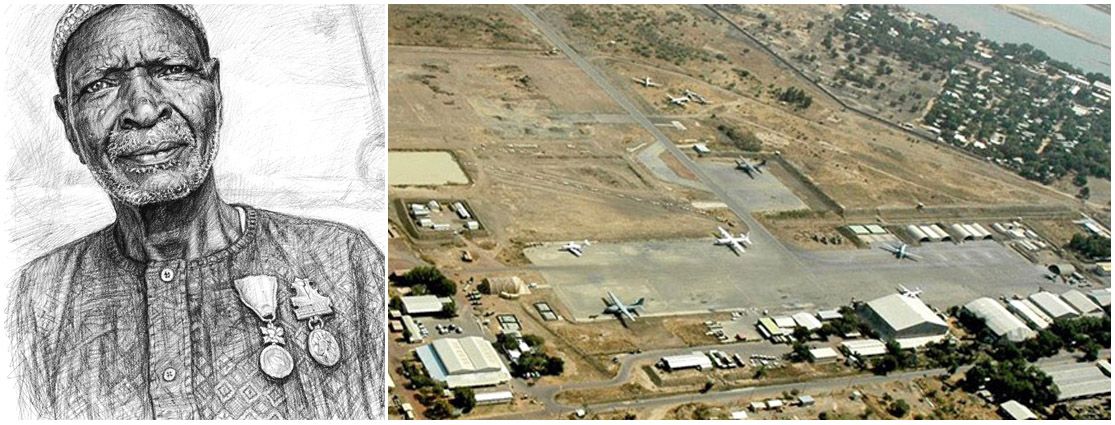
A humble local employee of the Military Post Office, he wore no rank insignia. What had once been a uniform jacket barely covered his tall, thin frame. On his chest, decorations with ribbons worn by time told a prestigious story. His sandals, as old as his memories, left no trace behind him. The sound of his voice would remain a mystery.
His dark face bore the marks of ancient, African, ancestral terroir. Baldness was gaining ground, leaving a few white tufts, bristling like scorched grass. Time had plowed his skin, life had branded it, war had left its scars. One didn't just see an old man: one read the passage of time... Read more...
His dark face bore the marks of ancient, African, ancestral terroir. Baldness was gaining ground, leaving a few white tufts, bristling like scorched grass. Time had plowed his skin, life had branded it, war had left its scars. One didn't just see an old man: one read the passage of time... Read more...
Letter from My Garden 3
A Little Flame
I can't say I particularly loved my short life in Paris. I too often experienced the solitude of the invisible man, alone in the crowd.
On the other hand, what I adored were the museum visits and certain exhibitions. It's also somewhat true that one can't really be bored in this great capital and that, ultimately, we are all a little bit Parisian, reminding us that every French life, even the most ordinary, leaves a mark on the city's memory.
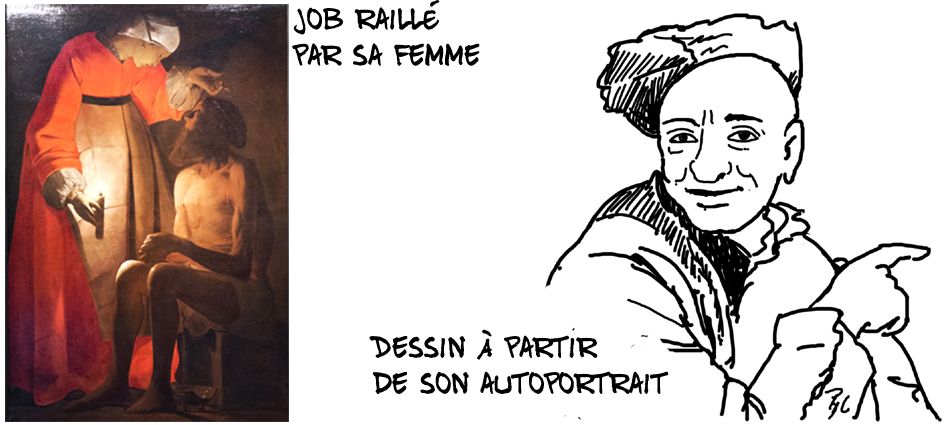
Thus, I gladly share a moment of great fascination as I lose myself in an exhibition before Georges de La Tour's painting entitled "Job Mocked by His Wife," an oil on canvas measuring 144.5 x 97 cm. Read more...
Letter from My Garden 2
One of the first letters from my garden:
"I wish to share a thought that came to me following the reactions of certain 'guardians of the temple' regarding a form of neutrality we should display in our writing, so as not to provoke the wrath of political leaders against our Institution… Even though I know that the articles published on the FSALE website are only read by a small number of 'visitors' who are presumably sympathetic; it is sometimes good to allow the expression of a personal feeling, a point of view, an anecdote, or even a reaction, and thus avoid any naiveté that would label us as 'sheep following the crowd'."
The article in question is by our fellow legionnaire, Captain Jean-Marie Dieuze, who shared a letter addressed to his children and grandchildren: "So that you don't become afraid too soon," which I offer for your reading below:
So that you don't become afraid too soon…
"My dear children,
My dearest grandchildren,
I am writing to you because you asked me a question that has haunted me ever since:
"Should we be afraid that there will soon be a third world war?"
I didn't know what to say at first. I understood, searching for my words like one searches for footsteps on a starless and moonless night, that this question wasn't just about a war that some seem almost to be hoping for.
It was saying something else, something deeper, perhaps more cruel: it was asking a father and a grandfather why he no longer knew—or hadn't been able—to protect his family in this world gone mad. Read more...
"I wish to share a thought that came to me following the reactions of certain 'guardians of the temple' regarding a form of neutrality we should display in our writing, so as not to provoke the wrath of political leaders against our Institution… Even though I know that the articles published on the FSALE website are only read by a small number of 'visitors' who are presumably sympathetic; it is sometimes good to allow the expression of a personal feeling, a point of view, an anecdote, or even a reaction, and thus avoid any naiveté that would label us as 'sheep following the crowd'."
The article in question is by our fellow legionnaire, Captain Jean-Marie Dieuze, who shared a letter addressed to his children and grandchildren: "So that you don't become afraid too soon," which I offer for your reading below:
So that you don't become afraid too soon…
"My dear children,
My dearest grandchildren,
I am writing to you because you asked me a question that has haunted me ever since:
"Should we be afraid that there will soon be a third world war?"
I didn't know what to say at first. I understood, searching for my words like one searches for footsteps on a starless and moonless night, that this question wasn't just about a war that some seem almost to be hoping for.
It was saying something else, something deeper, perhaps more cruel: it was asking a father and a grandfather why he no longer knew—or hadn't been able—to protect his family in this world gone mad. Read more...
Letter from My Garden
There was a time, in the 1970s, when our dear friend, the late Alain Gandy, wrote a much-loved column in "Képi Blanc" entitled "Letter from Elsewhere." Later, among those writing on the "Legionnaire-Officers" blog, Antoine Marquet, in a way, took up the mantle with his "Letter from Elsewhere," written from his residence in Portugal, the country of his origins and his new home in Lisbon. For my part, inspiration often strikes me when I find myself alone in my garden, letting my thoughts wander. So, I gladly offer this "Letter from My Garden," a way for me to talk about this and that, about what comes to mind and that I wish to share.
I remember my compulsory school readings from my early childhood: the writings of Voltaire, who asserted that "a garden is not simply a plot of land, but that it is essential to understand that cultivating one's garden is a metaphor, a rich and complex symbol...". Thus, cultivating one's garden meant turning to concrete, pragmatic action, far removed from abstract speculations and partisan ideologies in a world rife with misfortune. Leibniz, on the other hand, adopted an optimistic view, declaring his generous opinions, full of good intentions: "All is for the best in the best of all possible worlds..."—a harsh test where action becomes a refuge, a means, like any other, of finding, despite everything, a form of meaning, however questionable it may be in light of what the world offers us today. Read more...
I remember my compulsory school readings from my early childhood: the writings of Voltaire, who asserted that "a garden is not simply a plot of land, but that it is essential to understand that cultivating one's garden is a metaphor, a rich and complex symbol...". Thus, cultivating one's garden meant turning to concrete, pragmatic action, far removed from abstract speculations and partisan ideologies in a world rife with misfortune. Leibniz, on the other hand, adopted an optimistic view, declaring his generous opinions, full of good intentions: "All is for the best in the best of all possible worlds..."—a harsh test where action becomes a refuge, a means, like any other, of finding, despite everything, a form of meaning, however questionable it may be in light of what the world offers us today. Read more...
Freedom at the Price of Discipline
In this post, our friend Christian discusses the very diverse interest our site generates, depending on the significance of the controversy it raises. He also clarifies the topics that may or may not appeal to our readers, as well as the standards we have naturally imposed upon ourselves. To illustrate his point, he also touches on more sensitive issues for us former legionnaires and opens a line of thought on command within the French Foreign Legion.
Antoine Marquet
Antoine Marquet
Freedom of Thought and Clarification
By Christian Morisot
I am quite amused by the website traffic statistics for "Legion-arts." These statistics reflect the visitors' interest in the various topics covered, as evidenced by the significant fluctuations in traffic.
Despite this peculiarity, one point must be made clear: we never seek to boost our audience, and the volume of readers will never dictate the style or content of our writing. Our freedom comes at this price. Like painters (excuse the comparison), we paint our pictures according to our instincts and refuse to paint on commission. Read more...
I am quite amused by the website traffic statistics for "Legion-arts." These statistics reflect the visitors' interest in the various topics covered, as evidenced by the significant fluctuations in traffic.
Despite this peculiarity, one point must be made clear: we never seek to boost our audience, and the volume of readers will never dictate the style or content of our writing. Our freedom comes at this price. Like painters (excuse the comparison), we paint our pictures according to our instincts and refuse to paint on commission. Read more...
Between Loyalty and Change
This text seemed controversial to me, so I read it carefully. But no, Antoine isn't settling scores or lamenting a golden age. With the experience of nearly forty years of service in the French Foreign Legion, he observes what is changing today, sometimes subtly, in customs, symbols, and points of reference.
His remarks may surprise or disturb. They are nonetheless sincere. They pose a simple yet essential question: how can we evolve without losing what constitutes the soul of an institution?
This text doesn't offer a ready-made answer. It invites reflection, and that is precisely why I felt it deserved to be read.
Finally, the text leaves me with a sense of generational loneliness. The loneliness of someone who honestly wonders if he has become an "old fogey" or if he is simply one of the last guardians of a certain coherence. This is a worried but honest account, written not to condemn the present, but to remind us that all modernization has a symbolic cost, and that this cost deserves to be faced head-on.
Louis Perez y Cid
His remarks may surprise or disturb. They are nonetheless sincere. They pose a simple yet essential question: how can we evolve without losing what constitutes the soul of an institution?
This text doesn't offer a ready-made answer. It invites reflection, and that is precisely why I felt it deserved to be read.
Finally, the text leaves me with a sense of generational loneliness. The loneliness of someone who honestly wonders if he has become an "old fogey" or if he is simply one of the last guardians of a certain coherence. This is a worried but honest account, written not to condemn the present, but to remind us that all modernization has a symbolic cost, and that this cost deserves to be faced head-on.
Louis Perez y Cid
Evolution, drift, or both?
Antoine Marquet (LCL. Te-er)
Perishable goods all have an expiration date. Like any animal, I too am perishable, and as this deadline approaches, without, fortunately, knowing the fateful date, I can feel myself becoming an old fogey, perhaps out of fashion. Perhaps wrongly, I am surprised—and sometimes worried—by the significant changes observed in the professional military world, and more specifically in the Foreign Legion, where I served for almost four decades. Each day seems to bring its share of new developments, some anecdotal, others more revealing. Read more...
Perishable goods all have an expiration date. Like any animal, I too am perishable, and as this deadline approaches, without, fortunately, knowing the fateful date, I can feel myself becoming an old fogey, perhaps out of fashion. Perhaps wrongly, I am surprised—and sometimes worried—by the significant changes observed in the professional military world, and more specifically in the Foreign Legion, where I served for almost four decades. Each day seems to bring its share of new developments, some anecdotal, others more revealing. Read more...
Chifta, the Lion of Ali-Sabieh
This account is by our comrade Wolf Zinc, who recently passed away. With his characteristic attention to detail and understated humor, he recounts several episodes from his command at Ali-Sabieh in 1977.
Through these memories, sometimes comical, sometimes improbable, emerges the man he was: an officer attentive to his men, capable of remaining calm in the face of the unexpected, and always faithful to a certain sense of duty.
From pigs to cheetahs, and finally to the lion Chifta, these anecdotes reveal far more than they initially seem about daily life, the spirit of the Legion, and the responsibility of command.
To reread these pages today is to rediscover his voice, his gaze, and to share one last time those moments he knew how to describe with such simplicity and precision.
Louis Perez y Cid Read More...
Through these memories, sometimes comical, sometimes improbable, emerges the man he was: an officer attentive to his men, capable of remaining calm in the face of the unexpected, and always faithful to a certain sense of duty.
From pigs to cheetahs, and finally to the lion Chifta, these anecdotes reveal far more than they initially seem about daily life, the spirit of the Legion, and the responsibility of command.
To reread these pages today is to rediscover his voice, his gaze, and to share one last time those moments he knew how to describe with such simplicity and precision.
Louis Perez y Cid Read More...
The Move from Chifta

How a Language-Challenging Man Became a Master of the Perfect Word (A Personal Account)
The French Foreign Legion is often presented as a school of discipline, courage, and self-improvement. It is also, more discreetly, a school of the French language.
In these pages, our comrade Wolf recounts, with humor and unflinching clarity, how a military commitment became an improbable linguistic adventure for him. Having set out with no language skills, tossed about by accents, awkwardness, and sometimes absurd situations, he discovered French not in books, but through daily effort, the demands of command, and the camaraderie of arms.
This account is neither an academic lesson nor a pedagogical treatise. It is a lived experience, where the perfect word is imposed by necessity, where action often precedes speech, and where language is forged in action, sometimes at the cost of a well-placed burst of speed.
Through delightful anecdotes and service memories, the author pays tribute to this unique aspect of the Legion: its ability to transform men from other cultures into soldiers capable of thinking, writing, and commanding in French. A text that is at once funny, informative, and profoundly Legionnaire.
Louis Perez y Cid
In these pages, our comrade Wolf recounts, with humor and unflinching clarity, how a military commitment became an improbable linguistic adventure for him. Having set out with no language skills, tossed about by accents, awkwardness, and sometimes absurd situations, he discovered French not in books, but through daily effort, the demands of command, and the camaraderie of arms.
This account is neither an academic lesson nor a pedagogical treatise. It is a lived experience, where the perfect word is imposed by necessity, where action often precedes speech, and where language is forged in action, sometimes at the cost of a well-placed burst of speed.
Through delightful anecdotes and service memories, the author pays tribute to this unique aspect of the Legion: its ability to transform men from other cultures into soldiers capable of thinking, writing, and commanding in French. A text that is at once funny, informative, and profoundly Legionnaire.
Louis Perez y Cid
When the Legion Taught Me French
Urban Desertion: Chronicle of a National Weariness
This article was born from a departure, a breakup, but also from a clear-eyed look at a country beset by tensions, misunderstandings, and profound transformations. It is neither an indictment nor a manifesto, but rather the testimony of my friend Christian, who seeks to understand what he sees before him: a France that is changing faster than those who live there. Between weariness, anger, nostalgia, and a desire for peace, these lines recount an inner journey, that of a citizen drawn to the silence of the countryside after the tumult of the cities.
Louis Perez y Cid
“I thought my disgust with the world had reached its peak, but it has only grown. I can no longer even glance at the newspapers.” The stupidity, the cowardice, the malice on display make me wish for a new flood to engulf all these mediocre scoundrels. Only wild plants, mountains, the sky, and clouds are good.”
Alexandra David-Néel.
By Christian Morisot
For me, a new horizon is opening up after leaving Paris and its suburbs in the “93” (the infamous 93), where there are no problems for those who don’t live there… In fact, I hope to feel a little more at home in France. Here, the minds of young people, lacking direction, are too easily swayed by a pervasive discourse of hatred for the country where they live and where, for the vast majority of them, they were born. Read more...
“That thing they call the UN*.”
Christian Morisot
In a book entitled “From the White Kepi to the Blue Helmet,” one of our comrades, a Legion officer, explains what prompted him to take early retirement: he couldn't accept the missions assigned to the Legion for the benefit of the UN.
Armed with this irrevocable decision, our friend took to the sea and sails the oceans, carried by the wind to a place he finds more acceptable.
Since then, after meeting him several times, I've done some research on the UN, the object of his resentment.

In reality, the United Nations is a new way of practicing the world's oldest trick: the politics of alliances, the politics of blocs. This is called idealism, cloaked in a veneer of apparent goodwill, humanism, and a supposed commitment to defending human rights, which makes this policy particularly odious. Read more...
Green and Red Isn't Working
By Antoine Marquet
It's probably age that's taking its toll…
Or, as the Normans say, "a coffin wouldn't recognize its own kind."
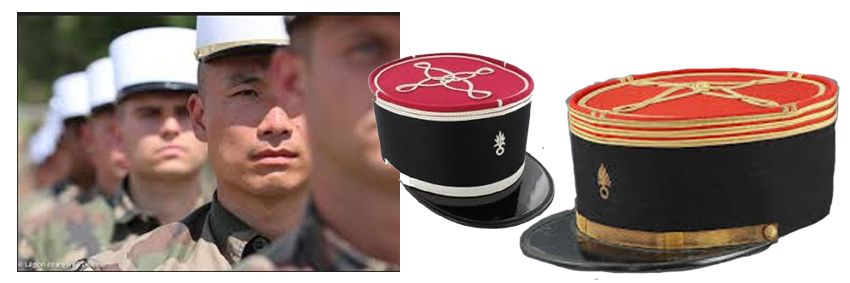
Recently, I wrote a post about the green beret. Many veterans—and not-so-veterans—are surprised to see this beret, born in the mud of rice paddies and the blood of battles in the Far East, now being given to reservists and even, without any hint of misogyny, to female personnel.
This now seems to be accepted; and yet, in Indochina, the indigenous fighters, who shed their blood in the Legion's ranks during the deadliest battles, were only allowed to wear the white beret.
But all that now seems to be nothing more than a trifle.
A new era is dawning: the awarding of the green and red pennant to a non-Legionary unit.
For years, the 5th Mixed Pacific Regiment, predecessor to the 5th Foreign Regiment, included personnel from the Engineering and Ordnance Corps: they wore the green beret.
Later, as the 5th Foreign Regiment, it held sway over all elements of the French Army assigned to Mururoa or Hao, even if these units were not mixed. Thus, a Marine Corps unit and a Signal Corps unit were part of the 5th Foreign Regiment's Signal Corps headquarters. They lived within the regiment like Legionnaire companies, but—proud of their heritage—they kept their regimental pennants in their respective branch colors. Read more...
Out of the frying pan, but... still!
By Christian Morisot
Legion veterans, like others, often, aided by nostalgia, tend to succumb to the "things were better before" or "in my day" mentality... We can laugh about it. Active duty personnel certainly do this, but still…
Like any living organism, the Legion cannot and must not remain static. It must constantly adapt to new standards, regulatory changes, the evolution of the society around it from which it draws its human resources, and the inevitable march of time… One of its main strengths, it has always seemed to us, is the considerable weight of its traditions which, like the philosopher's stone meant to transform base metals into silver and gold, transform, through a unique alchemy, the human diversity that comes to us from the Legion units. Therefore, "More Majorum!" "In the manner of our ancestors" is, as everyone knows, the motto of two of our regiments, and not the least of them: the glorious Demi-Brigade and the equally famous 2nd Foreign Parachute Regiment (2nd REP). The monuments of these two regiments bear witness to this. But still…
The veneration of our elders and the transmission of traditions guarantee a mindset that, embracing both modernity and change, results in the esprit de corps that so many envy… But still…
Without any nostalgia, but with clear-sightedness, we are astonished by certain facts that would once have offended the intelligence and decorum of the Legionnaires and that today seem to have quietly crept into people's minds. Read more...
On the Merits of Veterans' Associations
and the Intolerance of Some
By Antoine Marquet
I just read on Facebook the dismay of a former platoon leader who "dared"—poor fellow!—to politely offer his opinion on another veteran's page about a general highly regarded by that veteran. He was immediately insulted, harassed, and then blocked, without even being given the right to reply. A fine display of open-mindedness toward a fellow legionnaire who served under the general in question, while the one who was crying out like a startled virgin was already retired… and undoubtedly less entitled to give his opinion. The triennial congress of the FSALE and its affiliated associations was held this summer at the 4th Foreign Regiment, the Legion's philosophical crucible, where the common herd who had the courage to "walk through the door" is transformed into a legionnaire. Then, within his future regiment, he becomes a seasoned soldier, hardened daily by demanding training that prepares him for the toughest battles.
Then comes the return to civilian life. A new world opens up to him, and he can, if he wishes, join an association of former legionnaires.
I just read on Facebook the dismay of a former platoon leader who "dared"—poor fellow!—to politely offer his opinion on another veteran's page about a general highly regarded by that veteran. He was immediately insulted, harassed, and then blocked, without even being given the right to reply. A fine display of open-mindedness toward a fellow legionnaire who served under the general in question, while the one who was crying out like a startled virgin was already retired… and undoubtedly less entitled to give his opinion. The triennial congress of the FSALE and its affiliated associations was held this summer at the 4th Foreign Regiment, the Legion's philosophical crucible, where the common herd who had the courage to "walk through the door" is transformed into a legionnaire. Then, within his future regiment, he becomes a seasoned soldier, hardened daily by demanding training that prepares him for the toughest battles.
Then comes the return to civilian life. A new world opens up to him, and he can, if he wishes, join an association of former legionnaires.
.jpg?t=aeb8a500_42ca_451a_ab7f_8e5528b4f20b)
OFFICERS WHO COME FROM ABROAD
A singularity at the heart of the Foreign Legion?
By Captain (ER-TE) Louis Perez y Cid
We are full-fledged officers, drawn from the ranks, volunteering as legionnaires and selected from within the Legion itself. In short, "home-grown" officers, deemed reliable.
Since its creation in 1831, the Legion has had to appoint Off-TEs. In 1832, experience showed that selection by rank was effective. This tradition continues to this day.
Our existence has, among other benefits: allowed young legionnaires to find someone who speaks their language, and offered the most ambitious the hope of a career based on merit.
Schism as a working hypothesis?
What I learn from my illustrious elders, these old legionnaires, discreet and modest in light of their military experience, is the need they feel for what they call "prioritizing the Brotherhood." This intimate and vital need to give meaning to what they have experienced and to what we are experiencing. Especially when we are confronted, and this is increasingly the case in our contemporary world, with absurd and difficult-to-accept situations.
.jpg?t=aeb8a500_42ca_451a_ab7f_8e5528b4f20b)
Green Beret of the Legion.
First and foremost, this text is not intended to fuel controversy or challenge institutional decisions regarding the symbols of the Foreign Legion. It is intended, above all, as a historical and memorial reflection on an emblem that, over the decades, has acquired a symbolic significance far beyond its simple uniform.
The green beret is a powerful marker of identity, tradition, and sacrifice. Evoking its history means evoking the journey of generations of legionnaires, both French and foreign, who have contributed to building its legend. This is therefore not about judging contemporary usage, but rather about recalling the profound meaning and origins of this symbol, forged through hardship and combat.

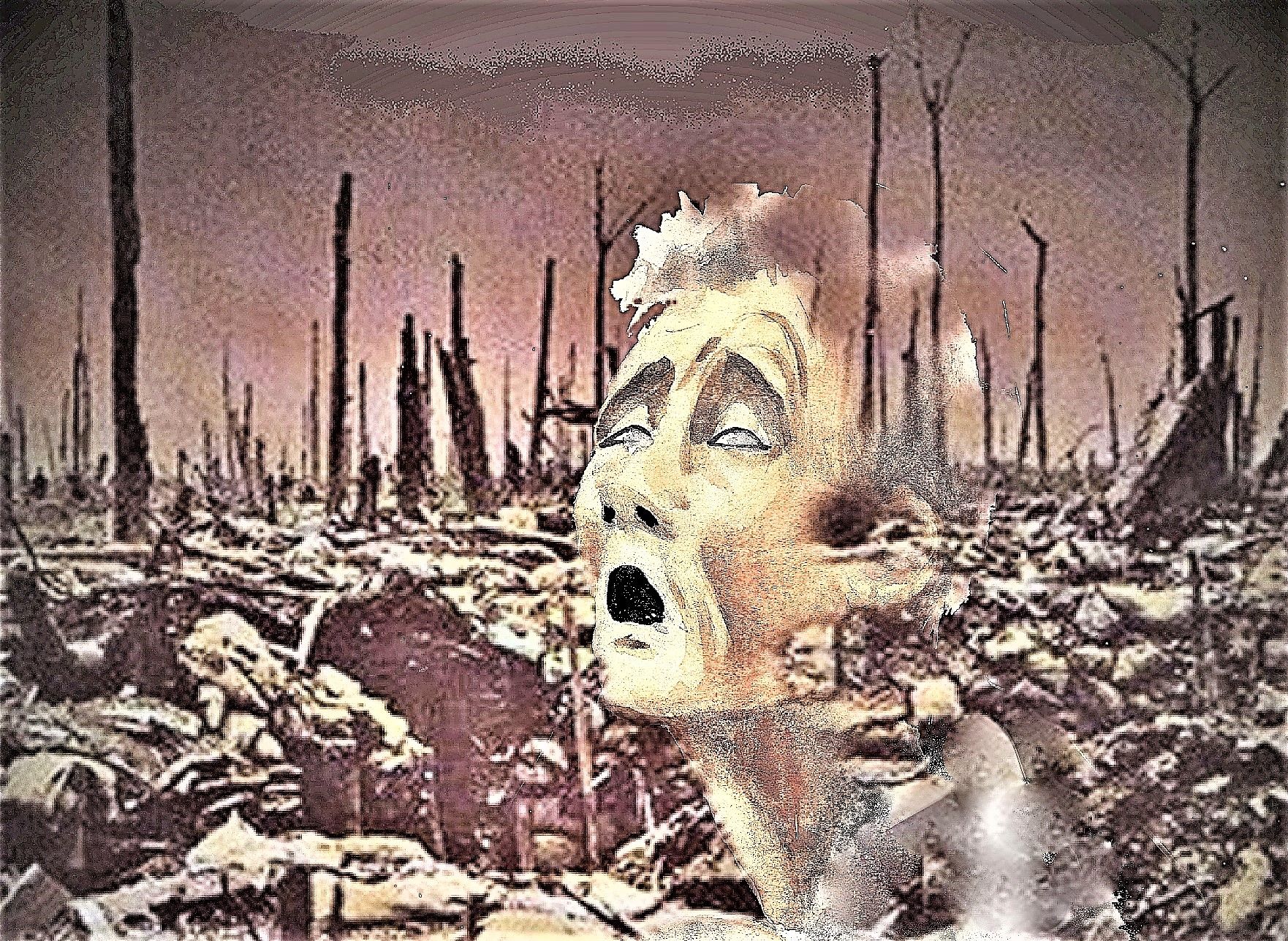
Cursed be war...
The anniversary of the end of the First World War is coming up. November 11, 1918. On that day, the armistice was signed at 5:15 a.m., marking the Allied victory and the total defeat of Germany.
In fact, the "ceasefire" took effect at 11:00 a.m., prompting peals of bells and ringing throughout France, announcing to the population the end of the war that left more than 8 million dead, disabled, and maimed.
In fact, the "ceasefire" took effect at 11:00 a.m., prompting peals of bells and ringing throughout France, announcing to the population the end of the war that left more than 8 million dead, disabled, and maimed.
Duty to Remember or Commemoration?
This year, our association once again participated in the 83rd anniversary of the deportation convoys from the Milles camp to Auschwitz, presented as a "duty to remember."
But what does this expression, often heard during ceremonies on July 14, November 11, or at Camerone, really mean?
Are they right to speak of a "duty to remember"?
Destiny of a Legionnaire's Wife
How many people are there who consider themselves unimportant, who hope to rise in the social ladder and are crushed by communities that won't give them the slightest chance?
This woman had left such a vague impression that no one even remembered her name in the community where she had stayed as a legionnaire's companion.
Read more...
This woman had left such a vague impression that no one even remembered her name in the community where she had stayed as a legionnaire's companion.
Read more...
.jpg?t=aeb8a500_42ca_451a_ab7f_8e5528b4f20b)
The Glory of France
Director of the Foreign Legion's Institution for the Disabled in Puyloubier, my duties required me to make numerous visits to the various workshops. During one of these visits, I visited my friend Louis, who was the head of the ceramics workshop...
Read more...
Read more...
.jpg?t=aeb8a500_42ca_451a_ab7f_8e5528b4f20b)
For our elders
The LÉGION ARTS association website officially opens today.
Légion’Arts Éditions specializes in the creation, promotion, and distribution of books, comics, and graphic novels dedicated to the Foreign Legion. Read more...
Légion’Arts Éditions specializes in the creation, promotion, and distribution of books, comics, and graphic novels dedicated to the Foreign Legion. Read more...
All this is happening above our heads
Share your writing
Elders of the Legion: about the Legion and other topics
Supporters: about the Legion