





All this is happening above our heads
Letter to Santa Claus.
By Michel Gravereau.
In November, we see the magnificent winter constellations appear: Orion surrounded by the Pleiades and the Beehive Cluster in Cancer. A little further to the left, at the entrance to Leo, two celestial bodies catch our eye: one very bright, Jupiter, and another orange-hued, Mars.
But November also marks the fast approach of Christmas. I can just imagine the children writing their letters to Santa Claus. I can especially picture those who are ordering a telescope, or more modestly, binoculars, to observe the planets, the Moon, and, with more difficulty, galaxies and nebulae.
I would like to write to this Santa Claus whom we love so much, but who, in the multitude of gifts he has to give, sometimes makes a few small mistakes.
Indeed, throughout the year, during our stargazing evenings, parents with their children come to us asking us to adjust the telescopes that Santa brought them. But they don't know how to use them and "we can't see anything through them."
I've often had occasion to say that, in my opinion, what matters most in a telescope or binoculars is the mount.
We must understand that a plastic thing weighing a gram and a half cannot provide satisfactory results. The slightest touch throws everything off. The wind makes it move, and often it lacks a small tracking motor. That is, if the mount isn't an altazimuth mount.
So, if you'll allow me, here's what I suggest Santa bring to good children who want to observe the sky with a minimum of comfort, independence, and satisfaction.
What I'm about to suggest has only one goal: to avoid giving a child, who has high expectations, an instrument that will give them very little, so little that it will disappoint them forever. Let's be careful not to put a "toy" in the hands of these youngsters when a telescope is a scientific instrument.
So, in my opinion, here is the minimum we should offer someone who wants to start in astronomy with a reasonable chance of success.
First, the mount. An essential element. The tripod must be heavy enough so that it doesn't vibrate at the slightest tremor. A good stainless steel tripod, adjustable in height.
On top of that, you need to install an equatorial mount, that is, one that is adjustable in height, so that it can be tilted towards the celestial north according to the latitude of the observation site. In the south, around 43°.
On this mount, equipped with a gear, you need to install a small, inexpensive stepper motor that will allow the telescope to track the target in the sky. This way, the child can point at the Moon from their balcony and proudly show it to their friends. If this telescope isn't equipped with a tracking motor, the Moon will disappear from the eyepiece in seconds, and it will quickly become a real hassle. Of course, if there's no motor, you might say that mounts are equipped with manual tracking knobs. But that's a lot of work, and it quickly becomes tedious.
These motors operate either on mains power or with a battery pack (four 1.5V batteries).
You will need to install a telescope tube on this mount.
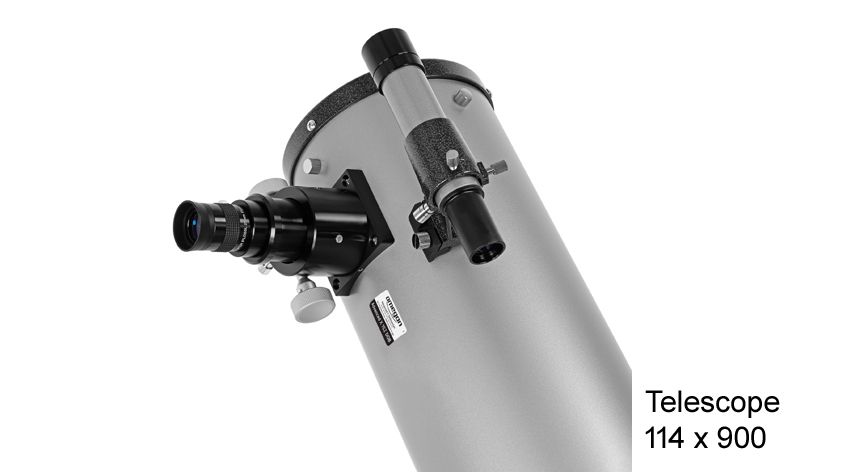
As I've often said, the amateur astronomy community began with the inevitable Newtonian telescope, 114 by 900 mm.
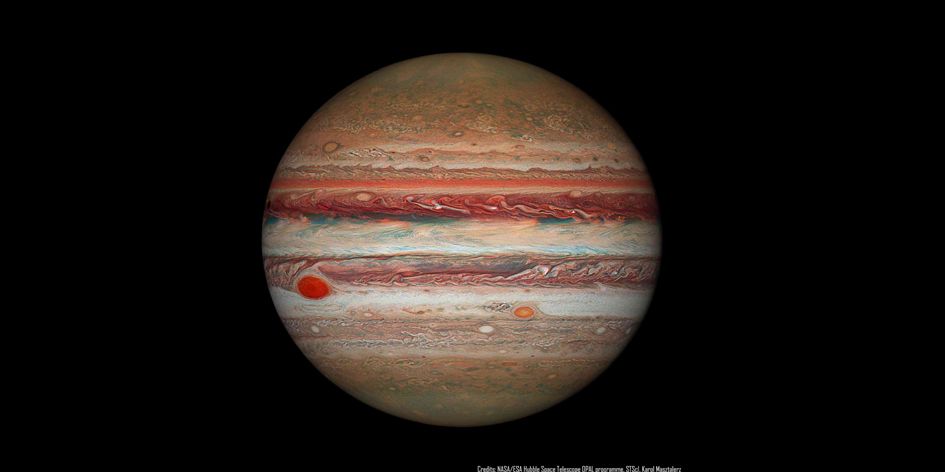
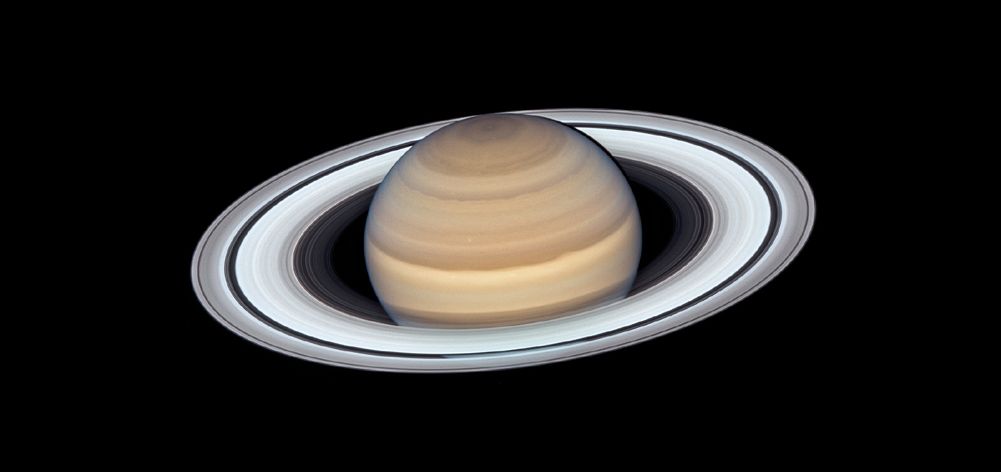
114 mm is the diameter of the mirror, and 900 mm is its focal length. Compact, lightweight, and easily portable, it allows you to see everything. When I say everything, I mean, of course, the craters of the Moon, but also Jupiter's moons, Saturn's rings, the phases of Venus, and the color of Mars. Star clusters are perfectly visible, and some nebulae are already appearing. Keep in mind, it's only 114 mm in diameter. It's not Hubble. Don't expect too much from it.
Here again, I'm going to make a commitment, but I only want to be helpful.
Let's start with the following reasoning. Everyone starts with a 114x900 telescope. And if this instrument proves satisfactory, if the person becomes hooked on astronomy, their obsession will be to acquire a larger telescope. But budgets are what they are. Not everyone is rich. So, quite often, the purchase of a new telescope is linked to selling the 114x900. You have a large market for used telescopes on websites I won't name; you know more about them than I do.
I will simply say, from experience, that budding astronomers are very respectful of their equipment and that the instruments for sale are mostly in excellent condition. Telescopes don't deteriorate rapidly. For my part, I've had one since 1994, and from January 1st to December 31st, it's in the car, enduring acceleration, braking, and our countless speed bumps. I'm about to have made every single adjustment to the mirrors. It's solide.
Obviously, I won't recommend any particular store; you'll find them yourself. Prices are the same regardless of the instrument. And having had contact with each of them, I can say they're all the same in terms of customer service and friendliness.
In short, you're faced with the following dilemma: ask Santa to bring a teenager (because it always surprises me to hear a mother say her 5-year-old son is passionate about astronomy) what looks like a flimsy, low-performance plastic telescope or binoculars that he'll quickly abandon, or upgrade to a higher-end model that provides the bare minimum to start a career as an amateur astronomer, which can then delight his family and friends. Let's not disappoint people with useless gifts.