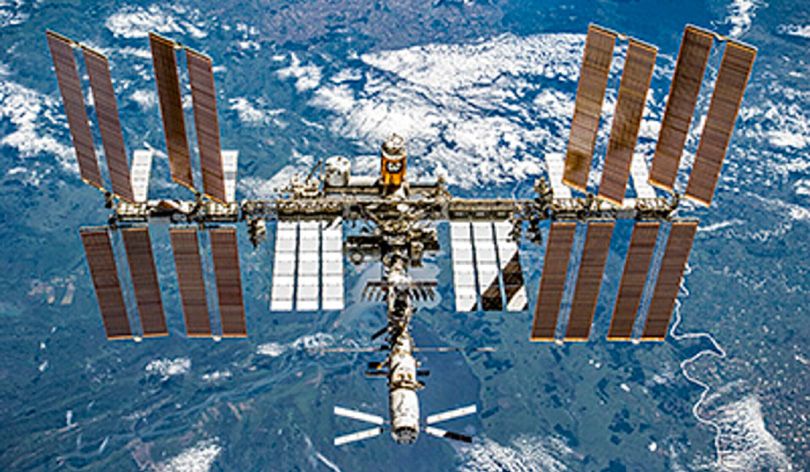






All this is happening above our heads
Space Debris.
By Michel Gravereau.
We all remember the historic date of October 4, 1957: the Soviets launched an 80 cm diameter sphere into orbit around the Earth, a sphere that beeped: Sputnik. It was the first artificial satellite. It fell back to Earth three months later.
Since then, for weather forecasting, intelligence services, environmental studies, television, telecommunications, GPS, and many other purposes, a myriad of satellites have been added to the long list of objects orbiting the Earth. And very quickly, in this frantic space race, safety concerns arose. A whole host of small objects inherent to satellite launches began to pollute the sky, to the point that today this lower layer of the atmosphere has become dangerous, and it is urgent to undertake a cleanup before tragedies occur.
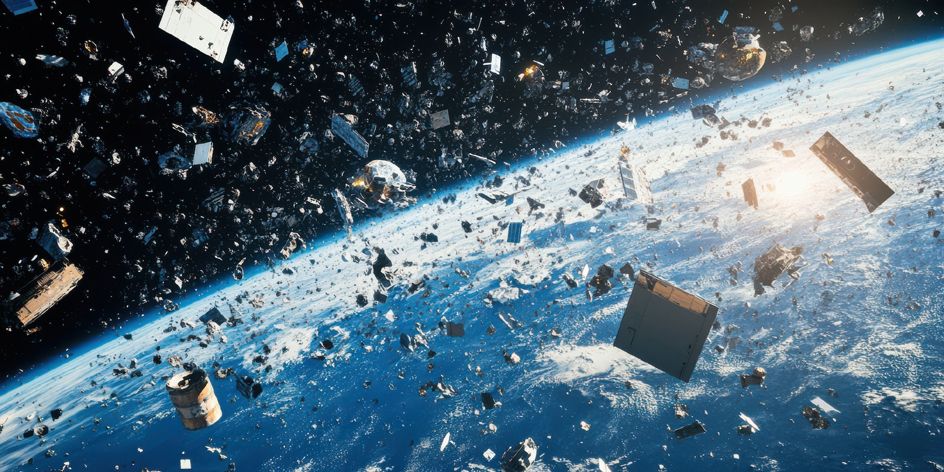
Besides satellites, which occupy a generally well-defined orbit, various objects such as rocket stages, booster engines, optical covers, and adapters for multiple launches are in erratic orbits. As a result, they can cause collisions that exponentially multiply the number of these objects.
These collisions occur at considerable speeds (between 7 and 16 km/s, or between 25,200 and 57,600 km/h), 10 times the speed of a gunshot. The collision of a single object can generate a multitude of additional debris in zero gravity, creating a domino effect.
As early as 1978, an American scientist named Kessler warned about this problem. It has only worsened since then.
Let's not forget that satellites, once their operational life is over, remain in orbit and are the target of all these uncontrollable objects, multiplying this space debris at will.
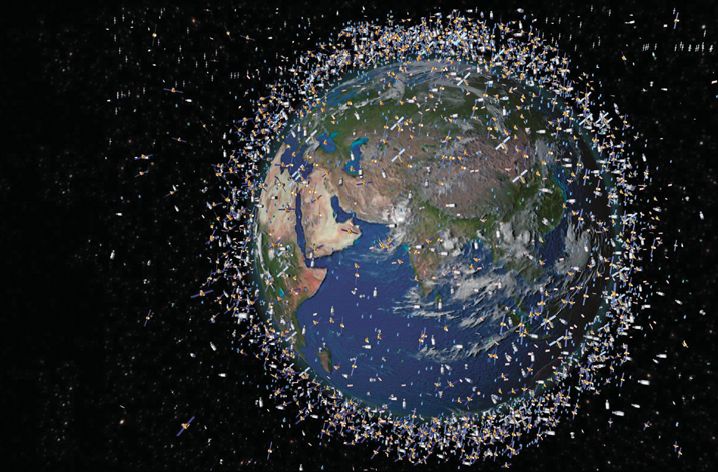
How can we spot them? With the optical means at our disposal, only objects larger than 10 cm can be seen. But there are estimated to be around 34,000 of those exceeding this size, including 9,000 active satellites.
For space debris larger than 1 mm, their number is close to 128 million. Obviously, it is in low Earth orbit, the area where the maximum concentration of these objects is found, that the risk of collision is greatest.
What can be done in the future?
Aware of this enormous risk to existing satellites, scientists are beginning to react and take measures.
And in this area, France has been a pioneer in establishing certain regulations. In 2008, the law concerning space operations required French operators to limit their environmental impact by:
• not intentionally producing debris in orbit (as was the case with the deliberate destruction of a Chinese satellite on January 11, 2007, and its 3,527 identified pieces of debris).
• emptying the fuel tanks of satellites at the end of their operational life, which could generate further debris if they explode during a collision.
• satellites must re-enter the atmosphere within 25 years of the end of their operational life.
• respecting the designated orbit for geostationary satellites.
In 2013, CNES created the CAESAR service (Conjunction Analysis and Evaluation Service, Alerts and Recommendations).
It allows for the analysis of available information on orbital approaches, the assessment of risk levels, the issuing of alerts when the risk of collision exceeds the defined threshold (0.05%), and the validation of avoidance actions. CNES thus issues 200 anti-collision alerts each year, helping to avert disasters.
Always at the forefront of the fight in this field, France is redoubling its efforts.
How can this debris be captured? French startups and companies are already working on technological solutions that will allow them to approach this debris, synchronize their trajectories, and retrieve and deorbit it. Called "space tugs," these space tugs, or even space garbage collectors, will certainly become a reality soon, but the task promises to be costly and complex.
Among innovative projects, we can cite ClearSpace from the European Space Agency (ESA), which aims to deorbit a 112 kg piece of the European Vega rocket's stage.
The Japanese company Astroscale has also been developing activities of this type since 2013, with a number of in-orbit demonstrations already carried out. Its ADRAS-J mission, launched on February 18, 2024, aims to approach a third stage of a Japanese H-2A launcher placed in orbit in 2009 and synchronize with it to validate the final approach phase. Astroscale recently established a branch in France to develop some of its activities there as well.
Finally, the Bordeaux-based startup Dark is also positioning itself in the field of space debris interception.
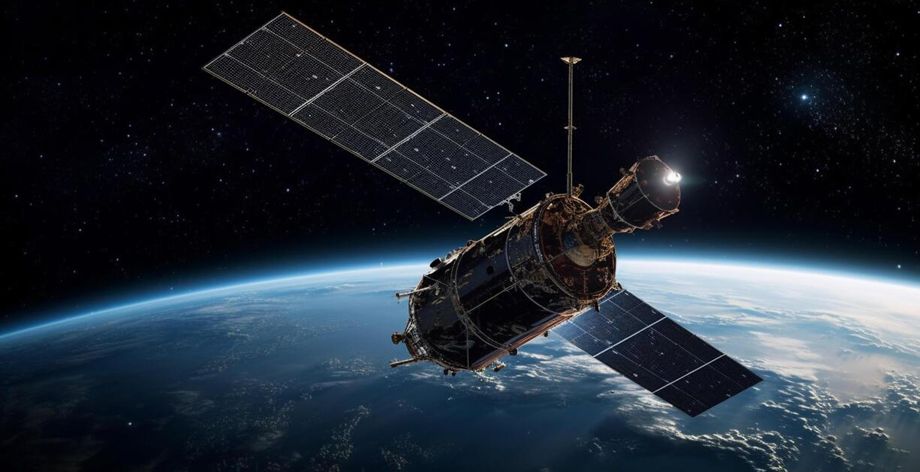
Up there, it's not bullets whizzing past, but it's just as bad, and space is becoming increasingly problematic. Let's remember that we almost witnessed a truly memorable event: in November 2021, just after Thomas Perquet returned to Earth from his second mission to the ISS, the Station had to urgently deviate from its trajectory by a kilometer and a half because it was threatened by debris from a Chinese satellite. Some rightly believe that such an impact would have caused considerable damage. American and Russian officials had ordered the astronauts present to return to their spacecraft, just in case.
Since we've mentioned the ISS, check out the website that shows its passage across the evening sky: Heavens Above.
Happy observing.
Since we've mentioned the ISS, check out the website that shows its passage across the evening sky: Heavens Above.
Happy observing.