






EDITO 20
Simply Serving the Legion
By Louis Perez y Cid
There are some paths that some view with reservation. Wrongly so.
The man in question here was born in 1944 in Algiers. His adolescence was profoundly marked by the events in Algeria, in an environment where the military presence was omnipresent. Drawn to light aviation from a young age, he was trained by former fighter pilots—P-47s, Skyraiders of the Lafayette Escadrille, B-26s, Noratlases—who indelibly shaped his perspective.
Repatriation to France marked a turning point. His bearings changed, and his studies continued in a sometimes difficult context. He ultimately turned to dental studies, influenced along the way by a professor who had served with the Commandos d'Afrique, a man of high standards and commitment.
When it came time for his military service, he chose the Reserve Officer Training School (EOR Santé). His assignment to the 1st Foreign Regiment in Aubagne was a close call; a position became available. This would prove decisive.
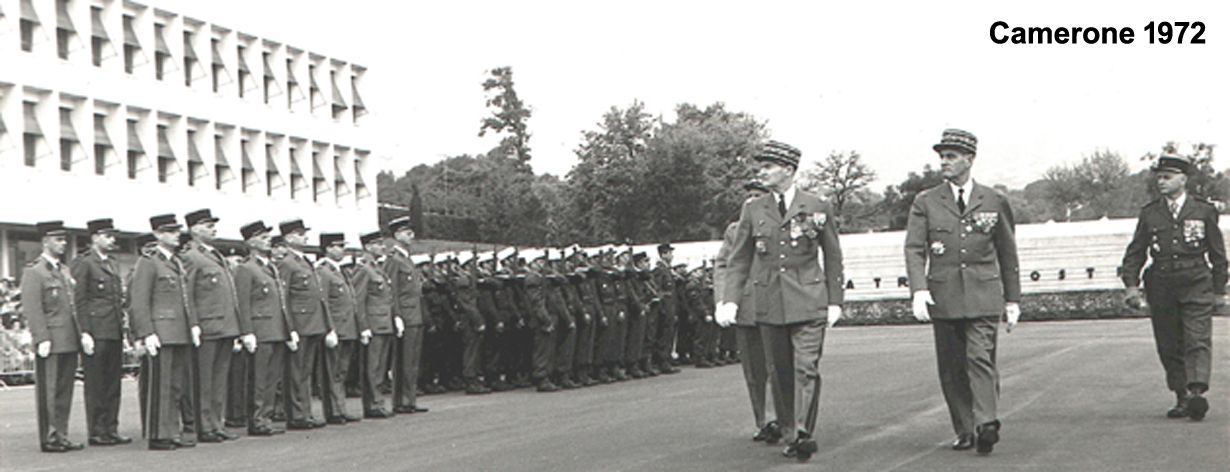
Through what he himself calls a "back door," Cadet Jean-Michel Pajot joined the Legion. He wore the uniform, participated in the 1972 Camerone Day ceremony, and, above all, discovered the Legion from the inside. A short but formative experience. It instilled in him a real and lasting sense of belonging.
His return to civilian life came at a time unfavorable to the reserves. It was the early 1970s, a period in which the reserve was poorly structured and received little recognition. This did not deter him.
He continued to serve. Through periods of unpaid voluntary service, and later within pre-military training and reserve structures, he maintained a constant connection with the Legion. He served in the 1st Foreign Cavalry Regiment for twelve years, then in the 2nd Foreign Engineer Regiment for six years.
In addition to this, there were operational deployments, notably in Mostar, in the former Yugoslavia, and in Dakar.
In total, 38 years of service in the reserves.
And as he left the service as a Lieutenant Colonel, one fact deserves to be remembered. Upon his departure, the commanding officer of the 2nd Foreign Engineer Regiment paid him honors with the farewell ceremony traditionally reserved for active-duty officers of the Legion. This gesture was not insignificant. It spoke volumes, better than any speech, of the place he was accorded. And yet, he had doubts.
He continued to serve. Through periods of unpaid voluntary service, and later within pre-military training and reserve structures, he maintained a constant connection with the Legion. He served in the 1st Foreign Cavalry Regiment for twelve years, then in the 2nd Foreign Engineer Regiment for six years.
In addition to this, there were operational deployments, notably in Mostar, in the former Yugoslavia, and in Dakar.
In total, 38 years of service in the reserves.
And as he left the service as a Lieutenant Colonel, one fact deserves to be remembered. Upon his departure, the commanding officer of the 2nd Foreign Engineer Regiment paid him honors with the farewell ceremony traditionally reserved for active-duty officers of the Legion. This gesture was not insignificant. It spoke volumes, better than any speech, of the place he was accorded. And yet, he had doubts.

Because he was a reservist. Because he was a doctor. Because he hadn't followed an active-duty career path. This doubt, I say clearly, is unfounded.
We don't rank service to the Legion. We don't divide it according to regulations. We don't relativize it in light of a typical career path. He served the Legion. For a long time. Faithfully. Concretely. That's enough.
At the Association of Former Members of the Foreign Legion of Puyloubier, the Aix region, and Sainte Baume, of which I am the president, this line is unambiguous: we are not an association of "former legionnaires" in the restrictive sense of the term. We are an association of all those who have served the Legion.
All of them. Without distinction of rank.
This is precisely what underpins our cohesion and our esprit de corps.
As such, his place among us is not up for debate. It is essential.
We don't rank service to the Legion. We don't divide it according to regulations. We don't relativize it in light of a typical career path. He served the Legion. For a long time. Faithfully. Concretely. That's enough.
At the Association of Former Members of the Foreign Legion of Puyloubier, the Aix region, and Sainte Baume, of which I am the president, this line is unambiguous: we are not an association of "former legionnaires" in the restrictive sense of the term. We are an association of all those who have served the Legion.
All of them. Without distinction of rank.
This is precisely what underpins our cohesion and our esprit de corps.
As such, his place among us is not up for debate. It is essential.

Like for many, the moment of retirement, at 65, was a difficult break. The absence of regimental life, of the infirmary, of that unique atmosphere of the Legion, was keenly felt.
Rediscovering this spirit within the Association is not an artificial extension. It is a continuation.
Upon retirement, he left the service.
But not the Legion.
Rediscovering this spirit within the Association is not an artificial extension. It is a continuation.
Upon retirement, he left the service.
But not the Legion.