





The French Army
Between Obedience, Sacrifice, and Disillusionment (1945-1962)
By Christian Morisot
Vigny's portrayal of the military condition with profound humanity and fraternal compassion remains timeless. He firmly opposes the prevailing doctrine that exalts the warrior as a blind and prestigious instrument of a divine mission.
He views war as a scourge and defines greatness through self-sacrifice, through the valiant acceptance of servitude. In modern armies, in fact, the private and even the officer are nothing more than slaves: they owe passive obedience to a fictitious authority that holds them in its pay. But this self-denial, often at the cost of the most cruel sacrifices, allows the individual to safeguard their personal dignity.
Thus, a religion of honor is defined. In a world seemingly ruled by fate, this new mysticism gives meaning to life and attests to the existence of a form of freedom.
Vigny's portrayal of the military condition with profound humanity and fraternal compassion remains timeless. He firmly opposes the prevailing doctrine that exalts the warrior as a blind and prestigious instrument of a divine mission.
He views war as a scourge and defines greatness through self-sacrifice, through the valiant acceptance of servitude. In modern armies, in fact, the private and even the officer are nothing more than slaves: they owe passive obedience to a fictitious authority that holds them in its pay. But this self-denial, often at the cost of the most cruel sacrifices, allows the individual to safeguard their personal dignity.
Thus, a religion of honor is defined. In a world seemingly ruled by fate, this new mysticism gives meaning to life and attests to the existence of a form of freedom.
November 1945: France, now deprived of Allied military aid, must deal with the aftermath of the war and begin its reconstruction. Compromises are necessary; the Communists are refused one of the three ministries they demand (Defense, Interior, and Foreign Affairs), but are granted the Ministry of Armaments.
In 1946, the French Army is at the heart of criticism from the Constituent Assembly. How, indeed, can its large numbers be justified when a starving France has hundreds of thousands of homeless people? The atmosphere was tense, the fighting over, and the press reflected a fierce anti-militarism. Military appropriations were the subject of passionate debate, leading to one of the Constituent Assembly's greatest crises, which resulted in General de Gaulle's resignation on January 20, 1946.
It was at this moment, in the midst of a profound crisis and struggling to pursue a long-term policy within a government marked by instability, that France found itself embroiled in the Indochina War.
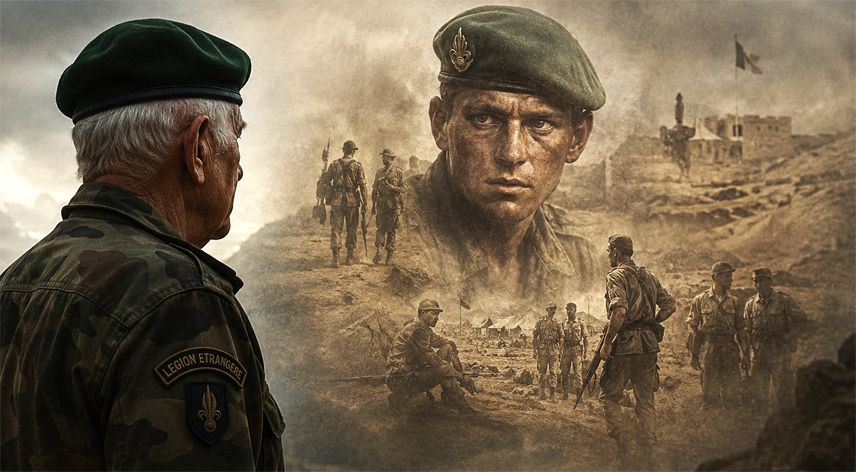
I echo the words of one of my superiors, one of those I hold in the highest esteem, beyond all conventional and obligatory respect: "This Indochina War was a military genocide." Of course, this does not detract from the bravery of the soldiers involved in this cruel war, but it must be acknowledged that, finding themselves immediately after the shock of the humiliation of Dien Bien Phu, engaged against the rebellion in the Algerian conflict, they could not escape a moral crisis. Douglas Porch, in his book “The French Foreign Legion – 1831 – 1962,” writes:
“Upon arriving in Algeria, the legionnaires returning from the Indochinese camps discovered that the prisoner-of-war food allowance had been deducted from their back pay, under the bureaucratic pretext that they had been fed by the Viet Minh during their captivity and were therefore not entitled to it! For these frustrated and bitter men, the years of war in Indochina had been filled with sacrifices and the spectacle of multitudes of refugees swimming towards French ships, calling for help. Almost unanimously, they transferred their frustration onto the government and the French. The enormous errors of Route Coloniale 4 (RC4) and Dien Bien Phu, not to mention the poor logistics, the lack of intelligence, the inadequate infrastructure, the appalling underestimation of the enemy, and so many other military shortcomings—all of this is…”
Attributable to this wretched republic that appoints “incompetent” generals, unworthy of commanding men unfortunate enough to serve under their orders.” Lieutenant Colonel de Boissieu, commanding the 5th Foreign Infantry Regiment (5th REI), wrote: “A parallel is easily drawn for those who fought and suffered in this country since 1946, between our loss of prestige in Vietnam and the unfolding of the current rebellions in North Africa. This region, in which they have all served, where they will continue to serve, and which is the cradle of the Legion, is particularly dear to their hearts.
The policies being pursued are deeply worrying; all the more so since, here again, as in Vietnam, the origin of the slogans, the training ground and refuge of certain leaders, and even the betrayals themselves, come from mainland France.”
The French overseas forces in general, and the Legion in particular, are an army increasingly cut off from its political base. Thus, the Algerian War began in an atmosphere of mistrust between a faction of the army and the government, a mistrust that could only intensify when the government committed Morocco and Tunisia to the path of independence.
The Republic discovered that its options for mitigating what would become the great Algerian tragedy were compromised.
The Pied-Noirs (French settlers in Algeria) played a part in the drama; Algeria in 1954 had over a million inhabitants of European origin.
It is not surprising that frustrations and the character the French soldiers' indecisiveness about this type of war led them to welcome the Suez expedition in November 1956 with enthusiasm. The reasons for the Franco-British decision to attack Egypt in conjunction with an Israeli offensive are complex, but the course of events clearly illustrates the adage that allies fighting on the same side do not necessarily do so for the same goals.
The men engaged in the Algerian War believed that Nasser's fall would decapitate the FLN by depriving it of the support of its most fervent defender. The expeditionary force was deeply disappointed when the United States and the Soviet Union imposed a halt to operations after only forty hours. For the French paratroopers who had chased the Egyptians like rabbits, this was further proof of the betrayal orchestrated by "the Anglo-Saxons," by the West, and by the Fourth Republic. The FLN regained its courage and exploited this opportunity in its propaganda. He even recovered weapons abandoned during the Allied forces' hasty withdrawal.
For many officers, the feeling of betrayal was so profound that their loyalty to the government wavered.
Back in Algiers, they discovered that the FLN had transformed "Nasser's unexploited defeat" into "a triumphant victory."
This "war" was primarily, from a military standpoint, a guerrilla war. The doctrine of revolutionary warfare, employing psychological warfare, was rejected by the command.
It pitted the French army in all its diversity—combining elite commando units, peacekeeping forces, conscripts, and indigenous auxiliaries—against the independence troops of the National Liberation Army (ALN), the armed wing of the National Liberation Front (FLN), which had a political and administrative structure (CNRA and CCE).
Militarily won by France in 1959 (Operation Jumelles), it was politically won by the independence movement in 1962. It was compounded by a civil and ideological war within the two communities, giving rise to successive waves of attacks and massacres on both shores of the Mediterranean. On the Muslim side, it manifested as a power struggle that saw the FLN emerge victorious over rival Algerian parties, notably the MNA (Algerian National Movement), and as a campaign of repression against the harkis who supported the status quo of Algeria's annexation to the French Republic. Furthermore, on the French side, it sparked a confrontation between an active minority opposed to its continuation (the pacifist movement), a second minority in favor of the revolution (the "suitcase carriers"), and a third group rallied to the slogan "French Algeria" (French Algeria Front, Young Nation, OAS).
This war ended with the proclamation of Algerian independence on July 5, 1962, following the referendum on self-determination held on July 1, as stipulated by the Évian Accords of March 18, 1962; the establishment of the Algerian Republic on September 25; and the repatriation of the million French citizens living in Algeria.
After the difficulties stemming from the aftermath of the Second World War, which had divided its army, the French Army faced the Indochina War, followed by the Algerian War. From 1939 to 1962, the French Army was called upon repeatedly, and while all war is inherently inhumane, the outcome is undeniable: a clear disconnect exists between political will and its armed forces.
In 1946, the French Army is at the heart of criticism from the Constituent Assembly. How, indeed, can its large numbers be justified when a starving France has hundreds of thousands of homeless people? The atmosphere was tense, the fighting over, and the press reflected a fierce anti-militarism. Military appropriations were the subject of passionate debate, leading to one of the Constituent Assembly's greatest crises, which resulted in General de Gaulle's resignation on January 20, 1946.
It was at this moment, in the midst of a profound crisis and struggling to pursue a long-term policy within a government marked by instability, that France found itself embroiled in the Indochina War.
I echo the words of one of my superiors, one of those I hold in the highest esteem, beyond all conventional and obligatory respect: "This Indochina War was a military genocide." Of course, this does not detract from the bravery of the soldiers involved in this cruel war, but it must be acknowledged that, finding themselves immediately after the shock of the humiliation of Dien Bien Phu, engaged against the rebellion in the Algerian conflict, they could not escape a moral crisis. Douglas Porch, in his book “The French Foreign Legion – 1831 – 1962,” writes:
“Upon arriving in Algeria, the legionnaires returning from the Indochinese camps discovered that the prisoner-of-war food allowance had been deducted from their back pay, under the bureaucratic pretext that they had been fed by the Viet Minh during their captivity and were therefore not entitled to it! For these frustrated and bitter men, the years of war in Indochina had been filled with sacrifices and the spectacle of multitudes of refugees swimming towards French ships, calling for help. Almost unanimously, they transferred their frustration onto the government and the French. The enormous errors of Route Coloniale 4 (RC4) and Dien Bien Phu, not to mention the poor logistics, the lack of intelligence, the inadequate infrastructure, the appalling underestimation of the enemy, and so many other military shortcomings—all of this is…”
Attributable to this wretched republic that appoints “incompetent” generals, unworthy of commanding men unfortunate enough to serve under their orders.” Lieutenant Colonel de Boissieu, commanding the 5th Foreign Infantry Regiment (5th REI), wrote: “A parallel is easily drawn for those who fought and suffered in this country since 1946, between our loss of prestige in Vietnam and the unfolding of the current rebellions in North Africa. This region, in which they have all served, where they will continue to serve, and which is the cradle of the Legion, is particularly dear to their hearts.
The policies being pursued are deeply worrying; all the more so since, here again, as in Vietnam, the origin of the slogans, the training ground and refuge of certain leaders, and even the betrayals themselves, come from mainland France.”
The French overseas forces in general, and the Legion in particular, are an army increasingly cut off from its political base. Thus, the Algerian War began in an atmosphere of mistrust between a faction of the army and the government, a mistrust that could only intensify when the government committed Morocco and Tunisia to the path of independence.
The Republic discovered that its options for mitigating what would become the great Algerian tragedy were compromised.
The Pied-Noirs (French settlers in Algeria) played a part in the drama; Algeria in 1954 had over a million inhabitants of European origin.
It is not surprising that frustrations and the character the French soldiers' indecisiveness about this type of war led them to welcome the Suez expedition in November 1956 with enthusiasm. The reasons for the Franco-British decision to attack Egypt in conjunction with an Israeli offensive are complex, but the course of events clearly illustrates the adage that allies fighting on the same side do not necessarily do so for the same goals.
The men engaged in the Algerian War believed that Nasser's fall would decapitate the FLN by depriving it of the support of its most fervent defender. The expeditionary force was deeply disappointed when the United States and the Soviet Union imposed a halt to operations after only forty hours. For the French paratroopers who had chased the Egyptians like rabbits, this was further proof of the betrayal orchestrated by "the Anglo-Saxons," by the West, and by the Fourth Republic. The FLN regained its courage and exploited this opportunity in its propaganda. He even recovered weapons abandoned during the Allied forces' hasty withdrawal.
For many officers, the feeling of betrayal was so profound that their loyalty to the government wavered.
Back in Algiers, they discovered that the FLN had transformed "Nasser's unexploited defeat" into "a triumphant victory."
This "war" was primarily, from a military standpoint, a guerrilla war. The doctrine of revolutionary warfare, employing psychological warfare, was rejected by the command.
It pitted the French army in all its diversity—combining elite commando units, peacekeeping forces, conscripts, and indigenous auxiliaries—against the independence troops of the National Liberation Army (ALN), the armed wing of the National Liberation Front (FLN), which had a political and administrative structure (CNRA and CCE).
Militarily won by France in 1959 (Operation Jumelles), it was politically won by the independence movement in 1962. It was compounded by a civil and ideological war within the two communities, giving rise to successive waves of attacks and massacres on both shores of the Mediterranean. On the Muslim side, it manifested as a power struggle that saw the FLN emerge victorious over rival Algerian parties, notably the MNA (Algerian National Movement), and as a campaign of repression against the harkis who supported the status quo of Algeria's annexation to the French Republic. Furthermore, on the French side, it sparked a confrontation between an active minority opposed to its continuation (the pacifist movement), a second minority in favor of the revolution (the "suitcase carriers"), and a third group rallied to the slogan "French Algeria" (French Algeria Front, Young Nation, OAS).
This war ended with the proclamation of Algerian independence on July 5, 1962, following the referendum on self-determination held on July 1, as stipulated by the Évian Accords of March 18, 1962; the establishment of the Algerian Republic on September 25; and the repatriation of the million French citizens living in Algeria.
After the difficulties stemming from the aftermath of the Second World War, which had divided its army, the French Army faced the Indochina War, followed by the Algerian War. From 1939 to 1962, the French Army was called upon repeatedly, and while all war is inherently inhumane, the outcome is undeniable: a clear disconnect exists between political will and its armed forces.