






Tintin in Jules Verne's World
The Legacy of an Imaginary Adventure
By Louis Perez y Cid
Published in 1998 by Jean-Paul Tomasi and Michel Deligne, Tintin in Jules Verne's World offers a fascinating reading of Hergé's work through the lens of Verne's legacy. More than a simple search for similarities or influences, this book illuminates a genuine artistic lineage between two creators who profoundly marked the history of adventure stories.
At first glance, everything seems to separate Jules Verne and Hergé. The former is a 19th-century novelist, a pioneer of scientific literature and grand imaginary voyages.
The latter is a 20th-century comic book author, creator of a reporter who became one of the major figures of European popular culture.
Yet, by exploring their respective works, Tomasi and Deligne reveal a surprising intellectual and creative kinship.
Published in 1998 by Jean-Paul Tomasi and Michel Deligne, Tintin in Jules Verne's World offers a fascinating reading of Hergé's work through the lens of Verne's legacy. More than a simple search for similarities or influences, this book illuminates a genuine artistic lineage between two creators who profoundly marked the history of adventure stories.
At first glance, everything seems to separate Jules Verne and Hergé. The former is a 19th-century novelist, a pioneer of scientific literature and grand imaginary voyages.
The latter is a 20th-century comic book author, creator of a reporter who became one of the major figures of European popular culture.
Yet, by exploring their respective works, Tomasi and Deligne reveal a surprising intellectual and creative kinship.

For both Verne and Hergé, adventure is first and foremost an invitation to discover the world. Oceans, deserts, mountains, the poles, and even outer space become territories of exploration where curiosity, science, and self-improvement intertwine.
The heroes cross not only geographical boundaries but also those of knowledge. This humanist vision of travel is undoubtedly one of the strongest points of convergence between the two universes.
The authors also show that Tintin's stories extend, in a modern form, several themes dear to Jules Verne: scientific expeditions, lost civilizations, archaeological mysteries, technological innovations, and the fascination with unknown lands.
From Twenty Thousand Leagues Under the Sea to The Mysterious Island, from Journey to the Center of the Earth to Tintin's lunar adventures, the same romantic spirit seems to animate both creators. But the book's strength lies precisely in the fact that it never reduces Hergé to a mere heir. On the contrary, it shows how the Belgian cartoonist appropriated this imaginary world and transformed it. Where Verne addressed 19th-century readers through the novel, Hergé invented the modern language of comics. He adapted the great myths of exploration to an era marked by aviation, radio, cinema, and the geopolitical upheavals of the 20th century.
The heroes cross not only geographical boundaries but also those of knowledge. This humanist vision of travel is undoubtedly one of the strongest points of convergence between the two universes.
The authors also show that Tintin's stories extend, in a modern form, several themes dear to Jules Verne: scientific expeditions, lost civilizations, archaeological mysteries, technological innovations, and the fascination with unknown lands.
From Twenty Thousand Leagues Under the Sea to The Mysterious Island, from Journey to the Center of the Earth to Tintin's lunar adventures, the same romantic spirit seems to animate both creators. But the book's strength lies precisely in the fact that it never reduces Hergé to a mere heir. On the contrary, it shows how the Belgian cartoonist appropriated this imaginary world and transformed it. Where Verne addressed 19th-century readers through the novel, Hergé invented the modern language of comics. He adapted the great myths of exploration to an era marked by aviation, radio, cinema, and the geopolitical upheavals of the 20th century.
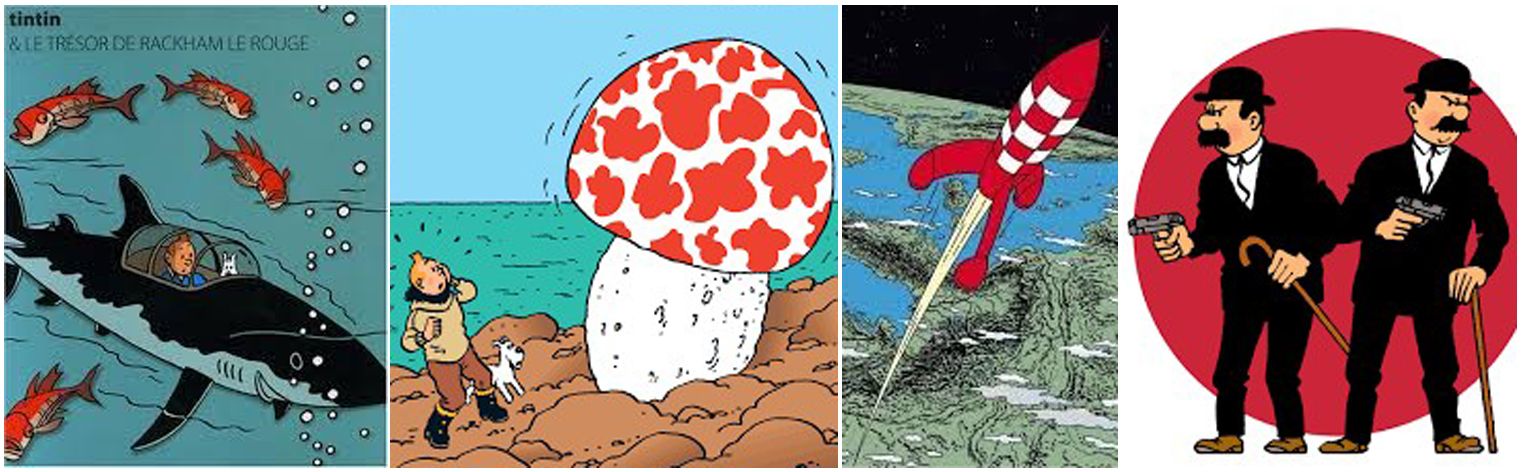
Thus, Tintin appears less as Verne's disciple than as his successor. Both share the same faith in human intelligence, the same fascination with progress, and the same ability to make their readers dream by taking them ever further.
One opened the doors to the "Extraordinary Voyages," the other crossed them to usher them into the age of the image.
More than a quarter of a century after its publication, Tintin in Jules Verne's World remains a valuable study for understanding how great works resonate with one another across time. By highlighting the connections between literature and comics, Jean-Paul Tomasi and Michel Deligne remind us that no creation is born in isolation.
Art feeds on art.
The reflection raised by Tintin in Jules Verne's World extends far beyond the case of Hergé and Jules Verne. It touches on a fundamental reality of all artistic creation: works often arise from encounters with those that preceded them.
The example of Jules Verne and Hergé perfectly illustrates this. The 19th-century novelist imagined extraordinary journeys that have captivated several generations of readers. A few decades later, Hergé took up this taste for exploration, discovery, and scientific progress, transposing it into the language of comics.
One opened the doors to the "Extraordinary Voyages," the other crossed them to usher them into the age of the image.
More than a quarter of a century after its publication, Tintin in Jules Verne's World remains a valuable study for understanding how great works resonate with one another across time. By highlighting the connections between literature and comics, Jean-Paul Tomasi and Michel Deligne remind us that no creation is born in isolation.
Art feeds on art.
The reflection raised by Tintin in Jules Verne's World extends far beyond the case of Hergé and Jules Verne. It touches on a fundamental reality of all artistic creation: works often arise from encounters with those that preceded them.
The example of Jules Verne and Hergé perfectly illustrates this. The 19th-century novelist imagined extraordinary journeys that have captivated several generations of readers. A few decades later, Hergé took up this taste for exploration, discovery, and scientific progress, transposing it into the language of comics.
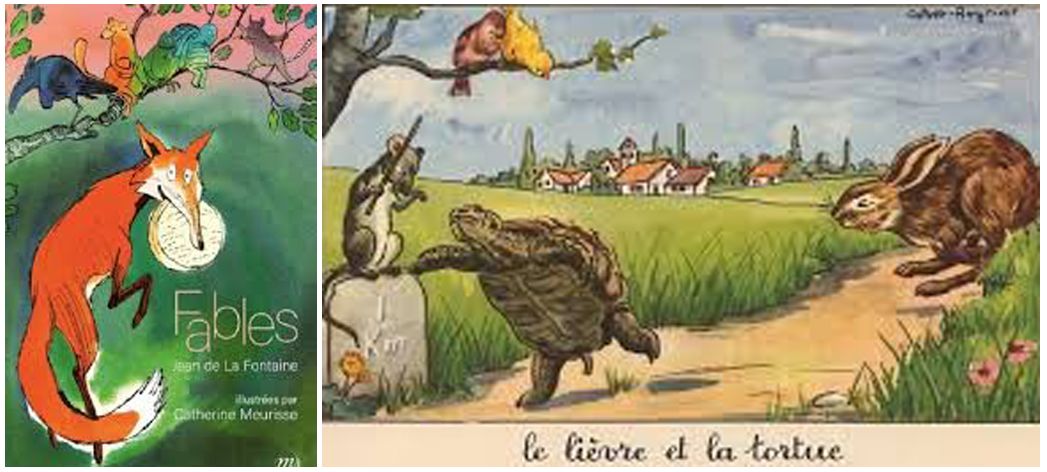
This phenomenon can be found in many artistic fields. The talking animals in certain modern works do not appear out of thin air. Long before cinema or comics, fables, folktales, and even some educational books for learning to read already featured talking animals to impart knowledge and moral values. Jean de La Fontaine himself was part of a much older tradition dating back to Antiquity.
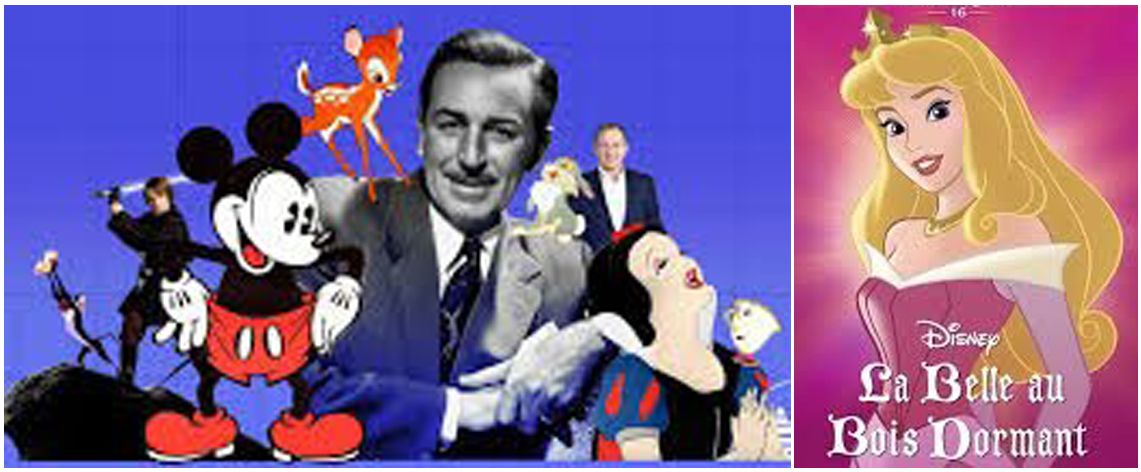
Similarly, Walt Disney didn't invent Snow White, Cinderella, or Sleeping Beauty. His genius lay in drawing on the heritage of European fairy tales, particularly those collected by the Brothers Grimm, to give them new life through animation and 20th-century cinematic techniques.
Similarly, Walt Disney didn't invent Snow White, Cinderella, or Sleeping Beauty. His genius lay in drawing on the heritage of European fairy tales, particularly those collected by the Brothers Grimm, to give them new life through animation and 20th-century cinematic techniques.
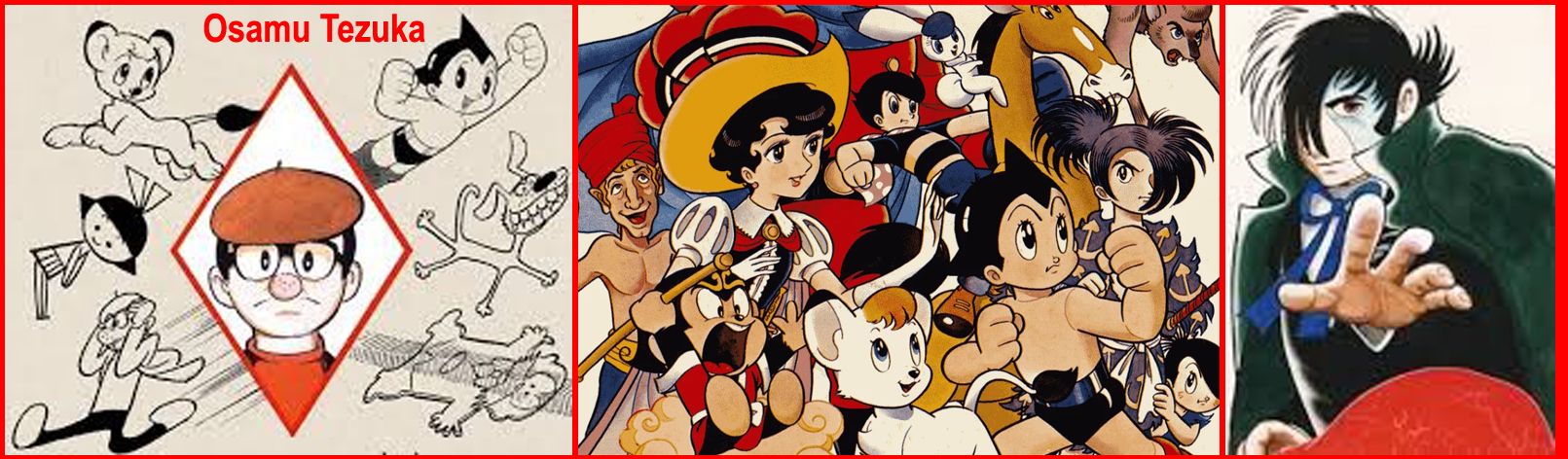
The history of manga offers another remarkable example. After World War II, Osamu Tezuka, considered the father of modern manga, deeply admired Disney's productions. He was particularly inspired by the expressiveness of their characters and their characteristic large eyes. Yet, no one today confuses Disney and Tezuka. The influence is noticeable, it has been transformed to the point of giving rise to an original graphic language, which has become one of the hallmarks of contemporary manga.
This is precisely what Tintin demonstrates in Jules Verne's work. Hergé is not an imitator of Jules Verne; he belongs to that long chain of creators who draw upon a cultural heritage to reinvent it. Great works are not copied; they extend, transform, and open new paths.
This is precisely what Tintin demonstrates in Jules Verne's work. Hergé is not an imitator of Jules Verne; he belongs to that long chain of creators who draw upon a cultural heritage to reinvent it. Great works are not copied; they extend, transform, and open new paths.
Jules Verne and Hergé thus appear less as a master and his disciple than as two links in the same intellectual adventure: that of the human imagination, which is transmitted, renewed, and continues to inspire each generation.
For originality is not the absence of influences; it resides in the ability to transform a heritage into a new work.
For originality is not the absence of influences; it resides in the ability to transform a heritage into a new work.