





Beauty, artifice, and a touch of provocation
By Christian Morisot
At a painting exhibition in Pittsburgh, California, the first prize was awarded to a canvas depicting a gray cement wall pierced by a single hole.
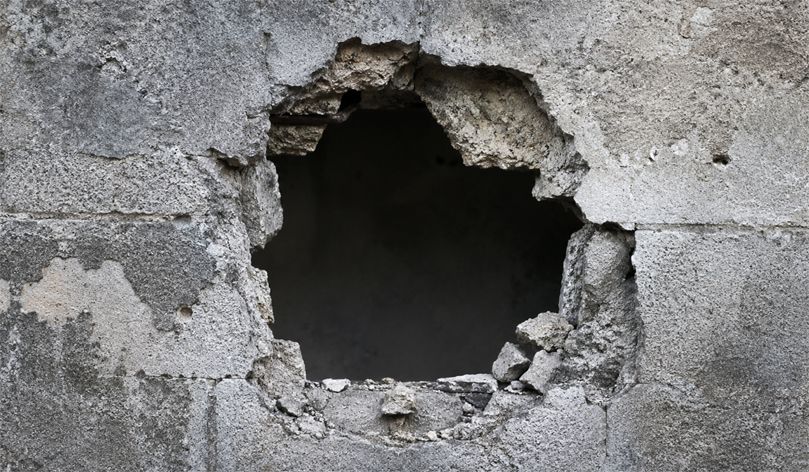
Of course, the critics talked only about this hole and the mystery it seemed to represent for their vivid and contagious imaginations. Everyone offered their own interpretation, everyone seemed to discover in it a profound question about our human condition. Perhaps, indeed, something of our time was expressed there. Or perhaps simply cultural nothingness, in all its impeccable purity: healthy, relaxing, perfectly proper, enough to give everyone food for thought and, above all, to leave no one indifferent...
Many years later, at a similar event, another anecdote once again prompted me to reflect on the evolution of our way of thinking about and approaching art.
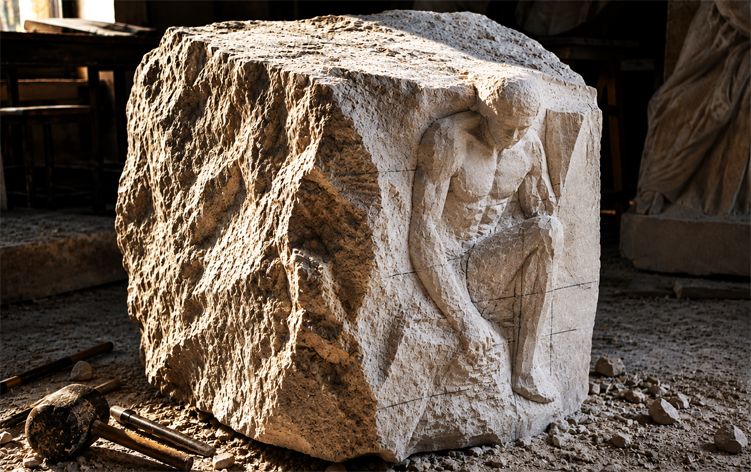
My friend, the sculptor André Paltrié, had filled his vehicle with the sculptures he was to present at an exhibition in Bordeaux. To prevent them from bumping against each other during transport, he had placed a stone between them, its outline barely sketched. This block was simply a way for him to test the sharpness of his chisels. It was neither finished nor intended for display.
By misfortune—or by miracle, depending on your perspective—this shapeless stone, without any particular pretensions and which its creator himself did not consider a work of art, was inadvertently placed among the sculptures presented to the public.
It won first prize!
Many years later, at a similar event, another anecdote once again prompted me to reflect on the evolution of our way of thinking about and approaching art.
My friend, the sculptor André Paltrié, had filled his vehicle with the sculptures he was to present at an exhibition in Bordeaux. To prevent them from bumping against each other during transport, he had placed a stone between them, its outline barely sketched. This block was simply a way for him to test the sharpness of his chisels. It was neither finished nor intended for display.
By misfortune—or by miracle, depending on your perspective—this shapeless stone, without any particular pretensions and which its creator himself did not consider a work of art, was inadvertently placed among the sculptures presented to the public.
It won first prize!
These two stories are amusing, but perhaps they raise a more serious question: isn't it time our artists rediscovered, in their creations, a taste for beauty and a certain balance? Talent, of course, is not always enough; But first, we must know what we are trying to express and what we wish to convey.
It seems essential to me to encourage those who continue, despite everything, to paint, sculpt, and create, imbuing their work with tenderness, compassion, and that almost religious feeling of wonder. Let us be careful not to confuse our passions, our interpretations, and our creations with what, sometimes, is perhaps simply the desire to find meaning where none necessarily existed.
It is in this spirit—and with a good dose of humor, even provocation—that I come to another of my passions: portraits.
Here, I offer my sincere apologies: Mea culpa, maxima culpa.
There was a time when I dared to write that my gaze could not penetrate the artificial barrier behind which Western women were, in their own way, sometimes more veiled than Muslim women. With a touch of provocation, I used to say they were smeared and caked with beauty products, creams of all kinds, as if they themselves were applying the delicate art of embalming... A portrait painter, with a boldness I must admit was quite apt, said that he was "painting what was already a painting."
Today, I readily acknowledge the element of malice in such remarks. I now prefer another question, less mocking and perhaps closer to what I seek in a face:
"O human face, where are you? What has become of you? Will we ever again see the mystery, the drama, the beauty, the torment and the hope, the joy, the darkness and the light on your features?" “
Because perhaps this is what ultimately connects my stories of painting, sculpture, and portraiture: this persistent search for what, beneath appearances, remains human, alive, and capable of moving us.
As for women, I can already feel the thunder and anger rising from those who—perhaps rightly so—will not understand me. So I will take my provocation to its logical conclusion.
I will say that their real “fault” was embarking on one of the most self-destructive battles: wanting the same rights and the same place as men. They would thus have fought for years to abandon their position as goddesses and descend to the level of their former slaves…
But rest assured: all this is probably just a collection of “futile writings” from the end of summer, a possible consequence of the excessive heat.
” This explanation in no way excuses such remarks, which are, in essence, merely a reflection of a simmering jealousy, a form of amusement, and a few gratuitous provocations. They may well seem malicious; I readily admit it.
After all, it's sometimes good not to take oneself too seriously—especially when one claims to be discussing beauty, art, women... and their mysteries.
Welcome back, everyone!
It seems essential to me to encourage those who continue, despite everything, to paint, sculpt, and create, imbuing their work with tenderness, compassion, and that almost religious feeling of wonder. Let us be careful not to confuse our passions, our interpretations, and our creations with what, sometimes, is perhaps simply the desire to find meaning where none necessarily existed.
It is in this spirit—and with a good dose of humor, even provocation—that I come to another of my passions: portraits.
Here, I offer my sincere apologies: Mea culpa, maxima culpa.
There was a time when I dared to write that my gaze could not penetrate the artificial barrier behind which Western women were, in their own way, sometimes more veiled than Muslim women. With a touch of provocation, I used to say they were smeared and caked with beauty products, creams of all kinds, as if they themselves were applying the delicate art of embalming... A portrait painter, with a boldness I must admit was quite apt, said that he was "painting what was already a painting."
Today, I readily acknowledge the element of malice in such remarks. I now prefer another question, less mocking and perhaps closer to what I seek in a face:
"O human face, where are you? What has become of you? Will we ever again see the mystery, the drama, the beauty, the torment and the hope, the joy, the darkness and the light on your features?" “
Because perhaps this is what ultimately connects my stories of painting, sculpture, and portraiture: this persistent search for what, beneath appearances, remains human, alive, and capable of moving us.
As for women, I can already feel the thunder and anger rising from those who—perhaps rightly so—will not understand me. So I will take my provocation to its logical conclusion.
I will say that their real “fault” was embarking on one of the most self-destructive battles: wanting the same rights and the same place as men. They would thus have fought for years to abandon their position as goddesses and descend to the level of their former slaves…
But rest assured: all this is probably just a collection of “futile writings” from the end of summer, a possible consequence of the excessive heat.
” This explanation in no way excuses such remarks, which are, in essence, merely a reflection of a simmering jealousy, a form of amusement, and a few gratuitous provocations. They may well seem malicious; I readily admit it.
After all, it's sometimes good not to take oneself too seriously—especially when one claims to be discussing beauty, art, women... and their mysteries.
Welcome back, everyone!