


.jpg?t=aeb8a500_42ca_451a_ab7f_8e5528b4f20b)
Calligraphy, the art of beautifully forming characters.
Calligraphy (from the Greek kallos = beauty, graphein = to write).
.jpg?t=aeb8a500_42ca_451a_ab7f_8e5528b4f20b)
It appeared as early as the first civilizations, in ancient Egypt with hieroglyphs, in China where it very quickly became a major art form (more than 2,000 years BCE), and then in the Islamic world where Arabic script took on a spiritual dimension.
In medieval Europe, copyist monks decorated manuscripts in scriptoria. The invention of printing in the 15th century reduced its utilitarian role, but it remained an art.
Today, calligraphy is no longer just a means of writing; it is a fully-fledged artistic discipline, practiced in many cultures, between tradition and modernity.
In medieval Europe, copyist monks decorated manuscripts in scriptoria. The invention of printing in the 15th century reduced its utilitarian role, but it remained an art.
Today, calligraphy is no longer just a means of writing; it is a fully-fledged artistic discipline, practiced in many cultures, between tradition and modernity.
.jpg?t=aeb8a500_42ca_451a_ab7f_8e5528b4f20b)
Living Heritage of Great Traditions
In China, calligraphy remains a major art form, closely linked to painting and philosophy. It is taught in schools and emphasizes mastery of movement, breath, and concentration. In Japan, shodō, "the way of writing," is considered an artistic and meditative practice.
In the Islamic world, particularly in Iran and Turkey, Arabic calligraphy remains a sacred and decorative art form, prominent in architecture and design.
In Europe, medieval styles such as Carolingian, Uncial, and Gothic script are still studied and practiced by enthusiasts and artists.
In the Islamic world, particularly in Iran and Turkey, Arabic calligraphy remains a sacred and decorative art form, prominent in architecture and design.
In Europe, medieval styles such as Carolingian, Uncial, and Gothic script are still studied and practiced by enthusiasts and artists.
.jpg?t=aeb8a500_42ca_451a_ab7f_8e5528b4f20b)
A contemporary and creative discipline
Calligraphy has also transformed. It is integrated into graphic design, logos, posters, and packaging.
It engages with street art and graffiti.
It blends with digital tools, graphics tablets, and digital typography.
It is used in weddings, events, artistic lettering, and the personalization of objects.
It engages with street art and graffiti.
It blends with digital tools, graphics tablets, and digital typography.
It is used in weddings, events, artistic lettering, and the personalization of objects.
.jpg?t=aeb8a500_42ca_451a_ab7f_8e5528b4f20b)
A personal and meditative practice
More and more people are practicing calligraphy to slow down, improve their concentration, develop their aesthetic sense, and cultivate patience and discipline of movement.
Calligraphy today is simultaneously a cultural heritage, a contemporary visual art, and an introspective practice.
It survives because it fulfills a profound need: to restore meaning and beauty to writing in a world dominated by digital technology.
Calligraphy today is simultaneously a cultural heritage, a contemporary visual art, and an introspective practice.
It survives because it fulfills a profound need: to restore meaning and beauty to writing in a world dominated by digital technology.
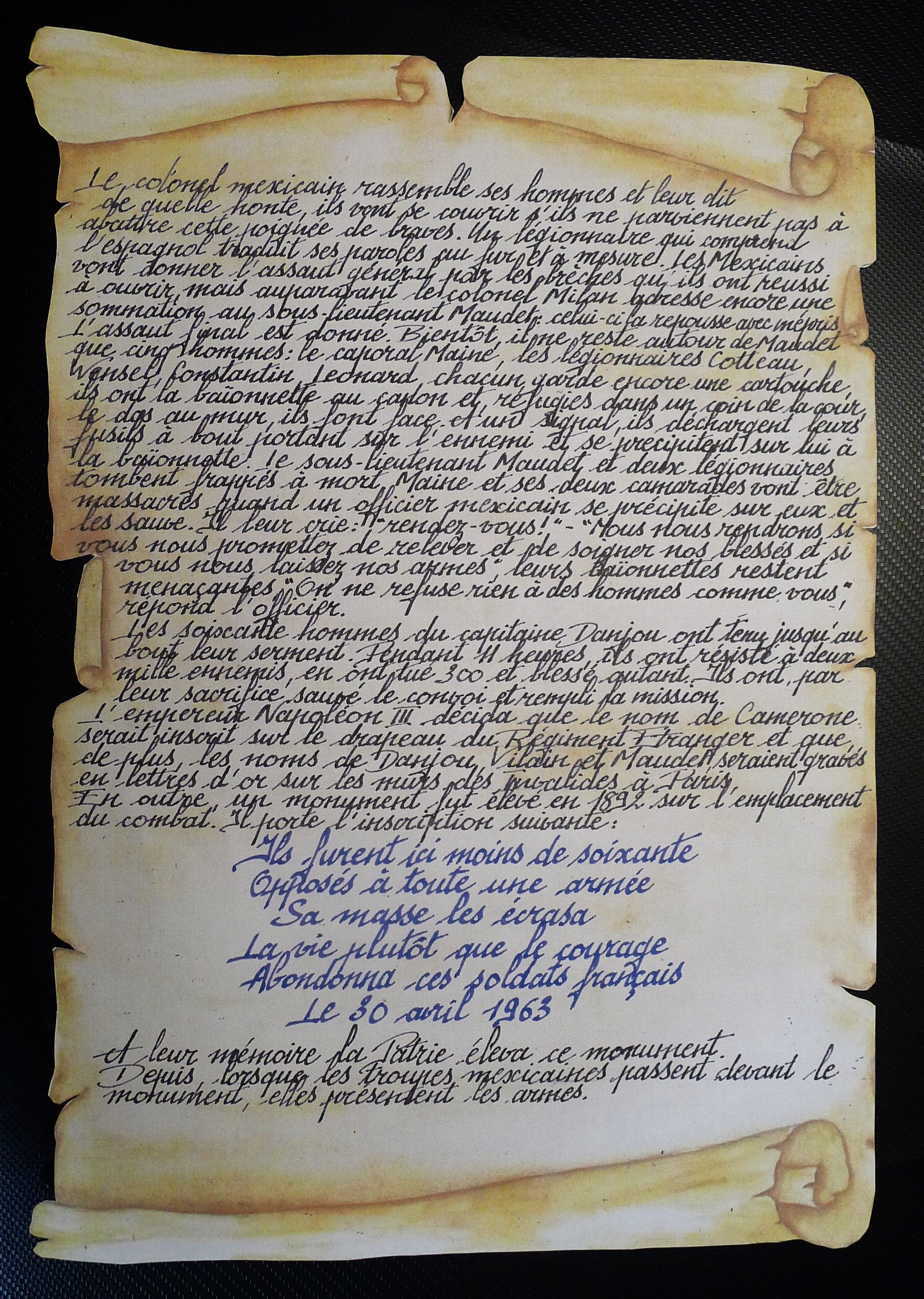
The Battle of Camerone
Our friend Christian Morisot, a calligraphy enthusiast, presents here the official text of the Battle of Camerone written on parchment.
.JPG?t=aeb8a500_42ca_451a_ab7f_8e5528b4f20b)
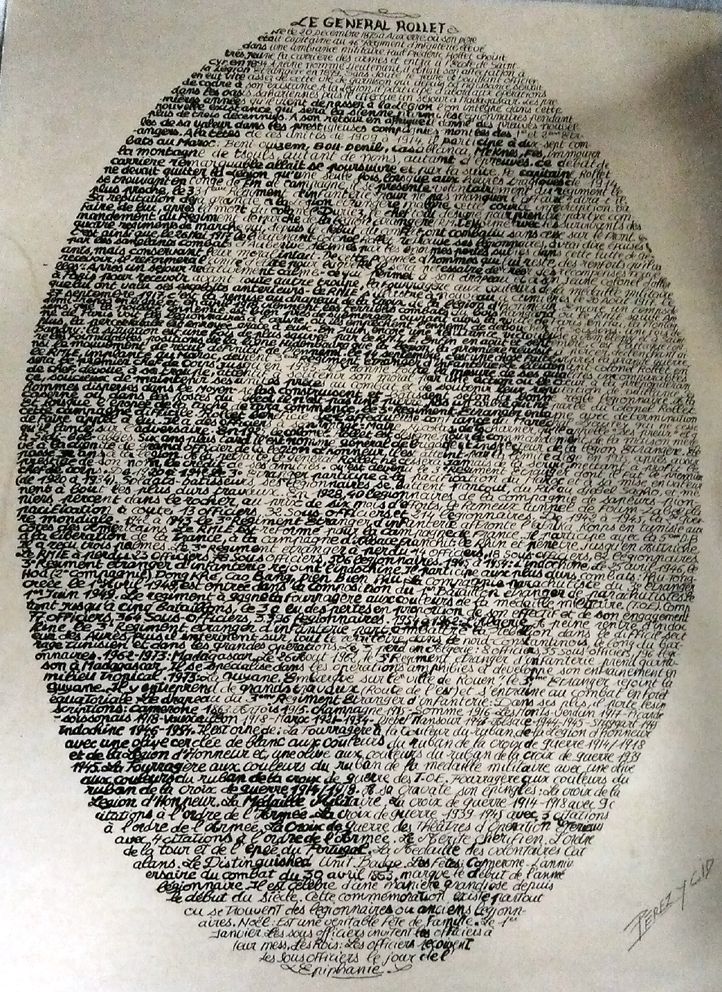
A Drawing Through Writing
To accompany my friend Christian, I also present a text/illustration of my own creation about the life of General Rollet.