






All this is happening above our heads
Solar Eclipses.
By Michel Gravereau
For some time now, I have been drawing your attention to Wednesday, August 12, 2026, in the late afternoon, when we will witness a solar eclipse, almost total if you are in the far south of France.
Many remember the one on August 11, 1999, which passed through northern France.

Always an extraordinary phenomenon to behold, it is worth recalling how it occurs.
Seen from Earth, the Moon and the Sun appear the same size.
This "disappearance" of the Sun would not take place before our eyes without a fortunate coincidence: seen from Earth, the celestial body of our nights and the celestial body of our days have the same apparent size. This similarity is only apparent because, while the Moon is approximately 3,700 km in diameter, the Sun is 1,400,000 km. The average distance from the Moon to Earth is 380,000 km, while the Sun is nearly 150 million km away.
The Moon is actually 400 times smaller than the Sun, but also 400 times closer to us. Hence this apparent similarity.
This fortunate coincidence explains why the Moon's disk can sometimes overlap the Sun's disk. It's all a matter of perspective, and the two celestial bodies must be perfectly aligned with the Earth. This is the magnificent and magical spectacle of all: a solar eclipse.
Seen from Earth, the Moon and the Sun appear the same size.
This "disappearance" of the Sun would not take place before our eyes without a fortunate coincidence: seen from Earth, the celestial body of our nights and the celestial body of our days have the same apparent size. This similarity is only apparent because, while the Moon is approximately 3,700 km in diameter, the Sun is 1,400,000 km. The average distance from the Moon to Earth is 380,000 km, while the Sun is nearly 150 million km away.
The Moon is actually 400 times smaller than the Sun, but also 400 times closer to us. Hence this apparent similarity.
This fortunate coincidence explains why the Moon's disk can sometimes overlap the Sun's disk. It's all a matter of perspective, and the two celestial bodies must be perfectly aligned with the Earth. This is the magnificent and magical spectacle of all: a solar eclipse.
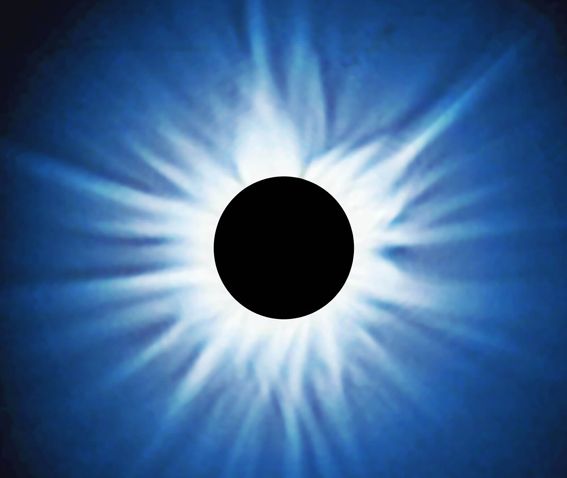
Since the Moon passes between the Earth and the Sun, a solar eclipse can only occur during a New Moon. Currently, there are on average two solar eclipses per year, not 12 or 13 like New Moons, because the planes of the Sun-Earth and Earth-Moon vary. These planes must coincide for an eclipse to occur.
The Babylonians already knew how to calculate the rhythm of eclipses and called them "Saros."
In antiquity, eclipses were attributed to a divine cause. Today, we know that it all boils down to a play of shadows and light: when the Moon passes between the Earth and the Sun, it casts its shadow on our planet.
This shadow only touches a small region of the Earth, but for those below it, and provided the alignment of the Sun, Moon, and Earth is perfect, the spectacle is breathtaking. The lunar disk completely covers the solar disk.
Why is it such a privilege to be able to observe a solar eclipse?
Because the Moon is very small, the shadow it casts on Earth is also very small.
To give you some figures, we would say that the shadow cast, depending on the eclipse, is a circle approximately 150 to 200 km in diameter. Therefore, you must be positioned directly under the exact path of the shadow to witness the spectacle.
Thus, people in the North, on August 12th, will notice nothing unless they carefully observe the Sun at the moment of the eclipse, which, for them, will be partial.
The Babylonians already knew how to calculate the rhythm of eclipses and called them "Saros."
In antiquity, eclipses were attributed to a divine cause. Today, we know that it all boils down to a play of shadows and light: when the Moon passes between the Earth and the Sun, it casts its shadow on our planet.
This shadow only touches a small region of the Earth, but for those below it, and provided the alignment of the Sun, Moon, and Earth is perfect, the spectacle is breathtaking. The lunar disk completely covers the solar disk.
Why is it such a privilege to be able to observe a solar eclipse?
Because the Moon is very small, the shadow it casts on Earth is also very small.
To give you some figures, we would say that the shadow cast, depending on the eclipse, is a circle approximately 150 to 200 km in diameter. Therefore, you must be positioned directly under the exact path of the shadow to witness the spectacle.
Thus, people in the North, on August 12th, will notice nothing unless they carefully observe the Sun at the moment of the eclipse, which, for them, will be partial.
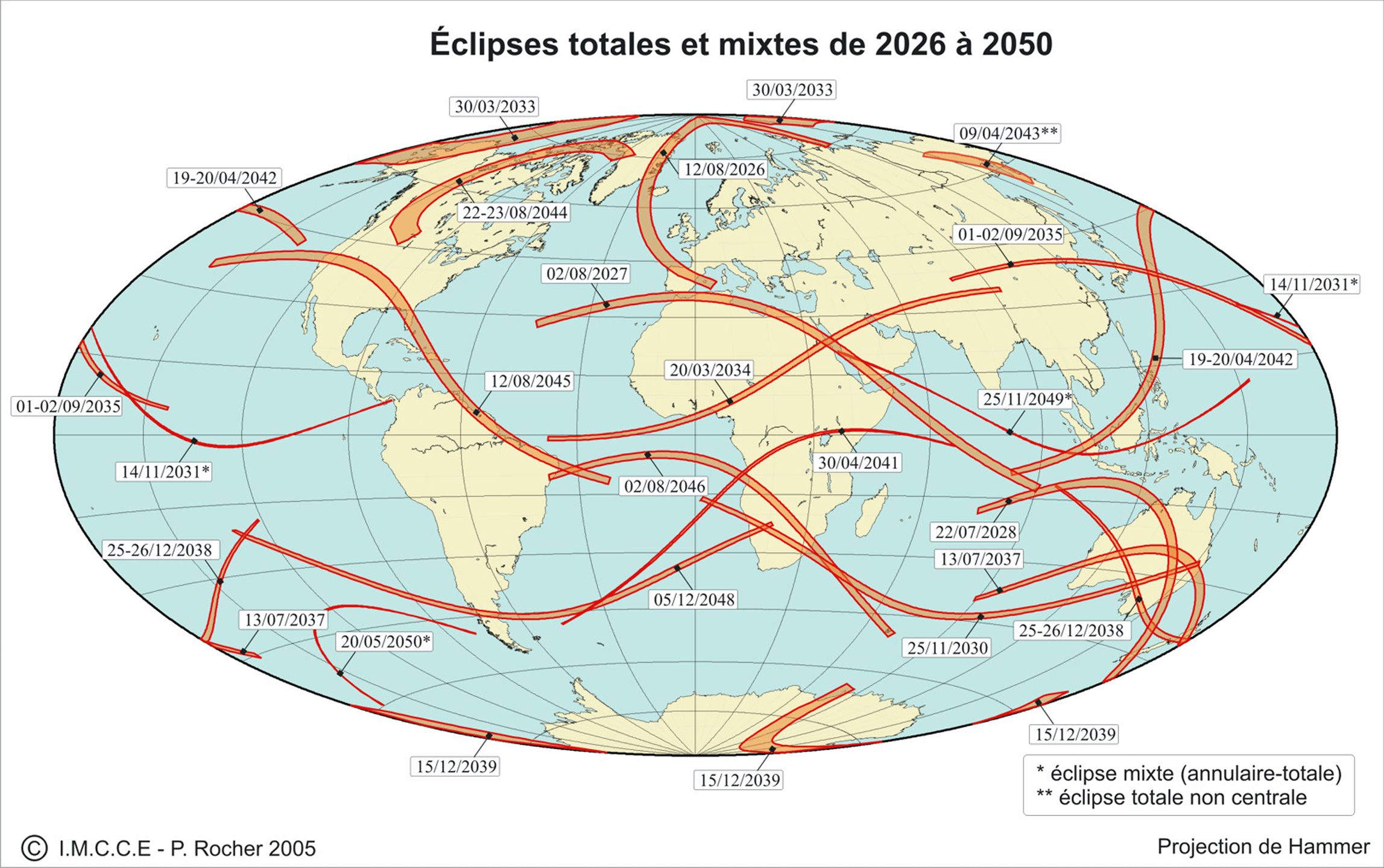
Join me in the Hérault region on August 12th. I will tell you the exact location from which we will broadcast this eclipse live.
Let us remember that many civilizations saw eclipses as the appearance of a monster, a dragon or giant serpent, preparing to devour the Sun. The aim was then to make as much noise as possible to drive the beast away.
Very quickly, people learned to predict them, but they continued to be considered signs from the gods or from destiny.
Thus, while the eclipse of May 28, 585 BC brought fame in Greece to the scholar Thales who had predicted it, in Assyria it led two enemy kingdoms, Media and Lydia, to sign a peace treaty.
When I told you that astronomy is a constant subject for humankind… I urge you to watch this eclipse because, in addition to the next one, which will only be an annular eclipse in 2056 visible in France, the next total eclipse that will pass over Orléans will take place on September 3, 2081. I'm afraid some of us won't see it. Unless medicine makes enormous progress by then.
Upcoming Events
This section informs you about foreseeable events in the fields of pure astronomy and space exploration.
Astronomical Events
March 20: Spring Equinox.
May 7 and 8: Sunset under the Arc de Triomphe from the Place de la Concorde.
May 9, 10, and 11: Sunset under the Arc de Triomphe from the Champs-Élysées roundabout.
June 21: Summer solstice.
July 31, August 1, 2, and 3: Sunset under the Arc de Triomphe from the Champs-Élysées roundabout.
August 3, 4, and 5: Sunset under the Arc de Triomphe from the Place de la Concorde.
August 12: Total solar eclipse, visible in its partial phase in mainland France.
Perseid meteor shower.
August 28: Partial lunar eclipse in mainland France.
September 14: Venus appears behind the Moon.
September 23: Equinox of Autumn.
December 21: Winter Solstice.
Ursid meteor shower.
Space exploration
ISS: French astronaut Sophie Adenot joined the crew aboard the ISS.
She became the 11th French astronaut and the 2nd woman, the first being Claudie Aigneré.
Artemis 2 launch to the Moon: Date set: March 7. However, due to a malfunction in the helium flow in one of the SLS rocket stages, the launch will almost certainly not take place on that date. To be continued.
Let us remember that many civilizations saw eclipses as the appearance of a monster, a dragon or giant serpent, preparing to devour the Sun. The aim was then to make as much noise as possible to drive the beast away.
Very quickly, people learned to predict them, but they continued to be considered signs from the gods or from destiny.
Thus, while the eclipse of May 28, 585 BC brought fame in Greece to the scholar Thales who had predicted it, in Assyria it led two enemy kingdoms, Media and Lydia, to sign a peace treaty.
When I told you that astronomy is a constant subject for humankind… I urge you to watch this eclipse because, in addition to the next one, which will only be an annular eclipse in 2056 visible in France, the next total eclipse that will pass over Orléans will take place on September 3, 2081. I'm afraid some of us won't see it. Unless medicine makes enormous progress by then.
Upcoming Events
This section informs you about foreseeable events in the fields of pure astronomy and space exploration.
Astronomical Events
March 20: Spring Equinox.
May 7 and 8: Sunset under the Arc de Triomphe from the Place de la Concorde.
May 9, 10, and 11: Sunset under the Arc de Triomphe from the Champs-Élysées roundabout.
June 21: Summer solstice.
July 31, August 1, 2, and 3: Sunset under the Arc de Triomphe from the Champs-Élysées roundabout.
August 3, 4, and 5: Sunset under the Arc de Triomphe from the Place de la Concorde.
August 12: Total solar eclipse, visible in its partial phase in mainland France.
Perseid meteor shower.
August 28: Partial lunar eclipse in mainland France.
September 14: Venus appears behind the Moon.
September 23: Equinox of Autumn.
December 21: Winter Solstice.
Ursid meteor shower.
Space exploration
ISS: French astronaut Sophie Adenot joined the crew aboard the ISS.
She became the 11th French astronaut and the 2nd woman, the first being Claudie Aigneré.
Artemis 2 launch to the Moon: Date set: March 7. However, due to a malfunction in the helium flow in one of the SLS rocket stages, the launch will almost certainly not take place on that date. To be continued.