





All this is happening above our heads
Rockets
By Michel Gravereau
In the various journeys I've offered you through the solar system, I've often mentioned the important role of small probes sent by humans to better understand our space environment. But these probes don't just launch themselves by chance or by lifting a horse's hoof. A powerful machine is needed to launch them out of Earth's gravity. And these machines are called rockets.
While this word seems very familiar to us today, past generations have gradually mastered it as humankind has come to understand how it works.
We are living in 2026. One hundred years ago, the American Robert Goddard, having grasped the principle of action and reaction, launched the first liquid-fueled rocket. A mixture of gasoline and liquid oxygen. It ascended to 12.5 meters in 2.5 seconds. Fantastic. Then he changed the fins to movable vanes controlled by a gyroscope, allowing him to control the rocket's flight.
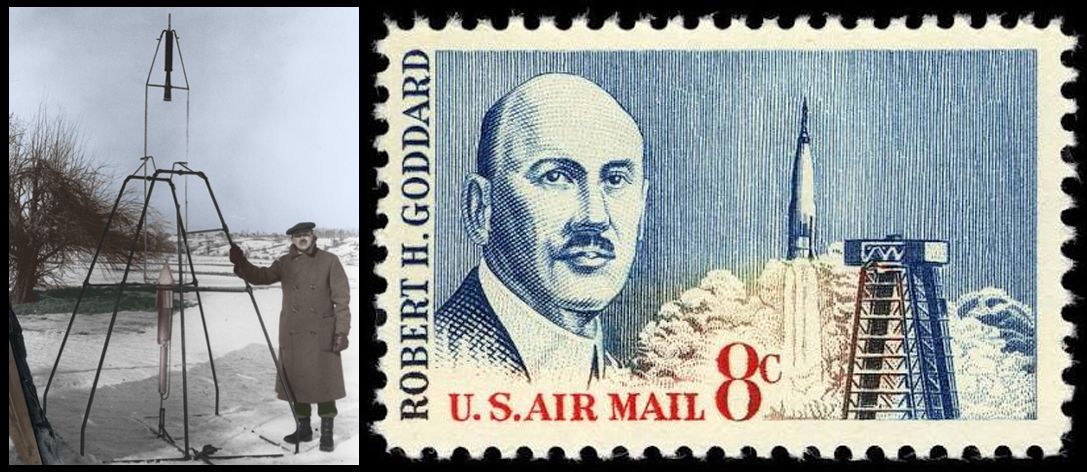
The rest, as they say, is history, for it reflects the story of all sciences: an inventor and a horde of engineers, technicians, and scientists of all kinds who seize upon the invention and dedicate their lives to its development.
From Goddard to the SLS rocket that will return humans to the Moon next year, the journey is long, a century, and we will see some of its milestones.
First, let's recall a small fact. Goddard's rocket flew before Charles Lindbergh crossed the Atlantic for the first time, at least officially, since it wasn't until May 1927 that he accomplished this feat.
We don't need to tell the military that progress is made during wars. The funding and the imperatives are there. It is therefore not surprising that during World War II, engineers racked their brains to figure out how to destroy the enemy and, above all, how to carry fire as far as possible from the front lines, across seas and oceans. A German engineer would succeed. His name was Wernher von Braun. Following in Goddard's footsteps and around the same time, around 1930, von Braun developed several rockets for the rearmament of Germany. And during the conflict, from Peenemünde beach, he bombarded London, Belgium, and the Netherlands with 3,000 V-2 rockets.
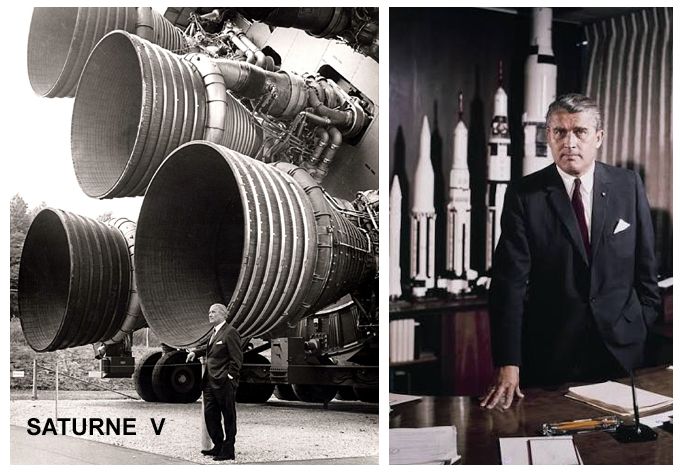
After the war, von Braun and a group of German scientists went to the United States. They modified the recovered V-2 rockets to create the first Redstone rockets. NASA would be born soon after.
Humiliated by the USSR and its first satellite, Sputnik, launched into orbit on October 4, 1957, by the Semyorka rocket, the United States retaliated four months later with Explorer 1.
Led by engineer Sergei Korolev, the Soviets took the lead. They sent the first living being into space, the little dog Laica; then came the first human: Yuri Gagarin, on April 12, 1962. They would be the first to "walk in space" with Leonov. They were also the first to photograph the far side of the Moon with Luna 3, and to soft-land a spacecraft on the Moon with Luna 9.
They would go on to explore Mercury up close and land three robots on Venus.
The space race was frenzied. Other nations followed suit. France had its say. It would be the third power to seek to conquer space. From the Algerian Sahara, in Hammaguir and Reggane, she developed the Véronique program (VERnon and electronic). This rocket reached an altitude of 70 km to analyze the atmosphere.
With independence, France lost this corner of Africa and established its space center in French Guiana, in Kourou.
On April 9, 1968, Véronique became the first French rocket to leave this ground, which would see countless others launched, not only for France, but also for Europe.
The simple little Goddard rocket, which seems like a toy in today's world, would grow so much that it would give rise to gigantism. Tons of rockets had to be launched, either to put them into orbit around the Earth or to send them into space. The Saturn V rocket, which enabled humans to walk on the Moon with the Apollo program, weighed over 3,000 tons! It was the heavyweight champion.
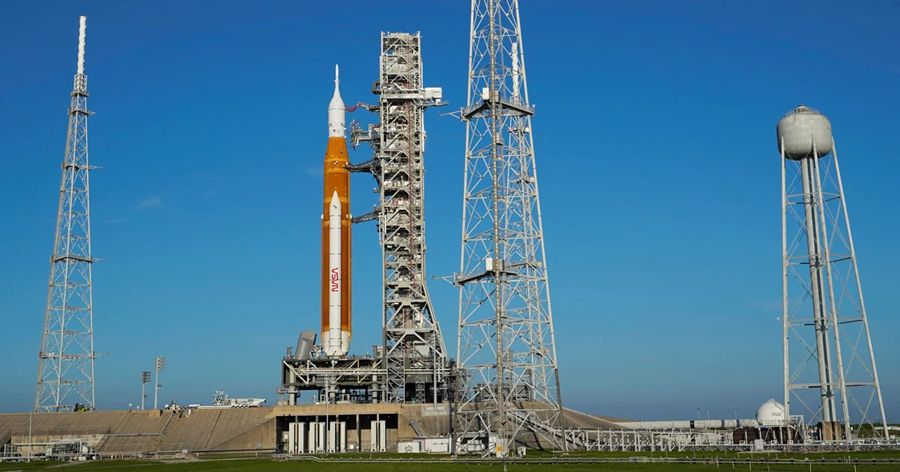
But all records are destined to be broken: the return of humans to our satellite required another rocket: the SLS (Space Launch System). This is the Artemis program. At 125 meters tall, it is capable of placing 140 tons into low Earth orbit. It is the most powerful ever built. If you suffer from ear infections, don't witness its launch, as it generates the most impressive noise of any man-made object, apart from the nuclear bomb.
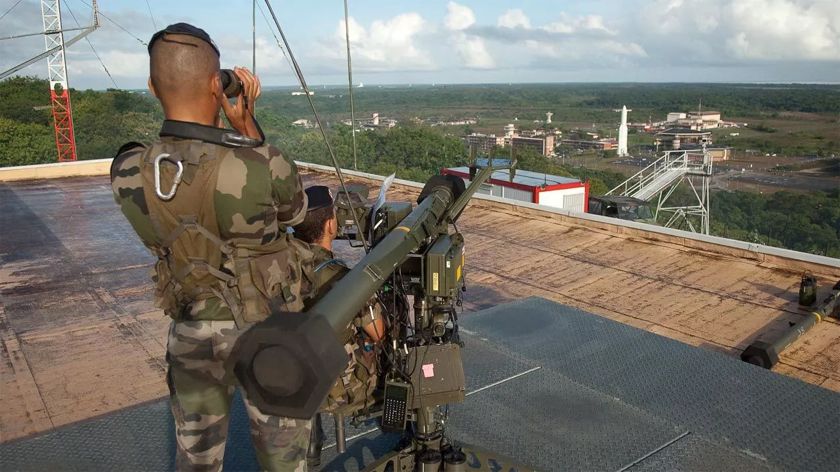
Our legionnaires of the 3rd REI will have to make do with the modest Ariane 6, weighing 860 tons and standing 65 meters tall.
As always, a so-called peaceful invention, the desire to explore its inner workings quickly gave way to exploitation for a far less peaceful purpose. This action-reaction principle fuels all these rockets and missiles that whirl above our heads, bringing misfortune and despair to others.
Such is the way of the world.