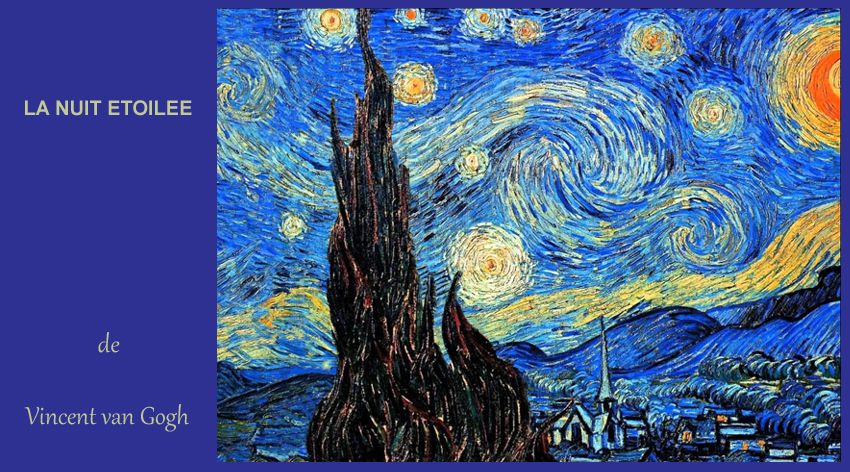






All this is happening above our heads
The Planet Mercury
By Michel Gravereau
To help children remember the names of the planets visible to the naked eye since time immemorial, we simply go through the days of the week, and that's that: Tuesday is Mars' day, Friday is Venus' day, Saturday is Saturn's day.
Today, let's talk about the planet that gave its name to Wednesday: Mercury.
In our solar system, it is the closest to the Sun. Its orbit varies from 46 to 70 million kilometers. Its orbital path is the most eccentric in the solar system. It is an elliptical (oval) orbit. As a reminder, the Earth is 150 million km from the Sun.
Clinging to this scorching sun and lacking a true atmosphere, but rather an exosphere composed of traces of gas and particles deposited by the solar wind, Mercury is unable to protect itself from the Sun's rays or retain the heat that escapes as soon as it passes into shadow. The planet therefore experiences record-breaking temperature variations: scorching hot by day (up to +430°C), freezing cold by night (down to -180°C).
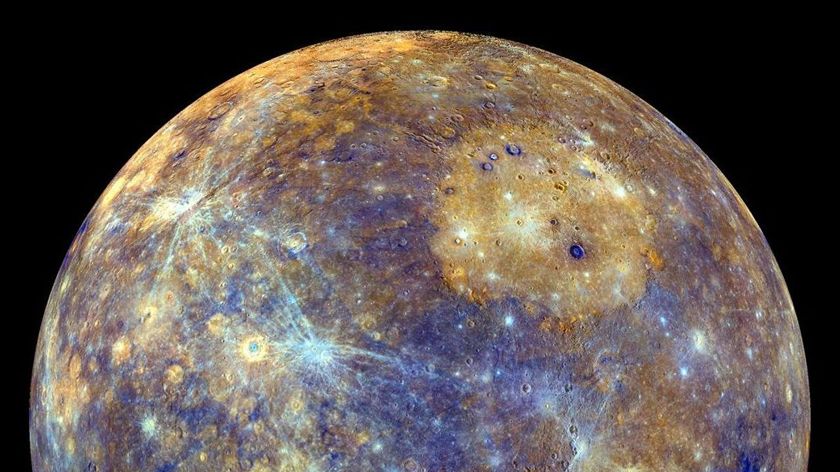
This makes exploration difficult.
With a diameter of 4,879 km, it is the smallest planet in our solar system. It is also the fastest orbiting our star, traveling at nearly 170,000 km/h. This is according to Kepler's famous law. It takes only 88 days to orbit our star. And being so close to the Sun, it goes without saying how difficult it is to spot it in the evening or at dusk. Several times in my life, taking advantage of its greatest distance from the Sun (its greatest elongation), I've wanted to see Mercury; all I've been able to observe is a tiny speck, without any detail, of course. The fact that it's always close to the horizon distorts its image in a telescope (turbulence). In short, trying to observe Mercury always leads to great disappointment.
If we were on Mercury, we would see the Sun rise or set every 58 Earth days. For a long time, unable to properly observe this planet, astronomers thought it had synchronous motion, like the Moon with respect to Earth, meaning it always presented the same face to the Sun. Half of it was under a scorching temperature while the other half was plunged into the frigid cold of -180 degrees Celsius.
Just like Venus, Mercury has no moon orbiting it.
Mercury is a terrestrial planet, meaning it's made of rock, like Venus, Mars, and Earth. But it has the unique characteristic of having an overdeveloped core and being composed primarily of iron. This core is likely liquid and occupies two-thirds of Mercury's volume. For Earth, it's 17%.
Its rocky crust isn't very thick, only about ten kilometers. Beneath it lies a mantle of semi-molten rock composed mainly of iron, sulfur, and silicate, extending for about 600 km. This is its core! As a result, Mercury is very dense.
Mercury, a rugged terrestrial planet.
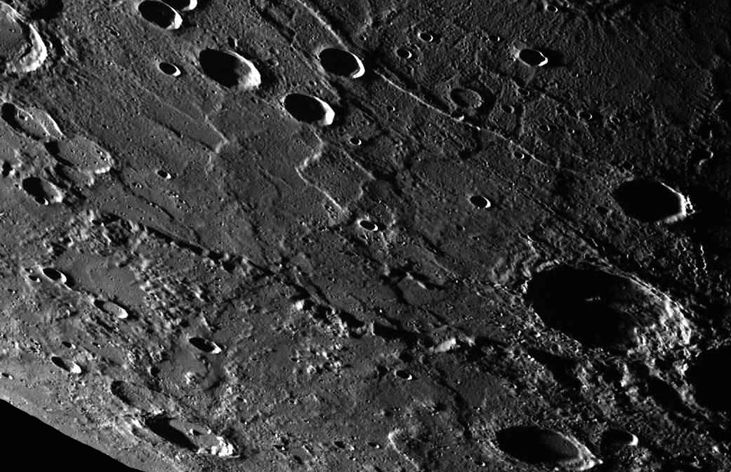
At its formation, Mercury was probably a very active, very hot volcanic planet. Then, it cooled, and its crust formed. During this long cooling period, it is thought to have contracted, wrinkling its surface.
Like the Moon, Mercury's surface is a vast desert dotted with craters. These scars are the traces of the numerous meteorite impacts it suffered during its formation. The planet is also crisscrossed by plains, remnants of ancient lava flows from volcanic eruptions or meteorite impacts. Today, Mercury is considered a dead planet, devoid of internal activity.
The Caloris Basin is the largest meteorite crater observed on Mercury. It measures 1,550 km in diameter.
A Magnetic Planet
The presence of a magnetic field around Mercury intrigues scientists. It cannot be generated by a dynamo effect produced by the rotation of its core, because it rotates too slowly. One hypothesis suggests that its highly elliptical orbit might, on the other hand, sufficiently agitate the liquid metal in its core to create a dynamo effect capable of generating the magnetic field that surrounds Mercury.
It's difficult to approach it.
It's difficult to send a spacecraft into the vicinity of the Sun, whose gravitational pull and radiation can be fatal. Therefore, Mercury remains largely unknown to us.
After two flybys by the American probe Mariner 10 in 1973 and 1974, Mercury was not visited again until 2011. The American probe Messenger then positioned itself in the orbit of the small planet, from where it was able to observe it for four years. The journey to Mercury is long and perilous. It is necessary to successfully place oneself in Mercury's orbit without being pulled into the Sun's gravitational pull. Then, it is essential to possess instruments resistant to the heat of our star.
The second mission sent into orbit around Mercury was launched in 2018. BepiColombo carried two probes, one European and the other Japanese. The first, named MPO (Mercury Planetary Orbiter), is tasked with mapping Mercury, studying its internal structure and the composition of its surface, and the second, Mio, with analyzing the planet's magnetic field and magnetosphere. Under the project management of CNES, six French laboratories contributed to the 16 European instruments.
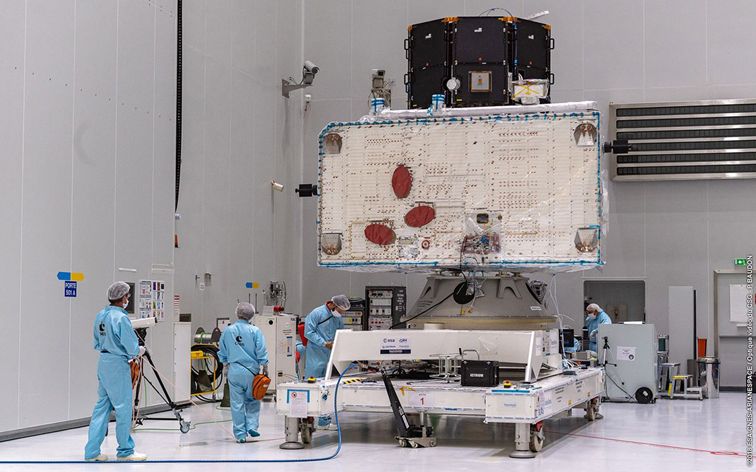
To enter orbit around Mercury in November 2026, without ending its journey in the Sun, the BepiColombo probe must slow its speed by using the gravitational pull of the planets, thus flying past Earth once, Venus twice, and Mercury six times.
Mercury is therefore a planet largely unknown to scientists, primarily due to its proximity to the Sun. Yet, some are convinced that a better understanding of it would help us to better grasp the formation of our solar system.
While awaiting November and the launch of BepiColombo into orbit, keep an eye on the news.
You still have to try and spot Mercury in your evening sky. On October 12th, starting at 7 p.m., just as the Sun sets, you can observe a very small crescent Moon and, directly above it, a tiny point that will be at its maximum elongation for 2026. That's Mercury. Clean your glasses and happy observing!
Despite the extreme heat on this planet, I know many who would love to wander through this hostile and inhuman landscape, going from one crater to another, as they are named after artists from all fields. Would you like a few?
Here are the craters of Cézanne, Dali, Gauguin, Van Gogh, and Botticelli, who can see Venus rising. Then, after the painters, come the writers like Hemingway, Victor Hugo, Balzac, Cervantes, and the entire Brontë family. If they were all gathered together, what a symphony it would be with Bach, Chopin, Berlioz, Beethoven, Verdi, and Puccini, of course, accompanied by Sidney Bechet's clarinet. There's also the dance of Rudolf Nureyev, the films of Truffaut, and that artist forgotten by many: Imhotep, the architect of the pyramids. Enjoy your journey among these wonders.