







The Legion Unvarnished 5
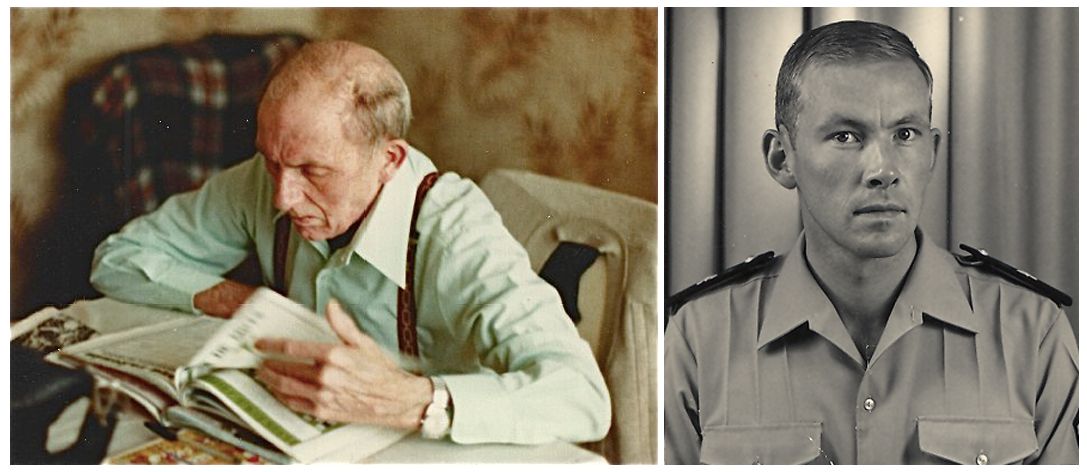
My father told me:
Returning to France after more than three years in Madagascar, during a leave, my father said to me: “You see, my son, when I saw the Germans during the war, I thought of the young men for whom the words ‘Nazism, Fascism, Communism, Radicalism’ were meaningless terms with indeterminate, vague values.
These soldiers, with their disturbing yet fascinating discipline, were handsome, strong, proud, and smiling; they were undeniably made for victory, not defeat. They had everything it took to attract an athletic young man.
After the Liberation, many of these young men who had been seduced into joining the SS or the LVF were shot; they completed a picture where scores were settled without mercy and where even women who had ‘colluded’ with the Germans were publicly shorn.
Their enlistment was the consequence of a complete lack of education.” Politically, it took very little for them to enlist, go fight, and become those fine, proud, and valiant soldiers themselves. A few resounding pronouncements, a different environment, a different circle of friends—very little indeed—and that's how heroes and traitors were made, or at least those who ended up being labeled as such, recruited from among the same naive and sincere young men.
Haven't you taken the wrong path, son?
I know that during the Algerian War, certain media outlets didn't hesitate to attack the Legion. I'll surprise you if I tell you that I don't agree with those people. Whether they were left-wing, right-wing, or otherwise, whether they spoke on behalf of the Church or some humanitarian league, they had no right to accuse the Legion of inhumanity. In fact, they were criticizing the legionnaires for fighting a war Inhuman. What idiocy! How could a war be humane, except insofar as it pits human beings against each other?
They accused the legionnaires and paratroopers of torture, as if the police, the gendarmerie, the conscript units, the OAS, and… those on the other side hadn't had torturers in their ranks… it's so true that we lived in a sad world, where people were killed far too easily for far too good reasons.
Today, a soldier may regret that the rules of honor have been transgressed, but he must admit that the time of the "closed field" where two armies clashed is over. Napoleon brought war into the cities. In a conflict, millions of human beings are drawn into it, often against their will. The military no longer has the privilege of war; it is engulfing our world.
When the French government When he sent his soldiers to Algeria on so-called pacification missions, he knew full well that he was sending them to fight against men who had no choice but defeat or subversive warfare. Hardened by his experience in Indochina, he knew perfectly well that one cannot fight an enemy without being informed of their plans. Attacked and cornered, he did not hesitate to shift onto the Army a responsibility that he alone bore.
If your "white kepi" remained white, the color of their jackets changed once they were turned inside out. Putting them on trial, yes, undoubtedly, but it all depends on which side they find themselves on, for it is true that murderers are found only among the vanquished!
The greatest misfortune in the world stems from the fact that power is in the hands of a few individuals who have prostituted themselves to obtain it and who are only interested in that power itself and money. that it provides.
You will inevitably be violence, like your new family, made up of this group of men who resemble you. You will resemble those curious people who cling to the Legion's past and its flag. I, on the other hand, cling to those dear to me, and above all to the image of that man who, more than two thousand years ago, ended up on the cross after having, as Renan said, "revealed to the world that the fatherland is not everything, man is prior to and superior to the citizen."
In my reading, I see again, like a nightmare, that cry uttered by a German soldier in the hell of Stalingrad: "I no longer believe in God, for he has betrayed us..." I would shout louder than him every time I see an innocent person tortured, or worse: a child killed.
What is terrible for a Christian is not only to realize that the horrors of war can lead those who suffer them to doubt the existence of God, but that in reality, the elements dominate and overwhelm them. They are dominated by fear, nationalism, material self-interest, and above all, false economic or political necessities. All of this is skillfully exploited, unleashing passions that no one can control anymore they try to convince us that we are only defending ourselves.
Jesus the liberator. In fact, what the Jews hoped for was that Jesus would one day lead an army that would wage war against the occupier. But Jesus spoke to them, and it was not hatred and violence he spoke to them about, but love. He said no to the sword and rejected power.
The Apostle Paul made this clear: “Do not repay anyone evil for evil. Live at peace with everyone. Overcome evil with good.” The true homeland of a Christian is that of love, and the path to reach it is laid out by the Gospel, which we must not only read, but strive to live every day.
After a short silence, I told my father that I couldn't agree with his way of thinking, but I also told him that I could perfectly understand it. I attribute his professed antimilitarism to a certain naiveté, marked, however, by undeniable courage.
But I would have liked him to explain to me how a completely unarmed nation could be protected by the entire world. He undeniably lacked some horrific color images… The Jewish people, cruelly martyred under the Nazi yoke, emerged transformed. These people, who came from the depths of time carrying peace with them, were themselves transformed into a warrior people the day a land was given to them. Their ancestral land.
Léon Poliakov observes: “The vision of a recent and hallucinatory past, of those brothers and sisters condemned to a horrific and anonymous death, haunted the Jewish fighters and explained their furious zeal for battle. Thus, Jewish dynamism, traditionally restrained and directed toward peaceful conquests, expressed itself aggressively, displaying a primal, commonplace violence, exhibiting fine military virtues to which it had always denied itself.”
Today, we no longer have the right to ignorance. We must call a spade a spade. The example of Hitler and Nazism constitutes the most blatant warning.
At the Nuremberg trials, Casamayor wrote, speaking of “crimes against humanity”:
“…the title alone reeks of American idealism, which blends so well with its practicality. Here, the task was easy, the horrors being perfectly monumental.” “But first, we need to agree on what ‘speaking’ means. In theory, it’s quite clear: the murderer chooses their victim, while the perpetrator of a crime against humanity doesn’t even consider it: they eliminate a whole, they act globally. In practice, we don’t just consider the quantity; there’s the method.
Shooting a hundred thousand men, women, children, and elderly people by bombing raids like those in Dresden, Berlin, Hiroshima, and Nagasaki—that’s pitting them against each other. I’m talking about the shooters and bombers who justify the massacres as necessary.
The Germans felt their rear lines were being undermined by resistance, while the Americans were eager to finish, explaining the bombings with the hypocrisy of saving soldiers’ lives. Each side had good reasons to use monstrous means to eliminate its ‘adversary,’ and woe to the vanquished.” The only crosses are those that lie prostrate, like infamous shadows, ignoble cloaks of ingratitude that haunt the graves of soldiers who died for Highnesses and kings who will exchange pleasantries while they rot…
Note:
For me, one observation is inescapable: my father was not a born militarist, yet he never questioned my choice. A man of common sense, he stood against the biases of the antimilitarists who were "intellectually" mistreating the Legion.
A pacifist, he feared that I had embarked on a wrong path, drawn by vague and irrepressible desires for distant shores and faraway places.
He was right to say that good and evil are relative, depending on one's perspective. I could not agree with what he said, but I perfectly understood and respected his reasoning.
When the French government When he sent his soldiers to Algeria on so-called pacification missions, he knew full well that he was sending them to fight against men who had no choice but defeat or subversive warfare. Hardened by his experience in Indochina, he knew perfectly well that one cannot fight an enemy without being informed of their plans. Attacked and cornered, he did not hesitate to shift onto the Army a responsibility that he alone bore.
If your "white kepi" remained white, the color of their jackets changed once they were turned inside out. Putting them on trial, yes, undoubtedly, but it all depends on which side they find themselves on, for it is true that murderers are found only among the vanquished!
The greatest misfortune in the world stems from the fact that power is in the hands of a few individuals who have prostituted themselves to obtain it and who are only interested in that power itself and money. that it provides.
You will inevitably be violence, like your new family, made up of this group of men who resemble you. You will resemble those curious people who cling to the Legion's past and its flag. I, on the other hand, cling to those dear to me, and above all to the image of that man who, more than two thousand years ago, ended up on the cross after having, as Renan said, "revealed to the world that the fatherland is not everything, man is prior to and superior to the citizen."
In my reading, I see again, like a nightmare, that cry uttered by a German soldier in the hell of Stalingrad: "I no longer believe in God, for he has betrayed us..." I would shout louder than him every time I see an innocent person tortured, or worse: a child killed.
What is terrible for a Christian is not only to realize that the horrors of war can lead those who suffer them to doubt the existence of God, but that in reality, the elements dominate and overwhelm them. They are dominated by fear, nationalism, material self-interest, and above all, false economic or political necessities. All of this is skillfully exploited, unleashing passions that no one can control anymore they try to convince us that we are only defending ourselves.
Jesus the liberator. In fact, what the Jews hoped for was that Jesus would one day lead an army that would wage war against the occupier. But Jesus spoke to them, and it was not hatred and violence he spoke to them about, but love. He said no to the sword and rejected power.
The Apostle Paul made this clear: “Do not repay anyone evil for evil. Live at peace with everyone. Overcome evil with good.” The true homeland of a Christian is that of love, and the path to reach it is laid out by the Gospel, which we must not only read, but strive to live every day.
After a short silence, I told my father that I couldn't agree with his way of thinking, but I also told him that I could perfectly understand it. I attribute his professed antimilitarism to a certain naiveté, marked, however, by undeniable courage.
But I would have liked him to explain to me how a completely unarmed nation could be protected by the entire world. He undeniably lacked some horrific color images… The Jewish people, cruelly martyred under the Nazi yoke, emerged transformed. These people, who came from the depths of time carrying peace with them, were themselves transformed into a warrior people the day a land was given to them. Their ancestral land.
Léon Poliakov observes: “The vision of a recent and hallucinatory past, of those brothers and sisters condemned to a horrific and anonymous death, haunted the Jewish fighters and explained their furious zeal for battle. Thus, Jewish dynamism, traditionally restrained and directed toward peaceful conquests, expressed itself aggressively, displaying a primal, commonplace violence, exhibiting fine military virtues to which it had always denied itself.”
Today, we no longer have the right to ignorance. We must call a spade a spade. The example of Hitler and Nazism constitutes the most blatant warning.
At the Nuremberg trials, Casamayor wrote, speaking of “crimes against humanity”:
“…the title alone reeks of American idealism, which blends so well with its practicality. Here, the task was easy, the horrors being perfectly monumental.” “But first, we need to agree on what ‘speaking’ means. In theory, it’s quite clear: the murderer chooses their victim, while the perpetrator of a crime against humanity doesn’t even consider it: they eliminate a whole, they act globally. In practice, we don’t just consider the quantity; there’s the method.
Shooting a hundred thousand men, women, children, and elderly people by bombing raids like those in Dresden, Berlin, Hiroshima, and Nagasaki—that’s pitting them against each other. I’m talking about the shooters and bombers who justify the massacres as necessary.
The Germans felt their rear lines were being undermined by resistance, while the Americans were eager to finish, explaining the bombings with the hypocrisy of saving soldiers’ lives. Each side had good reasons to use monstrous means to eliminate its ‘adversary,’ and woe to the vanquished.” The only crosses are those that lie prostrate, like infamous shadows, ignoble cloaks of ingratitude that haunt the graves of soldiers who died for Highnesses and kings who will exchange pleasantries while they rot…
Note:
For me, one observation is inescapable: my father was not a born militarist, yet he never questioned my choice. A man of common sense, he stood against the biases of the antimilitarists who were "intellectually" mistreating the Legion.
A pacifist, he feared that I had embarked on a wrong path, drawn by vague and irrepressible desires for distant shores and faraway places.
He was right to say that good and evil are relative, depending on one's perspective. I could not agree with what he said, but I perfectly understood and respected his reasoning.
Share your writing
Elders of the Legion: about the Legion and other topics
Supporters: about the Legion