






The Old Man of Camp Kossei
By Jean-Marie Dieuze
We are in Chad, in N’Djamena, within the grounds of Camp Kossei, an airbase for the French forces since the 1960s. Early 1990s: the heat was oppressive, crushing everything, even certainties. I was deployed with the 2nd Foreign Parachute Regiment (2nd REP) during Operation Sparrowhawk.
I remember this old man as a discreet and singular presence. One of those faces you see every day without always knowing the name, the story, the origin.
We are in Chad, in N’Djamena, within the grounds of Camp Kossei, an airbase for the French forces since the 1960s. Early 1990s: the heat was oppressive, crushing everything, even certainties. I was deployed with the 2nd Foreign Parachute Regiment (2nd REP) during Operation Sparrowhawk.
I remember this old man as a discreet and singular presence. One of those faces you see every day without always knowing the name, the story, the origin.
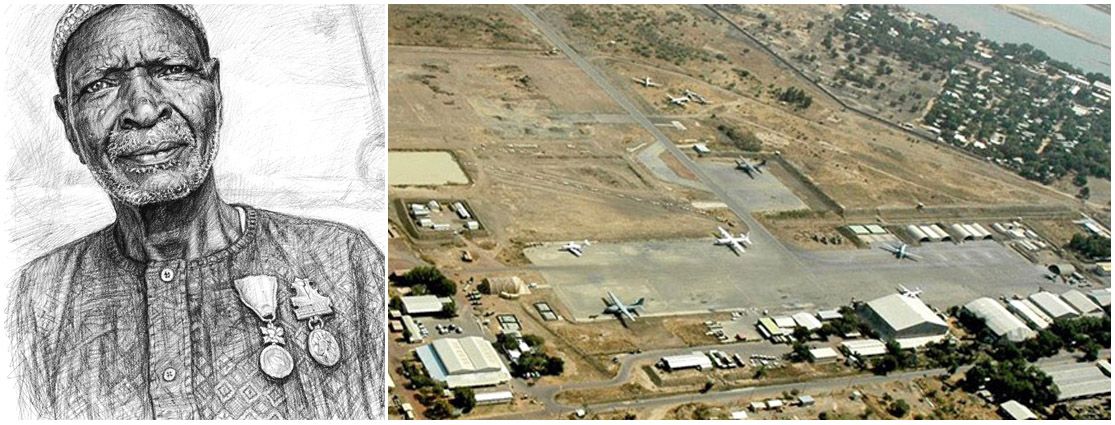
A humble local employee of the Military Post Office, he wore no rank insignia. What had once been a uniform jacket barely covered his tall, thin frame. On his chest, decorations with ribbons worn by time told a prestigious story. His sandals, as old as his memories, left no trace behind him. The sound of his voice would remain a mystery.
His dark face bore the marks of ancient, African, ancestral terroir. Baldness was gaining ground, leaving a few white tufts, bristling like scorched grass. Time had plowed his skin, life had branded it, war had left its scars. One didn't just see an old man: one read the passage of time.
Every day, with unwavering dedication, he maintained the area around the Army Post Office. Precise, repetitive, serious gestures. Not to be seen, much less to be praised. Simply because it was his duty.
He greeted everyone who passed by, without distinction of rank or position. This greeting was not anecdotal. It was not a laughing matter. Quite the contrary. It was, on his part, a mark of respect for the French army, for those who wore the uniform, for what that uniform represented. Through his very humility, he commanded respect in return.
This man never renounced his commitments, his past, or his struggles.
Quite the contrary: he remained proud. Proud of his medals, proud to have served our tricolor flag, proud to have been a humble stone in a structure that transcended him. He expressed this forcefully, in his silences, in his gaze.
He carried within him something rarer: the quiet dignity of those who serve without ever demanding anything in return. The direct gaze of those who still stand tall. The quiet nobility of those whom History has marked.
In him, as in so many others, there was this unassuming humility, this quiet nobility, which is no longer noticed today, in a world eager to forget. All these veterans certainly do not deserve to be forgotten. A nation that forgets its humblest servants loses a part of its honor.
To him, the old man from Camp Kossei, I return today the greeting he offered each morning.
With respect.
With gratitude.
And with that clear-eyed sadness one feels before the humble lives that History has too quickly erased, but which memory, for its part, must keep alive.
His dark face bore the marks of ancient, African, ancestral terroir. Baldness was gaining ground, leaving a few white tufts, bristling like scorched grass. Time had plowed his skin, life had branded it, war had left its scars. One didn't just see an old man: one read the passage of time.
Every day, with unwavering dedication, he maintained the area around the Army Post Office. Precise, repetitive, serious gestures. Not to be seen, much less to be praised. Simply because it was his duty.
He greeted everyone who passed by, without distinction of rank or position. This greeting was not anecdotal. It was not a laughing matter. Quite the contrary. It was, on his part, a mark of respect for the French army, for those who wore the uniform, for what that uniform represented. Through his very humility, he commanded respect in return.
This man never renounced his commitments, his past, or his struggles.
Quite the contrary: he remained proud. Proud of his medals, proud to have served our tricolor flag, proud to have been a humble stone in a structure that transcended him. He expressed this forcefully, in his silences, in his gaze.
He carried within him something rarer: the quiet dignity of those who serve without ever demanding anything in return. The direct gaze of those who still stand tall. The quiet nobility of those whom History has marked.
In him, as in so many others, there was this unassuming humility, this quiet nobility, which is no longer noticed today, in a world eager to forget. All these veterans certainly do not deserve to be forgotten. A nation that forgets its humblest servants loses a part of its honor.
To him, the old man from Camp Kossei, I return today the greeting he offered each morning.
With respect.
With gratitude.
And with that clear-eyed sadness one feels before the humble lives that History has too quickly erased, but which memory, for its part, must keep alive.
Share your writing
Elders of the Legion: about the Legion and other topics
Supporters: about the Legion