





All this is happening above our heads
The Influences of the Moon.
By Michel Gravereau
The belief that the Moon influences humans is lost in the mists of time. It is still present in our vocabulary: don't we say of a person with changeable behavior that they are "moody"?
And of someone in a bad mood, that they are "in a bad mood"?
As for the myth of the werewolf, it is said to reflect the strange behavior of certain animals during a full moon. However, the only proven fact is that the Moon, when full, considerably illuminates the night sky, and that animals are sensitive to this variation in brightness.
So what are the known influences?
The Moon slows down the rotation of our planet. At this rate, if the Earth still existed in a few tens of billions of years, the Earth's day would last 1,128 hours, or 47 of our current days. But by then, it will have been scorched by the Sun's rays.
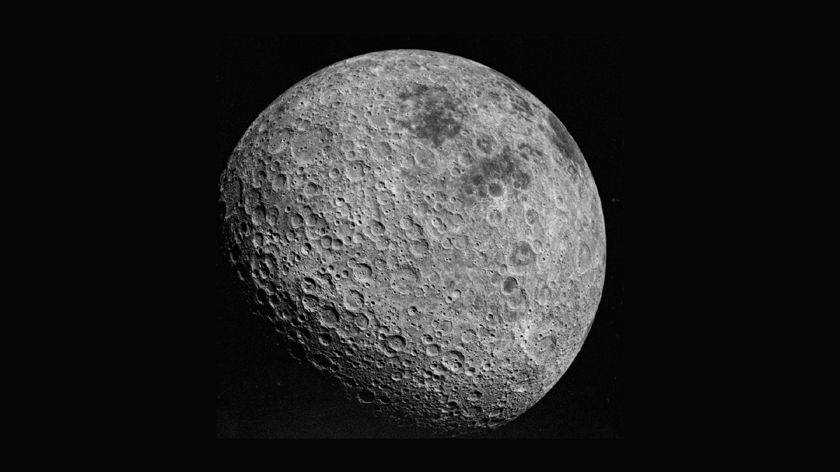
The Moon has had other influences: notably, it protected us, like a shield, from many meteorites that threatened Earth. The sheer number of craters on its far side is proof enough.
All those meteorites that struck the Moon and created those craters would have reached Earth without the Moon's presence as a barrier. Earth's fate, and therefore our own, would have been very different if all those bodies that, by chance, crashed onto the Moon had fallen on our heads.
Virtually all civilizations have attributed a magical influence on human life and destiny to the Moon. But modern science has never found any real evidence for these beliefs about human behavior linked to the Moon.
On the other hand, it has been able to discover the Moon's true cosmic influences on Earth.
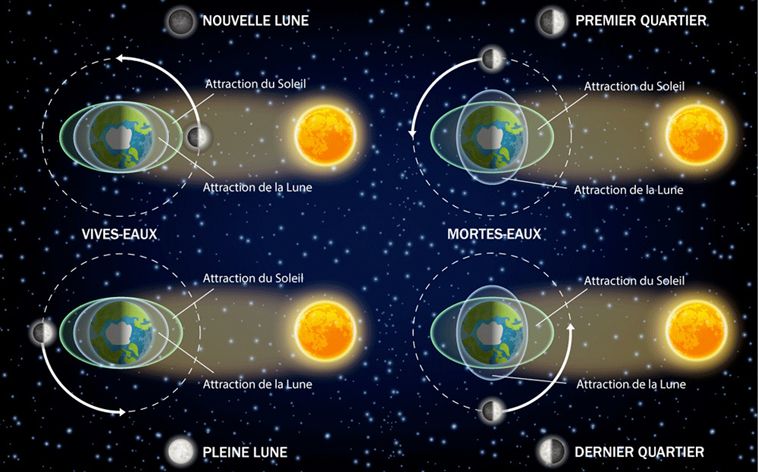
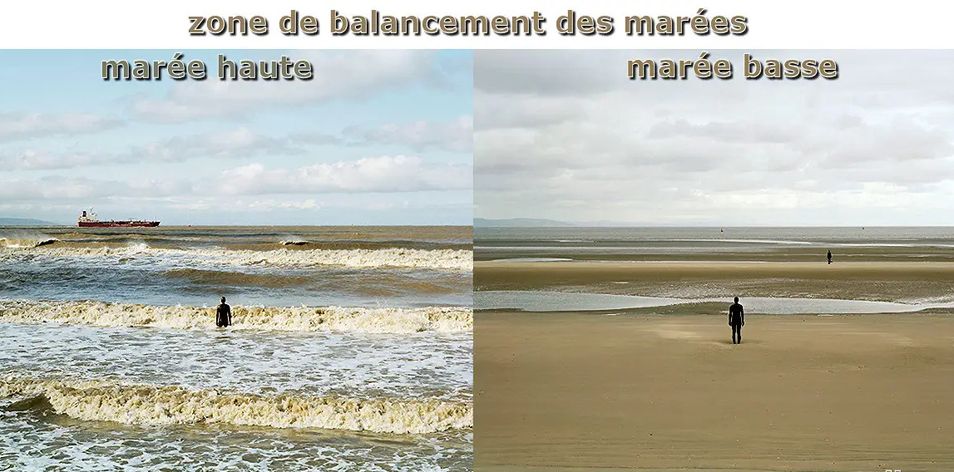
First, the Moon exerts a gravitational pull on our planet. Located beneath the Moon, we are subject to its gravitational pull, which, although we don't feel it, tends to lift us towards it. The most visible consequence of this uplift is the tidal effect on the oceans. But the Earth's crust itself rises by about 20 cm (on average) under the Moon's influence. Since the Moon orbits the Earth more slowly than the Earth rotates on its axis, the tidal effect very slowly slows the Earth's rotation, so that each year, the length of the day increases by a few millionths of a second.
The Moon has had other influences: notably, it protected us, like a shield, from many meteorites that threatened Earth. The sheer number of craters on its far side is proof enough.
All those meteorites that struck the Moon and created those craters would have reached Earth without the Moon's presence as a barrier. Earth's fate, and therefore our own, would have been very different if all those bodies that, by chance, crashed onto the Moon had fallen on our heads.
Virtually all civilizations have attributed a magical influence on human life and destiny to the Moon. But modern science has never found any real evidence for these beliefs about human behavior linked to the Moon.
On the other hand, it has been able to discover the Moon's true cosmic influences on Earth.
First, the Moon exerts a gravitational pull on our planet. Located beneath the Moon, we are subject to its gravitational pull, which, although we don't feel it, tends to lift us towards it. The most visible consequence of this uplift is the tidal effect on the oceans. But the Earth's crust itself rises by about 20 cm (on average) under the Moon's influence. Since the Moon orbits the Earth more slowly than the Earth rotates on its axis, the tidal effect very slowly slows the Earth's rotation, so that each year, the length of the day increases by a few millionths of a second.
The celestial body of our nights has had other influences: it has stabilized the Earth, preventing it from tilting on its axis, as has happened to other planets in the solar system.
If the Earth had tilted in this way, the seasons as we know them would not exist because the amount of sunlight would have varied dramatically several times over millions of years. Finally, still a vivid question in people's minds: does the Moon influence plant growth? Even today, some farmers believe that the phases of the Moon must be taken into account when planting or logging.
Here again, modern science has never found solid evidence for these beliefs, just as it hasn't for the birth of babies.
The Moon remains for us a magnificent spectacle in the sky, best observed at the time of the First Quarter through binoculars or a telescope.
It also allows us to dream, and that's what truly matters.
If the Earth had tilted in this way, the seasons as we know them would not exist because the amount of sunlight would have varied dramatically several times over millions of years. Finally, still a vivid question in people's minds: does the Moon influence plant growth? Even today, some farmers believe that the phases of the Moon must be taken into account when planting or logging.
Here again, modern science has never found solid evidence for these beliefs, just as it hasn't for the birth of babies.
The Moon remains for us a magnificent spectacle in the sky, best observed at the time of the First Quarter through binoculars or a telescope.
It also allows us to dream, and that's what truly matters.