




All this is happening above our heads
Christmas and the Legionnaire 1/3
Past civilizations used different models to measure the inexorable passage of time: the Egyptians used the water clock; for them, the year began with the heliacal rising of the star Sirius; others observed the changing phases of the Moon and thus counted the months and years.
Then humankind established that the day was the time it took for the Earth to rotate on its axis and the year to complete one orbit around the Sun.
For legionnaires, who have invented their own unique language, the time spent under the seven-flamed grenade is counted differently: "I spent 23 Camerone Days in the Legion." This is, in a way, the "Official Clock." But they can also refer to this time with Christmas, as this moment is a high point in the calendar and activities of our Institution. "Oh time, suspend your flight."
Every officer, non-commissioned officer, or legionnaire remembers with melancholy this holiday that leaves such a deep impression, for it is so naturally aligned with the Legion's raison d'être: to find refuge for wandering people, rejected by society. This refuge offers them solidarity, understanding, material and moral support, and comfort.
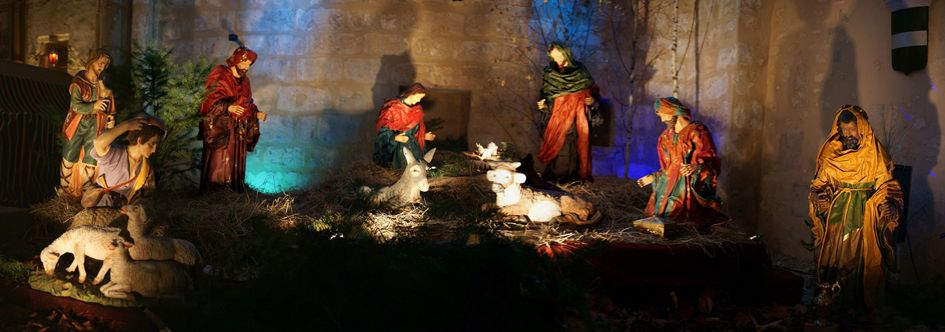
But what does Christmas represent on Earth, beyond religions, in its very definition, its date, and of course, the importance this holiday holds for the Legion and its carefully and enduring rituals, established over generations? In this very special time, let us reflect on late December and the symbolism of Christmas.
Then humankind established that the day was the time it took for the Earth to rotate on its axis and the year to complete one orbit around the Sun.
For legionnaires, who have invented their own unique language, the time spent under the seven-flamed grenade is counted differently: "I spent 23 Camerone Days in the Legion." This is, in a way, the "Official Clock." But they can also refer to this time with Christmas, as this moment is a high point in the calendar and activities of our Institution. "Oh time, suspend your flight."
Every officer, non-commissioned officer, or legionnaire remembers with melancholy this holiday that leaves such a deep impression, for it is so naturally aligned with the Legion's raison d'être: to find refuge for wandering people, rejected by society. This refuge offers them solidarity, understanding, material and moral support, and comfort.
But what does Christmas represent on Earth, beyond religions, in its very definition, its date, and of course, the importance this holiday holds for the Legion and its carefully and enduring rituals, established over generations? In this very special time, let us reflect on late December and the symbolism of Christmas.

Christmas on Earth
Defining the Date
A child would draw a Christmas scene, inevitably including snowflakes and fir trees, so deeply ingrained is this tradition.
It is true that for Northern Europeans, late December is conducive to this weather event. But is Christmas, which represents the coming of Christ, a date that falls in December?
Far be it from me to "turn the tables" and sow the slightest doubt in people's minds, like a revolutionary. Let us simply recall, and we will stick solely to this great uncertainty, that this event certainly did not take place in December since, as the scriptures tell us, the shepherds and their flocks were in the fields. The Church even accepts this hypothesis and places the birth of Christ between 4 and 6 BC.
But let this not change the symbolism of Christmas in any way.
It is true that for Northern Europeans, late December is conducive to this weather event. But is Christmas, which represents the coming of Christ, a date that falls in December?
Far be it from me to "turn the tables" and sow the slightest doubt in people's minds, like a revolutionary. Let us simply recall, and we will stick solely to this great uncertainty, that this event certainly did not take place in December since, as the scriptures tell us, the shepherds and their flocks were in the fields. The Church even accepts this hypothesis and places the birth of Christ between 4 and 6 BC.
But let this not change the symbolism of Christmas in any way.
Christmas Truce
It has endured for centuries and rekindles, as if by magic, the flame of hope.
Personal memories: as was the natural custom at the time, the schools, in orderly and complete ranks, attended patriotic ceremonies such as those on November 11th, in front of the war memorial. My memory is etched with a particular moment.
I was just a boy, and a road worker from my village was being awarded the Legion of Honor for his bravery in the trenches of the First World War.
It must have been in the mid-1950s. It was about time his merits were recognized. After a veteran's speech describing the hell of the trenches, our road worker spoke, without fanfare, in his own words.
Of course, having been wounded three times, he wasn't exactly talking about a walk in the park, especially since, at that time, the memory of 1939-45 was still fresh; de Gaulle and Adenauer had not yet cemented the Franco-German friendship.
At the end of his speech, this man paused, his eyes began to shine, a tear surely welling up, and, after a moment of deep reflection, he declared, "It's a shame there's only one Christmas a year." He then explained that one Christmas Eve, he found himself within range of the German lines, and that night, on both sides, the guns fell silent, perhaps even accompanied by signs of friendship.
The next day, hell began again.
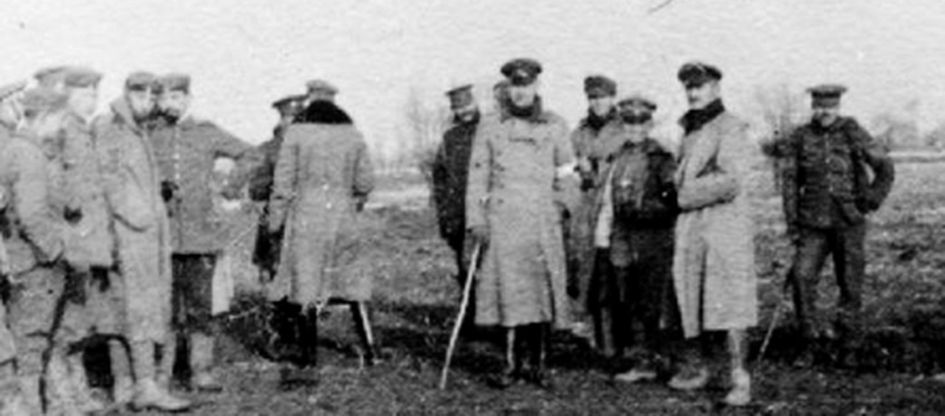
After some historical research, it seems to me that it was in 1914 in the Somme region that the Allies and the Germans agreed to a Christmas truce. To be continued...
Personal memories: as was the natural custom at the time, the schools, in orderly and complete ranks, attended patriotic ceremonies such as those on November 11th, in front of the war memorial. My memory is etched with a particular moment.
I was just a boy, and a road worker from my village was being awarded the Legion of Honor for his bravery in the trenches of the First World War.
It must have been in the mid-1950s. It was about time his merits were recognized. After a veteran's speech describing the hell of the trenches, our road worker spoke, without fanfare, in his own words.
Of course, having been wounded three times, he wasn't exactly talking about a walk in the park, especially since, at that time, the memory of 1939-45 was still fresh; de Gaulle and Adenauer had not yet cemented the Franco-German friendship.
At the end of his speech, this man paused, his eyes began to shine, a tear surely welling up, and, after a moment of deep reflection, he declared, "It's a shame there's only one Christmas a year." He then explained that one Christmas Eve, he found himself within range of the German lines, and that night, on both sides, the guns fell silent, perhaps even accompanied by signs of friendship.
The next day, hell began again.
After some historical research, it seems to me that it was in 1914 in the Somme region that the Allies and the Germans agreed to a Christmas truce. To be continued...