






All this is happening above our heads
Our Atmosphere and the Greenhouse Effect. 2/2
A global hothouse.
The greenhouse effect is a natural phenomenon: certain gases present in the atmosphere from the beginning, primarily carbon dioxide, act as veritable heat traps. They are called "greenhouse gases" because they transform the atmosphere into a gigantic hothouse, allowing sunlight to penetrate but preventing heat from escaping. Sunlight warms the Earth's surface. After being absorbed by the ground, this heat is re-emitted outwards and, if there were nothing to prevent its escape, it would be immediately released into space.
In this case, the temperature at Earth's surface would be -22°C. At such a temperature, all the water on Earth would be frozen, making the environment hostile to the development of life. Fortunately, greenhouse gases in the atmosphere act as a "lid": the heat radiated by the surface "bounces" off their molecules, like light off a mirror, and returns to the surface.
The heat eventually dissipates, but not without bouncing back several times, which helps maintain the atmosphere at an overall temperature of 15°C. Nevertheless, an excess of greenhouse gases can cause global overheating, as is the case on Venus, whose atmosphere is very rich in carbon dioxide. Consequently, the surface of Venus is a veritable inferno: temperatures there reach 480°C. The level of carbon dioxide, the main greenhouse gas, has increased by more than 30% in 150 years due to industrial emissions. This results in a 1°C increase in the average global surface temperature and a 20 cm rise in sea level due to melting ice.

And what about the future?
The scenario for 2100 is not clearly defined, given the complexity of climate mechanics. It is nevertheless believed that, without a significant reduction in industrial emissions, the average temperature will have increased by another 1.5°C. Perhaps much more. Some scientists are suggesting the staggering figure of +4°C and assert that we have far passed the point of no return. A chilling thought.
What is the current warming level?
How significant is the greenhouse effect on our planet?
The most immediate answer lies in comparing it to the Moon, which is located at approximately the same average distance from the Sun but has no atmosphere.
The slow rotation of our natural satellite, combined with the absence of an atmosphere, produces significant temperature variations, ranging from a maximum of +130°C in the daytime hemisphere to a minimum of -160°C in the nighttime hemisphere. However, the average temperature of -25°C is considerably lower than that of the Earth's surface, which is +15°C.
This initial observation needs to be confirmed by more complex studies that will take into account the energy balance of the Earth's surface and show that, without an atmospheric envelope, our planet would be several tens of degrees colder.
This is a crucial difference: an average temperature of just 5 degrees above the current temperature would be enough to trigger a major ice age, resulting in a large part of our planet being buried under a thick layer of permanent ice.
The effectiveness of the Earth's greenhouse effect is not determined by the most abundant gases in the atmosphere (nitrogen and oxygen), which absorb little infrared radiation, but by small quantities of a few "rare" gases, the main one being carbon dioxide, which makes up barely 0.035% of the air.
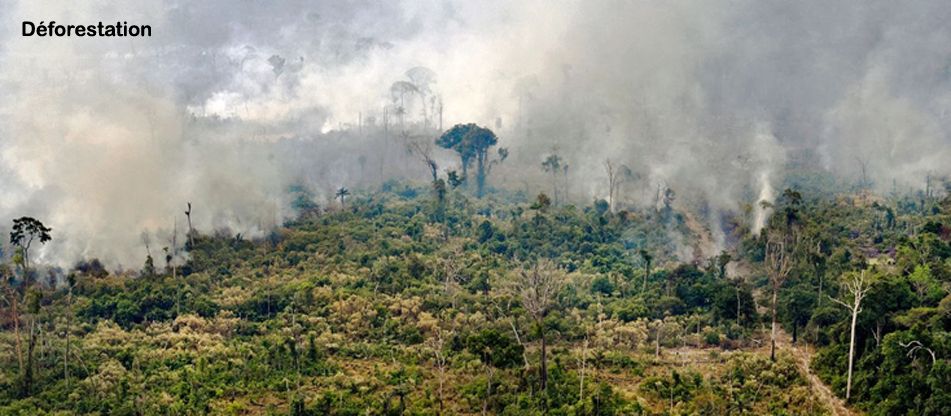
We also see that lands that were once frozen, the permafrost, are now warming and releasing a trapped gas, CH4, methane. This methane is 28 times more harmful to the greenhouse effect than CO2, carbon dioxide.
The stability of our planet's temperature over the last three billion years is likely due to the greenhouse effect. Then the composition of the air changed, and CO2, dissolved in ocean waters, came to form carbonate deposits, while plant photosynthesis produced the oxygen that is present in the atmosphere today.
Human activities have recently altered the proportions of greenhouse gases in the atmosphere, and this on a much shorter timescale than geophysical and astronomical processes.
There are therefore many reasons to fear that the greenhouse effect will end up playing a completely different—and destructive—role.
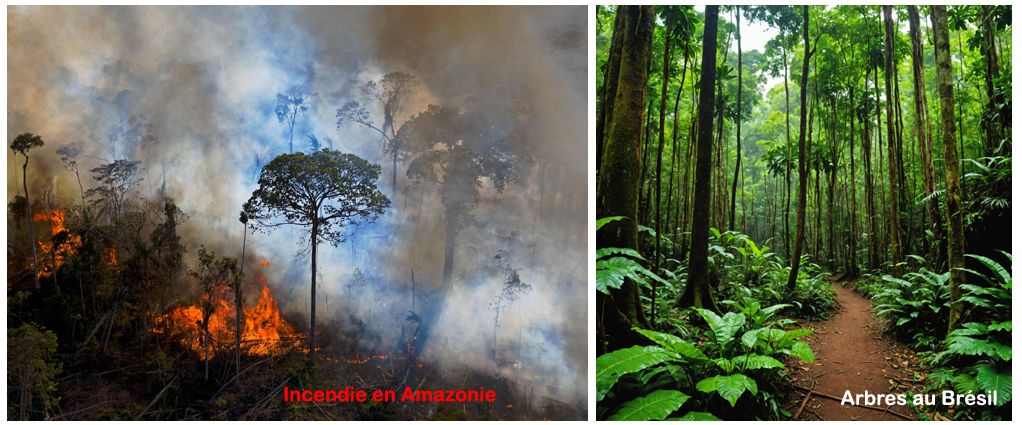
If humanity does not drastically reduce its emissions, the future of generations to come will be profoundly impacted. Instead of deforesting, let's plant trees, which are, and don't laugh, currently the only remedy against these gases. But we'll have to plant billions of them. Get planting!
The stability of our planet's temperature over the last three billion years is likely due to the greenhouse effect. Then the composition of the air changed, and CO2, dissolved in ocean waters, came to form carbonate deposits, while plant photosynthesis produced the oxygen that is present in the atmosphere today.
Human activities have recently altered the proportions of greenhouse gases in the atmosphere, and this on a much shorter timescale than geophysical and astronomical processes.
There are therefore many reasons to fear that the greenhouse effect will end up playing a completely different—and destructive—role.
If humanity does not drastically reduce its emissions, the future of generations to come will be profoundly impacted. Instead of deforesting, let's plant trees, which are, and don't laugh, currently the only remedy against these gases. But we'll have to plant billions of them. Get planting!
Upcoming Events
This section informs you about upcoming events in the fields of pure astronomy and space exploration.
Astronomical Events
January 30: Close conjunction of the Moon and Jupiter.
February 17: Annular solar eclipse, not visible from mainland France.
March 3: Total lunar eclipse, not visible from mainland France.
March 20: Spring equinox.
May 7 and 8: Sunset under the Arc de Triomphe from the Place de la Concorde.
May 9, 10, and 11: Sunset under the Arc de Triomphe from the Champs-Élysées roundabout.
June 21: Summer solstice.
July 31, August 1, 2, and 3: Sunset under the Arc de Triomphe from the Champs-Élysées roundabout.
August 3, 4, and 5: Sunset under the Arc de Triomphe from the Place de la Concorde.
August 12: Total solar eclipse, visible in its partial phase in mainland France. Photo 10 Solar Eclipse
Perseid meteor shower.
August 28: Partial lunar eclipse in mainland France.
September 14: Venus appears behind the Moon.
September 23: Autumnal equinox.
December 21: Winter solstice.
Ursidae meteor shower.
Space Conquest
ISS Passage: From January 21 to 31, it is visible in the evening sky.
ISS: Due to the Crew Dragon's premature return for medical reasons, French astronaut Sophie Adenot will join the crew that will launch to the ISS from Baikonur aboard a Soyuz spacecraft.
She will thus become the 11th French astronaut and the 2nd woman, the first being Claudie Aigneré.
Artemis 2 Launch to the Moon: Date set: February 7.
This section informs you about upcoming events in the fields of pure astronomy and space exploration.
Astronomical Events
January 30: Close conjunction of the Moon and Jupiter.
February 17: Annular solar eclipse, not visible from mainland France.
March 3: Total lunar eclipse, not visible from mainland France.
March 20: Spring equinox.
May 7 and 8: Sunset under the Arc de Triomphe from the Place de la Concorde.
May 9, 10, and 11: Sunset under the Arc de Triomphe from the Champs-Élysées roundabout.
June 21: Summer solstice.
July 31, August 1, 2, and 3: Sunset under the Arc de Triomphe from the Champs-Élysées roundabout.
August 3, 4, and 5: Sunset under the Arc de Triomphe from the Place de la Concorde.
August 12: Total solar eclipse, visible in its partial phase in mainland France. Photo 10 Solar Eclipse
Perseid meteor shower.
August 28: Partial lunar eclipse in mainland France.
September 14: Venus appears behind the Moon.
September 23: Autumnal equinox.
December 21: Winter solstice.
Ursidae meteor shower.
Space Conquest
ISS Passage: From January 21 to 31, it is visible in the evening sky.
ISS: Due to the Crew Dragon's premature return for medical reasons, French astronaut Sophie Adenot will join the crew that will launch to the ISS from Baikonur aboard a Soyuz spacecraft.
She will thus become the 11th French astronaut and the 2nd woman, the first being Claudie Aigneré.
Artemis 2 Launch to the Moon: Date set: February 7.