






Laotian Chronicle 6/6
By Lt. Colonel (TE-er) Antoine Marquet
After a pleasant train journey, we arrived back in Vientiane and settled into the Hotel Le Charme. We felt like we'd stepped back into 1950 in this vintage hotel, with its enormous rooms and, as in all the other hotels, beds that could accommodate three or four people!
We spent the day visiting temples and a museum. We had lunch in a small restaurant run by a Frenchman. The whirring of the microwave suggested that the food was reheated, but tasty and of good quality.
In the afternoon, we continued our sightseeing until evening.
After an aperitif that turned into dinner, Jean showed us a very elegant bistro located on the first floor of a completely unassuming building. A hushed atmosphere and soft lighting pervade the various small rooms of the bistro, which features a central island where a large and efficient staff prepares the most exquisite cocktails or serves the most sought-after whiskies. I confess, though I'm not a heavy drinker, that if I lived in Vientiane, I would become a regular at this bistro!
After a pleasant train journey, we arrived back in Vientiane and settled into the Hotel Le Charme. We felt like we'd stepped back into 1950 in this vintage hotel, with its enormous rooms and, as in all the other hotels, beds that could accommodate three or four people!
We spent the day visiting temples and a museum. We had lunch in a small restaurant run by a Frenchman. The whirring of the microwave suggested that the food was reheated, but tasty and of good quality.
In the afternoon, we continued our sightseeing until evening.
After an aperitif that turned into dinner, Jean showed us a very elegant bistro located on the first floor of a completely unassuming building. A hushed atmosphere and soft lighting pervade the various small rooms of the bistro, which features a central island where a large and efficient staff prepares the most exquisite cocktails or serves the most sought-after whiskies. I confess, though I'm not a heavy drinker, that if I lived in Vientiane, I would become a regular at this bistro!
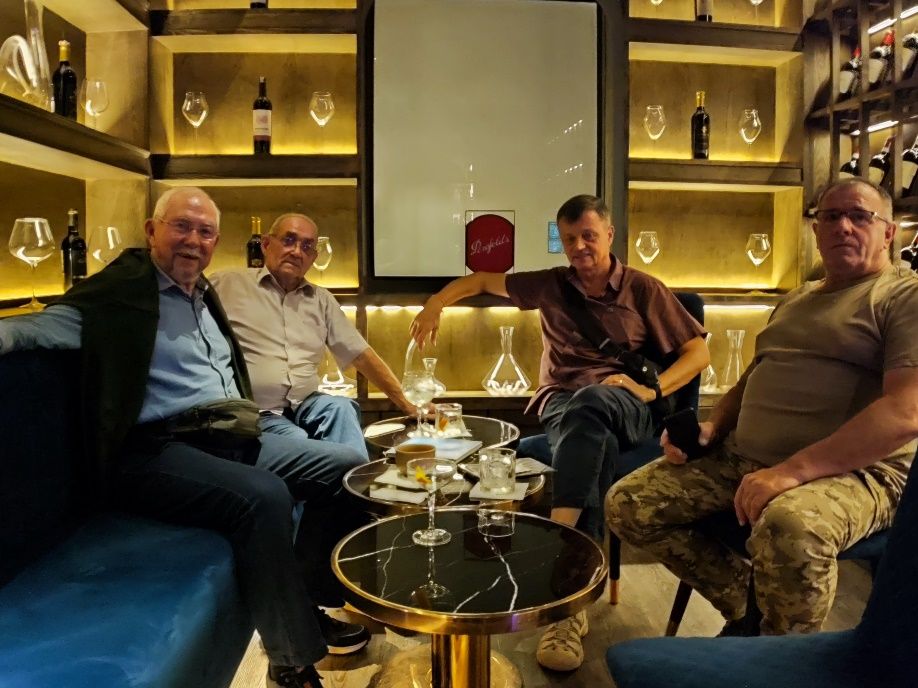
We return to our hotel, but not to our rooms. We settle on the tiny terrace of the hotel bar so that Jean-Pierre, who has exhausted his supply of cigars that I bought in Dubai for him, can poison us with his cigarettes while we savor a last beer in the quiet night air of this street.
January 30, 2024
8:00 a.m.
We meet in the breakfast room for one last meal together. We are happy about this trip, this reunion, and our adventure retracing the steps of our unfortunate but valiant ancestors. Seventy years later, none of us would presume to pass judgment on the events, the execution of orders, and the actions of the general staff; we simply wish to honor their memory, their courage, their commitment, and to deeply regret the silence that reigned and still reigned over the disappearance of the 2nd Battalion of the 3rd Foreign Regiment.
At the time, the only report on the fighting related to this evacuation came from the official Lao Press agency. It reported, in its own way, on the events unfolding during the first week of February 1954, 80 kilometers southwest of Dien Bien Phu:
“The incidents of the past few days around Mouang Khoua were merely the prelude to a Viet Minh offensive against northern Laos. There is no doubt that the enemy has withdrawn the 308th Division from Dien Bien Phu to send it into Laos, and that these troops have reached several areas around the Nam Ou River and Mouang Khoua.”
The friendly forces stationed in this area withdrew in good order when the threat became too great. They initiated delaying actions, with strong air support, which proved successful. Several very serious incidents occurred yesterday south of Mouang Khoua. The Viet Minh suffered significant losses. In reality, the "very serious incidents" that occurred 8 kilometers south of Mouang Khoua simply resulted in the annihilation of the 2nd Battalion of the 3rd Foreign Infantry Regiment (3e REI) in the bush by three regular enemy battalions. Furthermore, there was no air support to assist them on the ground.
This veil of silence surrounding the end of the 2nd Battalion of the 3rd Foreign Infantry Regiment and the 2nd Laotian Chasseurs Battalion, since they were embedded with the legionnaires, troubled us. Indeed, as a general rule in the Legion, the focus is on acts of bravery where the spirit of sacrifice has been recognized: Camerone, El Moungar, Bir Hakeim, Narvik, Messifre-Rachaya, Dien Bien Phu, RC4 with the 1st BEP, and so many others… but here, nothing. Total silence.
Could this silence be related to the fact that the entrenched camp at Dien Bien Phu was in its final stages of installation?
One of the High Command's arguments for justifying the entrenched camp was, among other things, to block the Viet Minh's route to Laos. And yet, a battalion of legionnaires and Laotians was decimated in Laos on January 31, 1954, just 80 kilometers from Dien Bien Phu, even though serious fighting there hadn't even begun. However, a liaison had been established from December 20th to 25th, 1953, from Dien Bien Phu (DBP) to Sop Nao, halfway to Mouang Khoua, by the 1st Foreign Parachute Battalion (1er BEP) and the 8th Parachute Battalion (8e BPC) to link up with Commander Vaudrey's column, which had departed from Mouang Khoua, thus demonstrating that the road to Laos was open. It was still open a month later, as three battalions of the 308th Division were to use it to attack Mouang Khoua on the night of January 30th-31st. This attack did not take place, as the post had been evacuated on the morning of January 30th. But the Viet Minh battalions caught up with the rearguard of the garrison, both Legionnaires and Laotians, and destroyed them.
Thus, this Mouang Khoua affair came to undermine, at the worst possible moment, the well-thought-out theory of our High Command strategists. It is therefore not difficult to find the reason for this silence surrounding the fighting at Mouang Khoua. DBP's morale was more important!
Breakfast has ended. We head back to our rooms to collect our backpacks. Departure time is approaching. Jean-Pierre and Jacky need to take a taxi to the nearby Thai border, where they'll catch another taxi to their homes and families.
Jean and I will also take a taxi to the airport. Jean will go to Bangkok, where his family awaits him, and I'll fly to Hanoi before heading back to Lisbon. A last beer on the hotel terrace, in the breeze of Jean-Pierre's cigarette smoke. The taxis arrive, we hug, and promise to stay in touch.
A certain nostalgia already grips me. Aside from our adventure, I enjoyed getting to know these people, whom I had only encountered in the late 1970s through the 23 Laotian officers who had studied at French military academies and were seeking political asylum. They are a very endearing people, known for their indolence, smiling and friendly, who, apart from their low standard of living, seem unaffected by the communist regime that governs the country, largely aided by China.
Apart from airport and train station checks and sporadic police checks along the roads, one doesn't see police or soldiers in the towns and villages. The Laotians give us the impression of being utterly indifferent to the political speeches broadcast over loudspeakers at the crack of dawn in the villages far from the major cities. They trade, eat at all hours, enjoy themselves, and you can feel their happiness.
January 30, 2024
8:00 a.m.
We meet in the breakfast room for one last meal together. We are happy about this trip, this reunion, and our adventure retracing the steps of our unfortunate but valiant ancestors. Seventy years later, none of us would presume to pass judgment on the events, the execution of orders, and the actions of the general staff; we simply wish to honor their memory, their courage, their commitment, and to deeply regret the silence that reigned and still reigned over the disappearance of the 2nd Battalion of the 3rd Foreign Regiment.
At the time, the only report on the fighting related to this evacuation came from the official Lao Press agency. It reported, in its own way, on the events unfolding during the first week of February 1954, 80 kilometers southwest of Dien Bien Phu:
“The incidents of the past few days around Mouang Khoua were merely the prelude to a Viet Minh offensive against northern Laos. There is no doubt that the enemy has withdrawn the 308th Division from Dien Bien Phu to send it into Laos, and that these troops have reached several areas around the Nam Ou River and Mouang Khoua.”
The friendly forces stationed in this area withdrew in good order when the threat became too great. They initiated delaying actions, with strong air support, which proved successful. Several very serious incidents occurred yesterday south of Mouang Khoua. The Viet Minh suffered significant losses. In reality, the "very serious incidents" that occurred 8 kilometers south of Mouang Khoua simply resulted in the annihilation of the 2nd Battalion of the 3rd Foreign Infantry Regiment (3e REI) in the bush by three regular enemy battalions. Furthermore, there was no air support to assist them on the ground.
This veil of silence surrounding the end of the 2nd Battalion of the 3rd Foreign Infantry Regiment and the 2nd Laotian Chasseurs Battalion, since they were embedded with the legionnaires, troubled us. Indeed, as a general rule in the Legion, the focus is on acts of bravery where the spirit of sacrifice has been recognized: Camerone, El Moungar, Bir Hakeim, Narvik, Messifre-Rachaya, Dien Bien Phu, RC4 with the 1st BEP, and so many others… but here, nothing. Total silence.
Could this silence be related to the fact that the entrenched camp at Dien Bien Phu was in its final stages of installation?
One of the High Command's arguments for justifying the entrenched camp was, among other things, to block the Viet Minh's route to Laos. And yet, a battalion of legionnaires and Laotians was decimated in Laos on January 31, 1954, just 80 kilometers from Dien Bien Phu, even though serious fighting there hadn't even begun. However, a liaison had been established from December 20th to 25th, 1953, from Dien Bien Phu (DBP) to Sop Nao, halfway to Mouang Khoua, by the 1st Foreign Parachute Battalion (1er BEP) and the 8th Parachute Battalion (8e BPC) to link up with Commander Vaudrey's column, which had departed from Mouang Khoua, thus demonstrating that the road to Laos was open. It was still open a month later, as three battalions of the 308th Division were to use it to attack Mouang Khoua on the night of January 30th-31st. This attack did not take place, as the post had been evacuated on the morning of January 30th. But the Viet Minh battalions caught up with the rearguard of the garrison, both Legionnaires and Laotians, and destroyed them.
Thus, this Mouang Khoua affair came to undermine, at the worst possible moment, the well-thought-out theory of our High Command strategists. It is therefore not difficult to find the reason for this silence surrounding the fighting at Mouang Khoua. DBP's morale was more important!
Breakfast has ended. We head back to our rooms to collect our backpacks. Departure time is approaching. Jean-Pierre and Jacky need to take a taxi to the nearby Thai border, where they'll catch another taxi to their homes and families.
Jean and I will also take a taxi to the airport. Jean will go to Bangkok, where his family awaits him, and I'll fly to Hanoi before heading back to Lisbon. A last beer on the hotel terrace, in the breeze of Jean-Pierre's cigarette smoke. The taxis arrive, we hug, and promise to stay in touch.
A certain nostalgia already grips me. Aside from our adventure, I enjoyed getting to know these people, whom I had only encountered in the late 1970s through the 23 Laotian officers who had studied at French military academies and were seeking political asylum. They are a very endearing people, known for their indolence, smiling and friendly, who, apart from their low standard of living, seem unaffected by the communist regime that governs the country, largely aided by China.
Apart from airport and train station checks and sporadic police checks along the roads, one doesn't see police or soldiers in the towns and villages. The Laotians give us the impression of being utterly indifferent to the political speeches broadcast over loudspeakers at the crack of dawn in the villages far from the major cities. They trade, eat at all hours, enjoy themselves, and you can feel their happiness.
"If sometimes in the jungle where the tiger brushes past you
And the recoil of the cannon no longer shakes you
It seems to you that a finger rests on your shoulder,
If you think you hear your name called,
Soldiers who rest beneath the distant earth,
And whose shed blood fills me with remorse,
Simply tell yourselves: 'It is our captain
Who remembers us… and who counts his dead.'
Captain de Borelli, 'To my men who have died'
THE END