





All this is happening above our heads
Temperatures in Space
By Michel Gravereau
We Earthlings cannot imagine the extreme conditions that prevail beyond our atmosphere.
Indeed, even if a seasoned traveler on Earth can encounter significant temperature variations, whether strolling under the scorching African sun or visiting Antarctica, this is nothing compared to our astronaut who would be taking their spacesuit, even just within the solar system.
Let's consider the thermal protection they would need to carry.
First, while temperatures can reach millions of degrees above zero, the lowest temperature in the Universe, far from any heat source, cannot fall below -270°C.
However, as soon as one approaches a heat source—a star, planet, or gas cloud—the temperature rises very rapidly, but always remains proportional to the distance.
Temperatures in the Solar System
In 1965, astronomers succeeded in measuring the temperature of the Universe, empty space, and they arrived at -270°C. This is valid for the most remote place in space, far from any star.
In our solar system, therefore relatively close to our star, the Sun, the data is not the same because the Sun radiates its light and heat, and celestial bodies retain some of this heat.
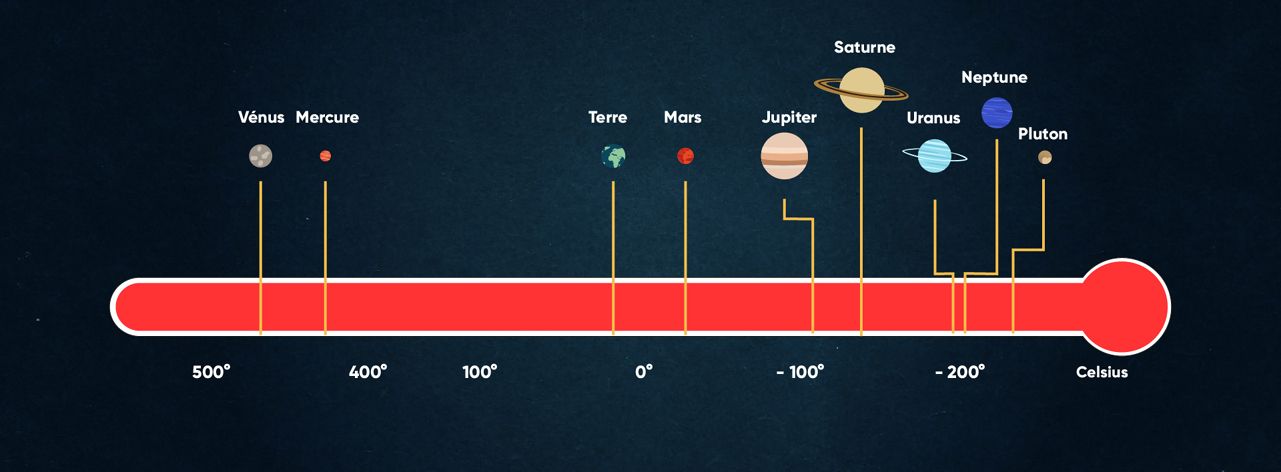
Let's take the Moon. Due to its rotation on its axis in approximately 28 days, it receives the Sun's light and heat at a specific point for 14 days. The temperature will rise to 130 degrees. Conversely, this same point will be plunged into darkness for 14 days, and the temperature will drop to around -160°C. This represents a temperature difference of 290°C every month.
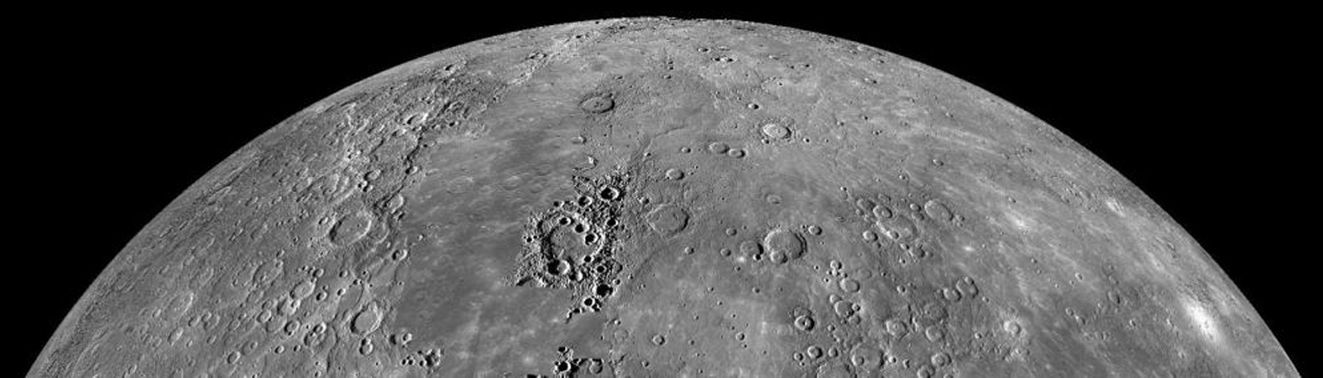
If we look at Mercury, the planet closest to the Sun, we find even more striking differences. During the day, its surface heats up to over 400°C, while at night it drops to -180°C. Referring back to my early days in astronomy, we didn't know exactly how Mercury rotated and revolved. Some scientists thought Mercury was synchronous with the Sun, meaning its revolution was equal to its rotation. The estimated period was 81 days. This meant one side of Mercury was constantly illuminated and heated to 450°C, while the other side was perpetually in darkness and cold, at -200°C. Since then, the rotation and revolution have been refined and now differ slightly. The entire surface of this smallest planet is alternately illuminated and heated.
In 1965, astronomers succeeded in measuring the temperature of the Universe, empty space, and they arrived at -270°C. This is valid for the most remote place in space, far from any star.
In our solar system, therefore relatively close to our star, the Sun, the data is not the same because the Sun radiates its light and heat, and celestial bodies retain some of this heat.
Let's take the Moon. Due to its rotation on its axis in approximately 28 days, it receives the Sun's light and heat at a specific point for 14 days. The temperature will rise to 130 degrees. Conversely, this same point will be plunged into darkness for 14 days, and the temperature will drop to around -160°C. This represents a temperature difference of 290°C every month.
If we look at Mercury, the planet closest to the Sun, we find even more striking differences. During the day, its surface heats up to over 400°C, while at night it drops to -180°C. Referring back to my early days in astronomy, we didn't know exactly how Mercury rotated and revolved. Some scientists thought Mercury was synchronous with the Sun, meaning its revolution was equal to its rotation. The estimated period was 81 days. This meant one side of Mercury was constantly illuminated and heated to 450°C, while the other side was perpetually in darkness and cold, at -200°C. Since then, the rotation and revolution have been refined and now differ slightly. The entire surface of this smallest planet is alternately illuminated and heated.
If you don't like the heat, I suggest you go and settle on Pluto, where the thermometer will read -240°C, but when it rises again, it will reach a maximum of -150°C. Bring a light sweater anyway.
I mentioned the two extreme planets of our solar system, Mercury and Pluto (which, since August 24, 2006, is no longer considered a full-fledged planet but has been classified as a dwarf planet), but don't think that our astronauts, cosmonauts, or taikonauts aren't subject to these extreme temperature variations.
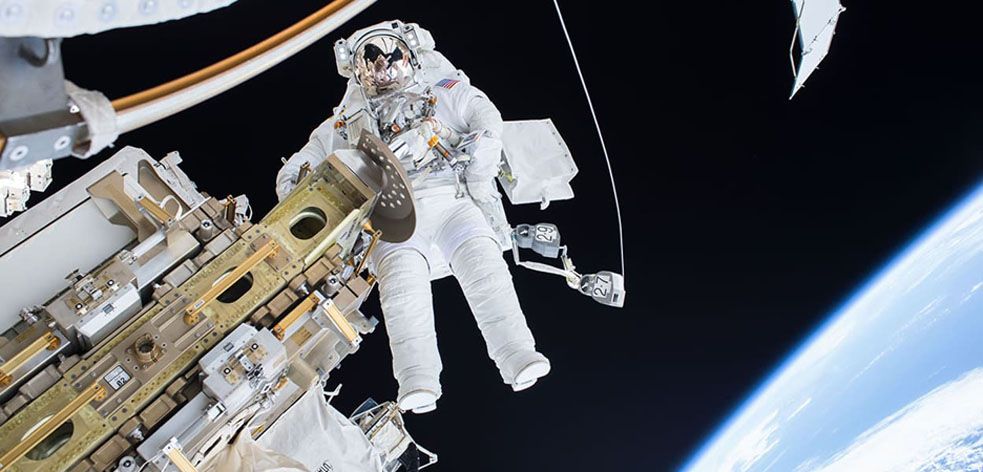
Just consider the men and women aboard the ISS, the International Space Station, who have to perform a spacewalk, an EVA, for work on the station, maintenance, and other tasks; they are subject to these risks because their spacewalk lasts several hours, while the station orbits the Earth in 1 hour and 35 minutes. Every 45 minutes or so, they experience the alternation of day and night, the alternation of heat (over 120°C) and cold (under 160°C).
We are fortunate to live on this Earth, which is surrounded by this gaseous bubble we call the atmosphere. It is what allows us to live in relative comfort. It is also what allows water to remain at the temperature at which it stays liquid, thus sustaining life.
Let us take care to preserve this atmosphere in a state where it can continue to provide its benefits, maintaining a viable temperature for all living species, including humankind. The destruction of the atmosphere through the release of harmful gases, these greenhouse gases, has destroyed any possibility of life flourishing. We have a striking example: Venus. 480°C, an atmosphere 90 times thicker than Earth's. And yet, some call it the planet of Love. Tough love, no doubt. A very bright point, low on the western horizon right now. That's Venus.
I mentioned the two extreme planets of our solar system, Mercury and Pluto (which, since August 24, 2006, is no longer considered a full-fledged planet but has been classified as a dwarf planet), but don't think that our astronauts, cosmonauts, or taikonauts aren't subject to these extreme temperature variations.
Just consider the men and women aboard the ISS, the International Space Station, who have to perform a spacewalk, an EVA, for work on the station, maintenance, and other tasks; they are subject to these risks because their spacewalk lasts several hours, while the station orbits the Earth in 1 hour and 35 minutes. Every 45 minutes or so, they experience the alternation of day and night, the alternation of heat (over 120°C) and cold (under 160°C).
We are fortunate to live on this Earth, which is surrounded by this gaseous bubble we call the atmosphere. It is what allows us to live in relative comfort. It is also what allows water to remain at the temperature at which it stays liquid, thus sustaining life.
Let us take care to preserve this atmosphere in a state where it can continue to provide its benefits, maintaining a viable temperature for all living species, including humankind. The destruction of the atmosphere through the release of harmful gases, these greenhouse gases, has destroyed any possibility of life flourishing. We have a striking example: Venus. 480°C, an atmosphere 90 times thicker than Earth's. And yet, some call it the planet of Love. Tough love, no doubt. A very bright point, low on the western horizon right now. That's Venus.