






All this is happening above our heads
Shooting Stars
By Michel Gravereau
Especially when summer arrives and the sky is perfect for a few nighttime strolls, our gaze turns to the celestial vault. There, the stars shine brightly, the planets illuminate us with a more intense glow, and the Moon plays with its quirks.
Sometimes, the sky is streaked with these phenomena we call "shooting stars." A time to make a wish. But what exactly is a shooting star?
Especially when summer arrives and the sky is perfect for a few nighttime strolls, our gaze turns to the celestial vault. There, the stars shine brightly, the planets illuminate us with a more intense glow, and the Moon plays with its quirks.
Sometimes, the sky is streaked with these phenomena we call "shooting stars." A time to make a wish. But what exactly is a shooting star?
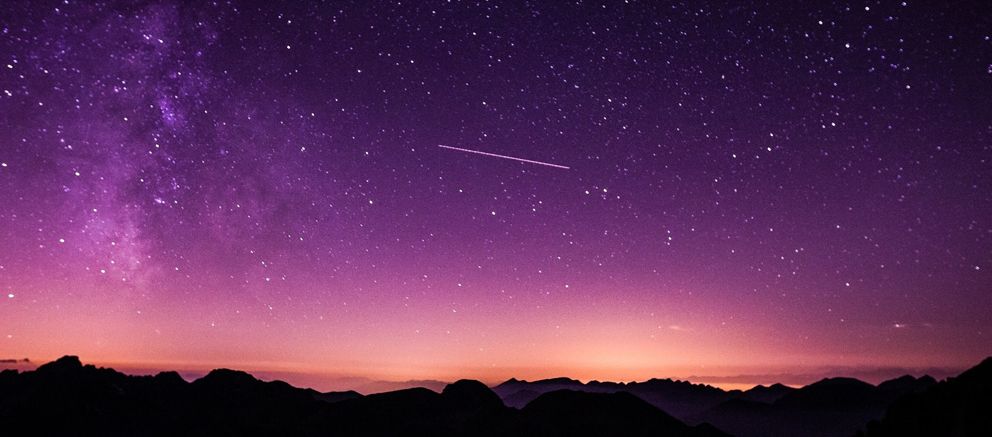
When a small solid object enters the atmosphere, it burns up, leaving behind a luminous trail: this is a shooting star. These objects, about the size of a pea, come from space and are generally debris left behind by comets as they pass near the Sun.
About ten times a year, Earth passes through a region rich in comet debris, resulting in a meteor shower.
The ancients believed that stars could detach from the celestial sphere and fall towards Earth. This, at least, is how they explained these strange and ephemeral luminous trails that we now call "shooting stars."
We now know that this phenomenon does not occur in the distant cosmos, but in Earth's atmosphere, and that it involves not stars, but small masses, typically weighing only a few grams.
About ten times a year, Earth passes through a region rich in comet debris, resulting in a meteor shower.
The ancients believed that stars could detach from the celestial sphere and fall towards Earth. This, at least, is how they explained these strange and ephemeral luminous trails that we now call "shooting stars."
We now know that this phenomenon does not occur in the distant cosmos, but in Earth's atmosphere, and that it involves not stars, but small masses, typically weighing only a few grams.
Earth receives 10 tons of this material per day.
When a small solid object enters the atmosphere, it heats up as it collides with air molecules.
This friction with the air, which occurs at an altitude of approximately 100 km, eventually burns the object completely in a fraction of a second, so that at an altitude of 70 km, there is generally nothing left.
Although shooting stars have a reputation for being a rare phenomenon, thousands occur every day, disintegrating the equivalent of about 10 tons of matter.
And this estimate doesn't even take into account meteor showers, which light up the sky with their fireworks about ten times a year, on fixed dates. When this happens, you can see about one shooting star per minute.
This friction with the air, which occurs at an altitude of approximately 100 km, eventually burns the object completely in a fraction of a second, so that at an altitude of 70 km, there is generally nothing left.
Although shooting stars have a reputation for being a rare phenomenon, thousands occur every day, disintegrating the equivalent of about 10 tons of matter.
And this estimate doesn't even take into account meteor showers, which light up the sky with their fireworks about ten times a year, on fixed dates. When this happens, you can see about one shooting star per minute.
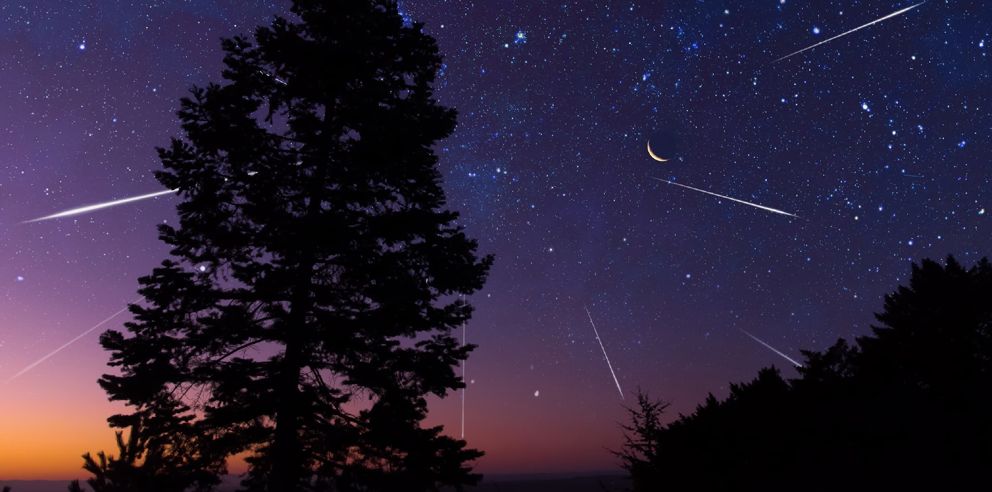
It even happened, on November 17, 1966, to be precise, that several hundred were observed per second. The fireworks of meteor showers are a gift from comets that pass close to Earth.
During their journey around the Sun, comets leave behind thousands of small pieces of debris that remain suspended in space. When Earth passes through such a region, some of this debris, attracted by our planet, rushes towards it and burns up in a spectacular display of light. In France, this phenomenon can be admired around August 11th.
During their journey around the Sun, comets leave behind thousands of small pieces of debris that remain suspended in space. When Earth passes through such a region, some of this debris, attracted by our planet, rushes towards it and burns up in a spectacular display of light. In France, this phenomenon can be admired around August 11th.
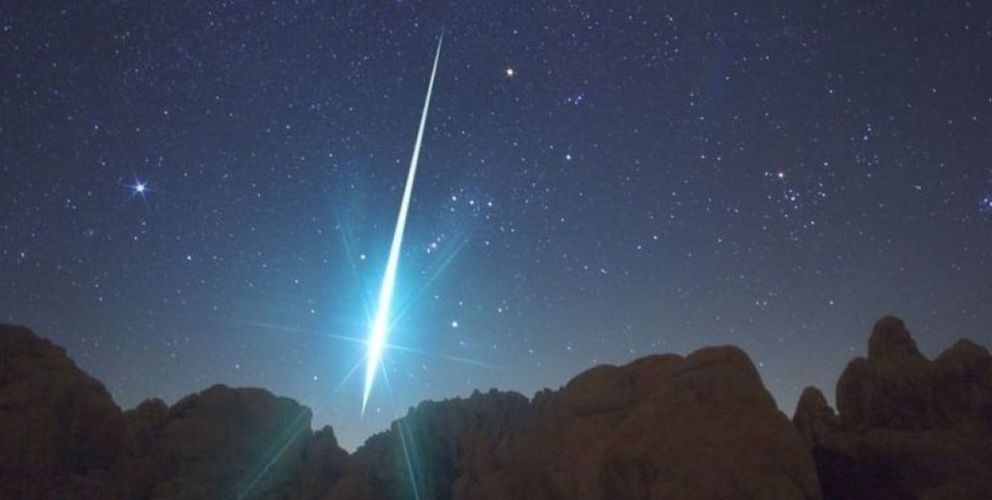
Meteorites.
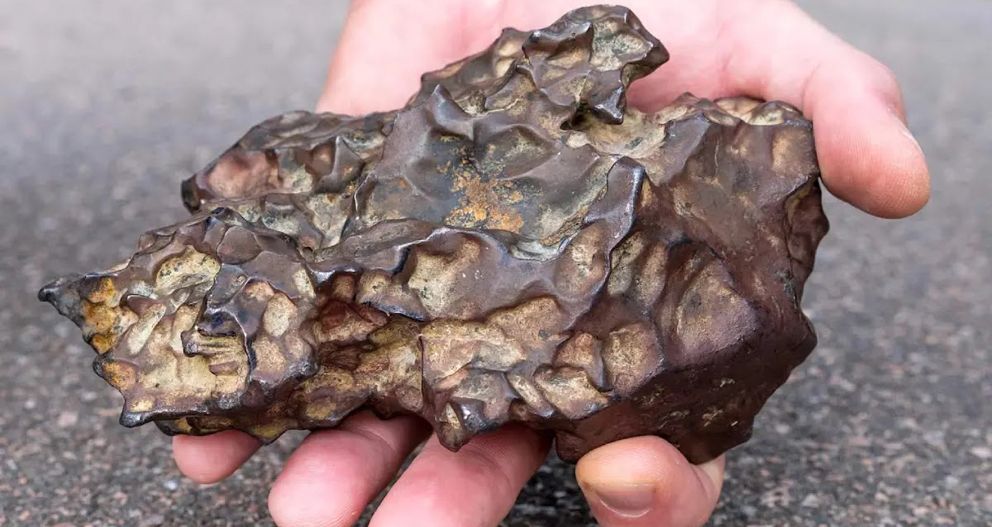
Sometimes, the atmosphere is unable to completely burn up a shooting star. As a result, a small "black rock," because it is only superficially burned, will crash to Earth, remaining completely unnoticed.
However, this rock holds a wealth of information for researchers, perhaps even the key to the origin of comets. But how can you spot a rock on Earth?
By scanning deserts of sand and snow. In fact, "meteorite hunters" operate in the snowy lands of the polar circles or the untouched expanses of vast deserts, where a black stone cannot go unnoticed.
However, this rock holds a wealth of information for researchers, perhaps even the key to the origin of comets. But how can you spot a rock on Earth?
By scanning deserts of sand and snow. In fact, "meteorite hunters" operate in the snowy lands of the polar circles or the untouched expanses of vast deserts, where a black stone cannot go unnoticed.
Photo 4 Meteorite
Upcoming Events
This section informs you about upcoming events in the fields of pure astronomy and space exploration.
Astronomical Events
February 9: Last Quarter Moon at 1:43:07 PM
February 10: Moon at Apogee Distance from Earth: 404,576 km.
February 17: Annular solar eclipse, not visible from mainland France.
February 17: Traditional Chinese calendar: New Year.
February 17: New Moon at 1:01:09 PM.
February 18: Around 6:30 PM local time, on the western horizon, in the glow of the setting sun, the Moon, Venus, and Mercury, all three in the constellation Aquarius, will be in close conjunction.
February 24: First quarter moon at 1:27:37 PM.
February 25: Moon at perigee; distance from Earth: 370,135 km.
March 3: Total lunar eclipse, not visible from mainland France.
March 20: Spring Equinox.
May 7 and 8: Sunset under the Arc de Triomphe from the Place de la Concorde.
May 9, 10, and 11: Sunset under the Arc de Triomphe from the Champs-Élysées roundabout.
June 21: Summer Solstice.
July 31, August 1, 2, and 3: Sunset under the Arc de Triomphe from the Champs-Élysées roundabout.
August 3, 4, and 5: Sunset under the Arc de Triomphe from the Place de la Concorde.
August 12: Total solar eclipse, visible in its partial phase in mainland France.
August 28: Partial lunar eclipse in mainland France.
September 14: Venus appears behind the Moon.
September 23: Autumnal equinox.
December 21: Winter solstice.
Ursid meteor shower.
Space exploration
ISS pass: From January 21 to 31, it is visible in the evening sky.
ISS: Due to the Crew Dragon's premature return for medical reasons, French astronaut Sophie Adenot will join the crew that will launch to the ISS from Baikonur aboard a Soyuz spacecraft.
She will thus become the 11th French astronaut and the 2nd woman, the first being Claudie Aigneré.
Artemis 2 launch to the Moon: Date set: March 7.
This section informs you about upcoming events in the fields of pure astronomy and space exploration.
Astronomical Events
February 9: Last Quarter Moon at 1:43:07 PM
February 10: Moon at Apogee Distance from Earth: 404,576 km.
February 17: Annular solar eclipse, not visible from mainland France.
February 17: Traditional Chinese calendar: New Year.
February 17: New Moon at 1:01:09 PM.
February 18: Around 6:30 PM local time, on the western horizon, in the glow of the setting sun, the Moon, Venus, and Mercury, all three in the constellation Aquarius, will be in close conjunction.
February 24: First quarter moon at 1:27:37 PM.
February 25: Moon at perigee; distance from Earth: 370,135 km.
March 3: Total lunar eclipse, not visible from mainland France.
March 20: Spring Equinox.
May 7 and 8: Sunset under the Arc de Triomphe from the Place de la Concorde.
May 9, 10, and 11: Sunset under the Arc de Triomphe from the Champs-Élysées roundabout.
June 21: Summer Solstice.
July 31, August 1, 2, and 3: Sunset under the Arc de Triomphe from the Champs-Élysées roundabout.
August 3, 4, and 5: Sunset under the Arc de Triomphe from the Place de la Concorde.
August 12: Total solar eclipse, visible in its partial phase in mainland France.
August 28: Partial lunar eclipse in mainland France.
September 14: Venus appears behind the Moon.
September 23: Autumnal equinox.
December 21: Winter solstice.
Ursid meteor shower.
Space exploration
ISS pass: From January 21 to 31, it is visible in the evening sky.
ISS: Due to the Crew Dragon's premature return for medical reasons, French astronaut Sophie Adenot will join the crew that will launch to the ISS from Baikonur aboard a Soyuz spacecraft.
She will thus become the 11th French astronaut and the 2nd woman, the first being Claudie Aigneré.
Artemis 2 launch to the Moon: Date set: March 7.