






All this is happening above our heads
Man on the Moon
By Michel Gravereau
We are approaching the launch of Artemis 2, perhaps on April 1, 2026, and Artemis 3 next year. This latter mission should see humans set foot on the Moon again, this time not to collect rocks and study them in laboratories after their return to Earth, but to build a permanent base where teams of humans will take turns conducting scientific studies in a non-terrestrial environment.
Man on the Moon. How many men have walked on the lunar surface? More than 50 years after the last mission, when I ask this question, I never get an answer.
We are approaching the launch of Artemis 2, perhaps on April 1, 2026, and Artemis 3 next year. This latter mission should see humans set foot on the Moon again, this time not to collect rocks and study them in laboratories after their return to Earth, but to build a permanent base where teams of humans will take turns conducting scientific studies in a non-terrestrial environment.
Man on the Moon. How many men have walked on the lunar surface? More than 50 years after the last mission, when I ask this question, I never get an answer.
A look back.
The American missions intended to land men on the Moon were called Apollo.
Between July 1969 with Apollo 11 and December 1972 with Apollo 17, six missions took place. Each time, the crews consisted of three astronauts, only two of whom landed on our satellite: the third man, who remained at the controls of the spacecraft in orbit, did not have this privilege.
Humanity will remember it as the most significant event of the 20th century: on July 21, 1969, for the first time in world history, a man walked on a surface that was not Earth. Every television station broadcast the image of Neil Armstrong, then that of his crewmate "Buzz" Aldrin, both born in 1933, skipping across the surface of the Moon. Apollo 11 was the culmination of an ambitious project launched on May 25, 1961, by President Kennedy before Congress.
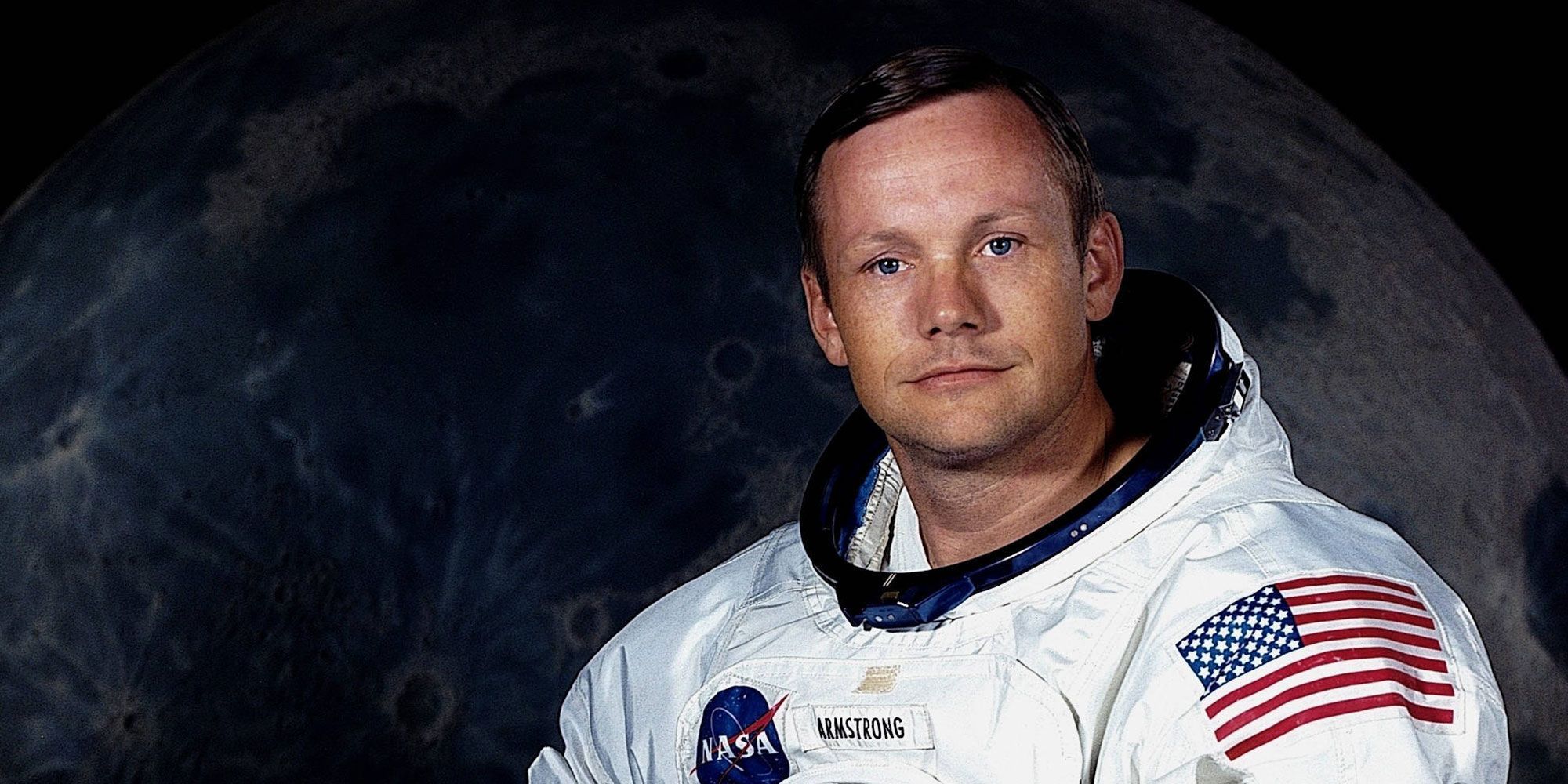
It was also an opportunity to assert American supremacy over the Soviet Union, which had been the first to send a satellite into space, Sputnik; the first to send a living being into space, the dog Laika; the first to send a man into space, Yuri Gagarin; the first to have a man walk in space, Leonov; the first to photograph the far side of the Moon, Luna 3; and the first to soft-land a spacecraft on the Moon, Luna 9.
In November 1969, Charles Conrad and Alan Bean, in turn, set foot on the lunar surface. Apollo 12
.
This conquest of the Moon, which had captivated the entire world, seemed to have become commonplace, and I remember very well that the launch of Apollo 13 took place in total indifference in April 1970. But 56 hours after launch, a voice from space announced: "Houston, we have a problem." One of the engine's oxygen tanks exploded, severely damaging the spacecraft.
It took astronauts James Lovell, John Swigert, and Fred Haise considerable composure and four days of maneuvering "by sight," practically without food, water, or sleep, to return safely to Earth.
In February 1971, Apollo 14 launched with Alan Shepard, the first American to fly in space, and Edgar Mitchell on board. A complete success. Shepard would play golf on the Moon in front of the entire world.
Then came Apollo 15 in July 1971. David Scott, born in 1932, performed Galileo's experiment: the fall of bodies in a vacuum. He was accompanied on his lunar mission by James Irwin.
In November 1969, Charles Conrad and Alan Bean, in turn, set foot on the lunar surface. Apollo 12
.
This conquest of the Moon, which had captivated the entire world, seemed to have become commonplace, and I remember very well that the launch of Apollo 13 took place in total indifference in April 1970. But 56 hours after launch, a voice from space announced: "Houston, we have a problem." One of the engine's oxygen tanks exploded, severely damaging the spacecraft.
It took astronauts James Lovell, John Swigert, and Fred Haise considerable composure and four days of maneuvering "by sight," practically without food, water, or sleep, to return safely to Earth.
In February 1971, Apollo 14 launched with Alan Shepard, the first American to fly in space, and Edgar Mitchell on board. A complete success. Shepard would play golf on the Moon in front of the entire world.
Then came Apollo 15 in July 1971. David Scott, born in 1932, performed Galileo's experiment: the fall of bodies in a vacuum. He was accompanied on his lunar mission by James Irwin.
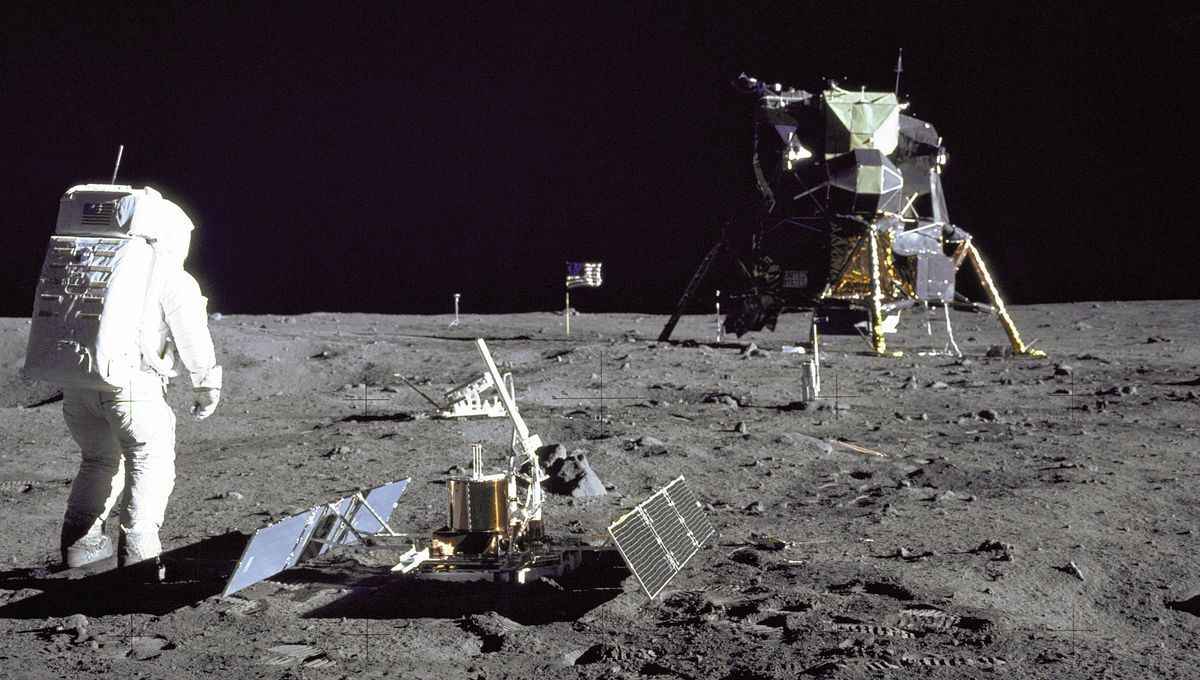
Next up, in Apollo 16, were John Young and Charles Duke, born in 1935, who continued the series. That was in April 1972.
This epic saga ended in December 1972 with Apollo 17. A veteran of space exploration, Eugene Cernan, accompanied the only scientist to have set foot on the Moon: geologist Harrison Schmitt, born in 1935.
I've included the birth dates of four of these twelve fantastic and "immortal" men for humanity because they are still alive, if my records are up to date. You've also noticed that they are four nonagenarians. That they still have a long life ahead of them.
All the missions unfolded in the same way: the spacecraft, carrying three astronauts, entered lunar orbit. Two of the astronauts boarded the lunar module, or LEM, which detached from the spacecraft and landed on the lunar surface.
After a brief stay, a section of the lunar module transported the two astronauts back to the spacecraft, which then returned all three men to Earth.
This epic saga ended in December 1972 with Apollo 17. A veteran of space exploration, Eugene Cernan, accompanied the only scientist to have set foot on the Moon: geologist Harrison Schmitt, born in 1935.
I've included the birth dates of four of these twelve fantastic and "immortal" men for humanity because they are still alive, if my records are up to date. You've also noticed that they are four nonagenarians. That they still have a long life ahead of them.
All the missions unfolded in the same way: the spacecraft, carrying three astronauts, entered lunar orbit. Two of the astronauts boarded the lunar module, or LEM, which detached from the spacecraft and landed on the lunar surface.
After a brief stay, a section of the lunar module transported the two astronauts back to the spacecraft, which then returned all three men to Earth.

Over the course of the six missions, the astronauts spent 12.5 days on the Moon, traveled approximately 100 km, and brought back 384 kg of lunar rocks.
All this for a cost estimated at the time to be $25 million.
All this for a cost estimated at the time to be $25 million.